

The qualified dividends and capital gain tax worksheet 2024 is one of the most important tools you’ll use when filing your federal income taxes, especially if you’ve earned investment income during the year. If you’ve sold stocks, received dividend payments, or made other investment moves, understanding how to complete this worksheet correctly can save you thousands of dollars in taxes or help you avoid costly mistakes with the IRS.
Table of Contents
What Is the Worksheet?
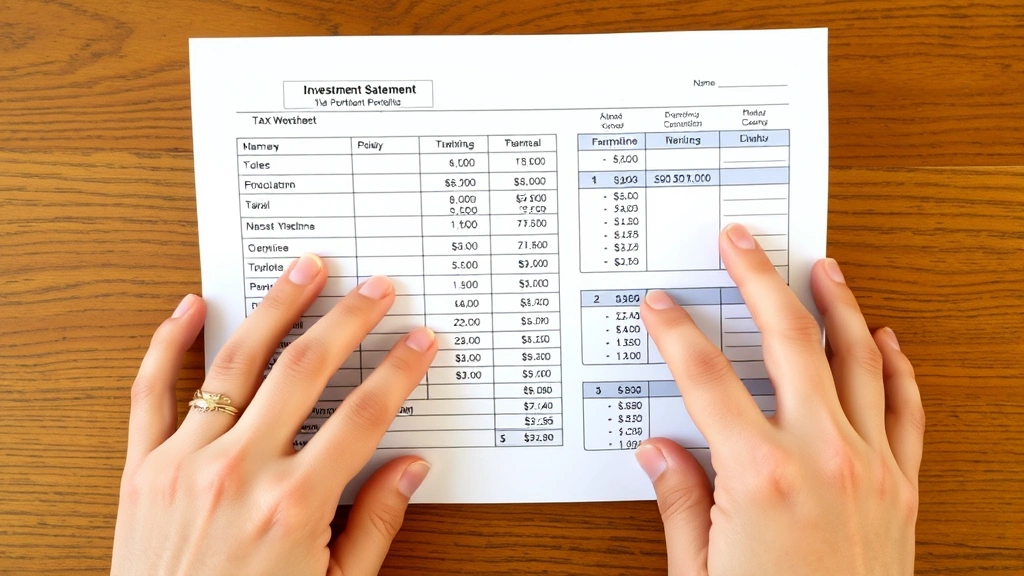
The qualified dividends and capital gain tax worksheet is IRS Form 1040, Schedule D, or Schedule D-1, depending on your situation. This worksheet determines your taxable income when you have long-term capital gains or qualified dividend income. Think of it as a specialized calculator that helps you figure out exactly how much of your investment income gets taxed and at what rate.
Why does this matter? Because investment income is taxed differently than your regular W-2 wages. When you earn a salary, your employer withholds taxes automatically. But when you earn dividends or sell investments, you need to manually report and calculate the tax yourself. The worksheet ensures you’re doing this correctly.
The IRS created this worksheet because qualified dividends and long-term capital gains receive preferential tax treatment compared to ordinary income. Instead of being taxed at your regular income tax rate (which could be as high as 37%), these earnings are taxed at lower rates: 0%, 15%, or 20%, depending on your total income.
Qualified vs. Ordinary Dividends
Not all dividends are created equal in the eyes of the IRS. Understanding the difference between qualified and ordinary dividends is crucial for completing your worksheet accurately.
Qualified dividends are distributions from U.S. corporations or qualified foreign corporations that meet specific IRS requirements. To qualify, you must have held the stock for more than 60 days during a 121-day period centered around the ex-dividend date. These dividends get the preferential tax treatment we mentioned—taxed at 0%, 15%, or 20%.
Ordinary dividends are everything else. This includes dividends from real estate investment trusts (REITs), master limited partnerships, and certain foreign corporations. Ordinary dividends are taxed as regular income, which means they’re taxed at your marginal tax rate—potentially much higher than the preferential rates.
Your broker will send you a Form 1099-DIV that separates qualified dividends from ordinary dividends. Box 1a shows qualified dividends, while Box 1b shows ordinary dividends. Make sure you’re reading this form carefully before you start your worksheet.
Capital Gains Basics for 2024
Capital gains are profits you make when you sell an investment for more than you paid for it. The IRS divides these into two categories: short-term and long-term.
Short-term capital gains occur when you sell an investment you’ve held for one year or less. These are taxed as ordinary income at your regular tax rate. They don’t qualify for the preferential treatment and don’t go on the qualified dividends worksheet.

Long-term capital gains occur when you sell an investment you’ve held for more than one year. These qualify for preferential tax rates of 0%, 15%, or 20%, just like qualified dividends. This is where the worksheet comes in.
For 2024, the long-term capital gains tax rates are:
- 0% rate: For single filers with taxable income up to $47,025
- 15% rate: For single filers with taxable income between $47,025 and $518,900
- 20% rate: For single filers with taxable income over $518,900
These thresholds are different for married filing jointly, married filing separately, and head of household filers. You’ll find the complete breakdown on the IRS website and in the instructions that come with your Form 1040.
Breaking Down the Worksheet
The qualified dividends and capital gain tax worksheet has several lines that work together to calculate your tax. Let’s break down what each section does without getting lost in the weeds.
Part 1: Ordinary Income starts with your total taxable income before capital gains and qualified dividends are considered. This includes wages, interest, ordinary dividends, and other income sources.
Part 2: Capital Gains and Qualified Dividends adds up your long-term capital gains and qualified dividends. The worksheet keeps these separate from your ordinary income because they’re taxed differently.
Part 3: Tax Calculation figures out your tax in two ways: once assuming all your income is ordinary, and once with the preferential rates applied to your capital gains and qualified dividends. The worksheet then tells you which scenario results in lower taxes.
This might sound complicated, but the worksheet walks you through it line by line. You’re essentially comparing two tax scenarios to see which one benefits you most.
Step-by-Step Completion Guide
Here’s how to complete the worksheet without losing your mind:

Step 1: Gather Your Documents Collect your Form 1099-DIV (dividends), Form 1099-B or brokerage statement (capital gains), and any other investment income documents. Also have your Form 1040 draft handy.
Step 2: Enter Ordinary Income On line 1 of the worksheet, enter your total taxable income before capital gains and qualified dividends. This comes from your Form 1040.
Step 3: Enter Capital Gains On the appropriate line, enter your long-term capital gains. If you have losses, you can offset gains. Short-term gains go on your regular Form 1040, not here.
Step 4: Enter Qualified Dividends Use the amount from Box 1a of your Form 1099-DIV. Remember, ordinary dividends (Box 1b) stay in your regular income.
Step 5: Calculate Total Income Add your ordinary income, capital gains, and qualified dividends together. This is your total taxable income.
Step 6: Use Tax Tables The worksheet includes special tax tables for capital gains. Find your filing status and total income, then follow the instructions to calculate your tax.
Step 7: Enter Result on Form 1040 Transfer your calculated tax to the appropriate line on your Form 1040. Make sure you’re using the worksheet result, not the standard tax tables.
2024 Tax Rates and Brackets
Understanding the 2024 tax brackets helps you predict which capital gains rate you’ll fall into. Here’s the breakdown for single filers:
- 10% bracket: $0 to $11,600
- 12% bracket: $11,601 to $47,150
- 22% bracket: $47,151 to $100,525
- 24% bracket: $100,526 to $191,950
- 32% bracket: $191,951 to $243,725
- 35% bracket: $243,726 to $609,350
- 37% bracket: $609,351 and above
Notice how these brackets don’t align with the capital gains brackets. This is intentional. The IRS wants you to use the capital gains brackets (0%, 15%, 20%) to calculate tax on your investment income, then use the ordinary brackets to calculate tax on your wages and other income.

For married filing jointly, the brackets are roughly double. For example, the 0% capital gains rate applies to taxable income up to $94,375 for married couples filing jointly in 2024.
If you’re unsure which bracket you fall into, the worksheet will guide you to the right tax table. The IRS publishes updated tables each year, and tax software automatically uses the correct 2024 figures.
Common Mistakes to Avoid
We’ve seen taxpayers make these errors repeatedly. Learning from their mistakes can save you headaches (and money):
Mistake #1: Mixing Up Qualified and Ordinary Dividends Many people put all dividend income in the capital gains section. Your broker separates these on the 1099-DIV for a reason. Only qualified dividends go on the worksheet; ordinary dividends stay in regular income.
Mistake #2: Including Short-Term Capital Gains Short-term gains don’t get preferential rates, so they shouldn’t go on this worksheet. They belong on your regular Form 1040 as ordinary income. Only long-term gains (assets held more than one year) go here.
Mistake #3: Forgetting Capital Losses If you sold investments at a loss, you can offset your gains. Many people forget to include these losses, which inflates their taxable capital gains and increases their tax bill unnecessarily.
Mistake #4: Using Wrong Filing Status The tax tables are different for single, married filing jointly, married filing separately, and head of household. Using the wrong one can throw off your entire calculation. Double-check your filing status before you start.
Mistake #5: Not Reading the Instructions The IRS instructions that come with the worksheet are actually pretty helpful. They walk through examples and explain which lines apply to your situation. Skipping them often leads to errors.
If you have tax exempt interest income, that’s another wrinkle to watch for. Tax-exempt interest doesn’t reduce your taxable income for capital gains purposes, which can push more of your income into higher capital gains brackets.

Real-World Examples
Example 1: The Conservative Investor
Sarah is a single filer with $50,000 in W-2 wages. She received $2,000 in qualified dividends and had a long-term capital gain of $3,000 from selling company stock. Her ordinary income is $50,000. Adding her capital gains and qualified dividends, her total taxable income is $55,000.
Using the worksheet, her first $47,025 of income is taxed at ordinary rates. The remaining $7,975 ($55,000 – $47,025) falls into the 15% capital gains bracket because it exceeds the 0% threshold but stays below the 20% threshold. Her capital gains tax is $1,196.25 (15% × $7,975), which is much lower than if those gains were taxed as ordinary income at 22%.
Example 2: The Successful Entrepreneur
James is married filing jointly with $200,000 in business income. He sold an investment property and realized a $100,000 long-term capital gain. He also received $5,000 in qualified dividends. His total taxable income is $305,000.
His first $94,375 of capital gains and dividends are taxed at 15%. The remaining $10,625 ($105,000 – $94,375) is taxed at 20%. His total capital gains tax is $16,279 (15% × $94,375 + 20% × $10,625). Without the preferential rates, these gains would be taxed at 35% or 37%, costing him significantly more.
These examples show why getting the worksheet right matters. Small errors can cost hundreds or thousands of dollars.
Frequently Asked Questions
Do I need to file the worksheet if I have no capital gains?
No. If you only have ordinary income and ordinary dividends, you don’t need the qualified dividends and capital gain tax worksheet. You’ll use the standard tax tables instead. However, if you have any long-term capital gains or qualified dividends, you should use the worksheet even if the amounts are small.
What if I have capital losses?
Capital losses reduce your capital gains dollar-for-dollar. If you have $5,000 in gains and $2,000 in losses, you only report $3,000 in net capital gains on the worksheet. If losses exceed gains, you can deduct up to $3,000 against ordinary income in that year, with excess losses carrying forward to future years.
Are stock dividends taxed differently?
Stock dividends (where you receive additional shares instead of cash) are generally not taxed when you receive them. However, when you eventually sell those shares, any gain is subject to capital gains tax. The holding period starts from when you received the dividend shares.
How do I know my holding period?
For stocks and mutual funds, the holding period is measured from the purchase date to the sale date. The asset must be held for more than one year (not one year or exactly one year) to qualify for long-term treatment. Your brokerage statement or 1099-B will typically identify short-term vs. long-term gains for you.
Can I use tax software instead of the worksheet?
Yes, absolutely. Tax software like TurboTax, H&R Block, and TaxAct automatically calculate your capital gains tax using the correct worksheet. If you’re comfortable with technology, this is often easier and less error-prone than doing it manually. However, understanding how the worksheet works helps you catch errors and make informed decisions about your investments.
What about mutual fund distributions?
Mutual funds distribute capital gains to shareholders. These are reported on Form 1099-DIV (for qualified dividends) or Form 1099-B (for capital gains). The holding period for mutual fund shares is based on when you purchased them, not when the fund purchased the underlying securities. Qualified mutual fund distributions are treated the same as qualified dividends on the worksheet.
Do I include Medicare taxes on the worksheet?
No. The Net Investment Income Tax (NIIT), also called the Medicare tax on investment income, is calculated separately. If your modified adjusted gross income exceeds certain thresholds ($200,000 for single filers, $250,000 for married filing jointly), you may owe an additional 3.8% tax on your net investment income. This is separate from the capital gains tax calculated on the worksheet.
Final Thoughts
The qualified dividends and capital gain tax worksheet 2024 might seem intimidating at first, but it’s really just a structured way to calculate your investment income taxes. The key is understanding that not all income is taxed the same way. Your wages, ordinary dividends, and interest are taxed at your regular rate. But your long-term capital gains and qualified dividends get preferential treatment, which can save you significant money if you complete the worksheet correctly.
Start by gathering your documents—your 1099-DIV, brokerage statements, and Form 1040 draft. Then follow the worksheet line by line. If you get stuck, the IRS instructions are actually helpful, and don’t hesitate to consult a tax professional who understands FIT tax and investment income. The cost of professional help often pays for itself through tax savings.
Remember that investment decisions shouldn’t be made solely for tax reasons, but understanding your tax situation helps you plan better. If you’re approaching year-end, consider talking with a financial advisor about tax-loss harvesting or timing investment sales strategically. And if you have other income sources like disability income, make sure you’re accounting for everything on your return.
The 2024 tax year will be here before you know it. Getting familiar with the qualified dividends and capital gain tax worksheet now means you’ll be prepared when it’s time to file. Your future self (and your bank account) will thank you.


