

Understanding s-corp taxes for dummies doesn’t require a finance degree—it just requires knowing the key differences between how S-corporations are taxed versus sole proprietorships or C-corporations. If you’re a business owner considering an S-corp election or already operating as one, you’re probably wondering how this structure affects your bottom line and whether it’s actually worth the extra paperwork. The honest answer? For many small business owners, an S-corp can save you thousands in self-employment taxes every year. But there are rules, deadlines, and gotchas you need to understand first.
Table of Contents
What is an S-Corp?
An S-corporation isn’t a legal entity—it’s a tax election. You can form an LLC or corporation under your state’s business laws, then elect to be taxed as an S-corp by filing Form 2553 with the IRS. Think of it as choosing how the IRS treats your business income, not changing your actual business structure.
Here’s the practical difference: A sole proprietor or single-member LLC is taxed as a “disregarded entity,” meaning business income flows directly to your personal tax return. An S-corp, by contrast, is a separate tax entity that files its own return (Form 1120-S) but doesn’t pay corporate-level taxes. Instead, profits pass through to you and other shareholders.
Many small business owners choose S-corp status specifically to reduce self-employment taxes. We’ll explain why in a moment, but first, understand that this election comes with compliance requirements. You’ll need to file additional forms, run payroll (even if you’re the only employee), and maintain corporate formalities.
Pass-Through Taxation Explained
S-corporations are “pass-through” entities, meaning the business itself doesn’t pay income tax. Instead, profits and losses pass through to shareholders’ personal tax returns. If you own 100% of the S-corp, all income flows to you.
Here’s how it works step-by-step:
- Your S-corp earns $150,000 in net profit during the year
- The business files Form 1120-S reporting this income
- You receive a Schedule K-1 showing your share of profits
- You report this K-1 income on your personal Form 1040
- You pay individual income tax on that amount (no corporate tax)
This sounds similar to how sole proprietorships work, and it is—except for one critical difference we’ll cover next: how self-employment taxes are calculated.
Self-Employment Tax Savings
Here’s where S-corps get interesting. Self-employment tax (Social Security and Medicare) is currently 15.3% on net earnings from self-employment. For a sole proprietor earning $100,000, that’s roughly $14,130 in self-employment taxes.
With an S-corp, you split your income into two buckets:

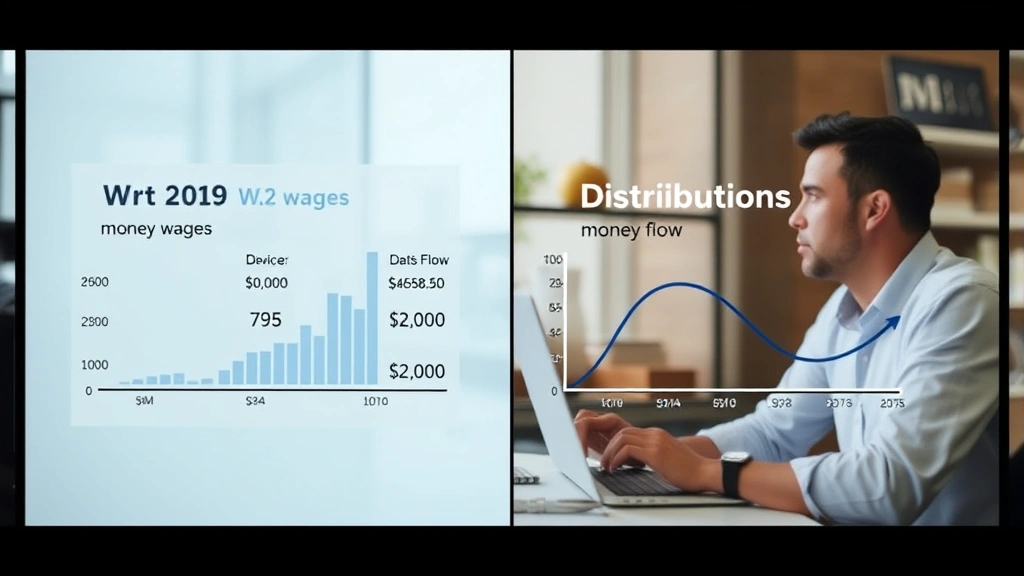
- W-2 wages: Salary you pay yourself (subject to self-employment tax)
- Distributions: Leftover profits (NOT subject to self-employment tax)
Example: You earn $100,000 net profit. You pay yourself a $60,000 W-2 salary and take $40,000 in distributions. Self-employment tax applies only to the $60,000, saving you roughly $6,180 annually (15.3% × $40,000). That’s real money.
But—and this is crucial—the IRS requires your W-2 salary to be “reasonable” for the work you do. You can’t pay yourself $1,000 and take $99,000 in distributions. The agency actively audits S-corps that underpay owners, so understanding the reasonable salary rule is essential.
The Reasonable Salary Rule
The IRS defines “reasonable compensation” as the amount a similar business would pay for the same services. A plumber running a solo operation can’t claim a $10,000 annual salary; a software developer with $500,000 in revenue can’t take $15,000 and claim the rest as distributions.
How do you know what’s reasonable? Consider:
- Your industry’s average salaries (Bureau of Labor Statistics data helps)
- Your role and responsibilities
- Your business’s revenue and profitability
- Hours worked and complexity of duties
The IRS looks at comparable wages. If you’re a marketing consultant earning $200,000 annually, paying yourself $40,000 while taking $160,000 in distributions would raise red flags. A reasonable split might be $120,000 salary and $80,000 distributions.
Auditors use factors like industry benchmarks, your experience level, and comparable positions to challenge unreasonably low salaries. If they win, they’ll reclassify distributions as wages, add back self-employment taxes, and impose penalties. It’s not worth the risk.
Filing Deadlines and Forms
S-corp taxation requires specific forms and timelines. Missing deadlines can cost you significantly.
Form 2553 (S-Corp Election): File this to elect S-corp status. For the election to be effective for the current tax year, you must file it by March 15 of the following year (or within 2 months and 15 days of starting your business). Late elections are possible but complicated.
Form 1120-S (S-Corp Tax Return): File this annual return by March 15 (for calendar-year businesses). This form reports all business income, deductions, and distributions.
Schedule K-1 (Shareholder’s Share): The S-corp provides you with a K-1 showing your income allocation. You’ll report this on your personal Form 1040.
Form 941 (Quarterly Payroll): Since you must pay yourself W-2 wages, you’ll file quarterly payroll tax returns. This is non-negotiable—even if you’re the only employee.
Missing these deadlines triggers penalties. The S-corp return penalty is $205 per day (as of 2024), up to $102,500 per year. Payroll filing penalties are similarly steep.
State Franchise Tax Considerations
Some states impose franchise taxes on S-corporations, which can eat into your federal self-employment tax savings. A few states don’t recognize S-corp elections at all.
For example, California charges an $800 annual franchise tax on all corporations, including S-corps. If you’re operating in California, you’ll owe this fee regardless of profitability. Some states base franchise taxes on revenue or net income, which can be substantial for growing businesses.
Before electing S-corp status, research your state’s requirements. In some cases, state taxes eliminate the federal self-employment tax savings entirely. This is especially true if you operate in multiple states.
States like Nevada, Wyoming, and South Dakota have no state income tax, making S-corp elections more attractive. But if you’re in a high-tax state, run the numbers carefully.

Quarterly Estimated Taxes
As an S-corp owner, you’ll owe quarterly estimated taxes on your share of profits. These payments cover both income tax and self-employment tax on your W-2 wages.
Here’s the process:
- Estimate your annual profit and tax liability
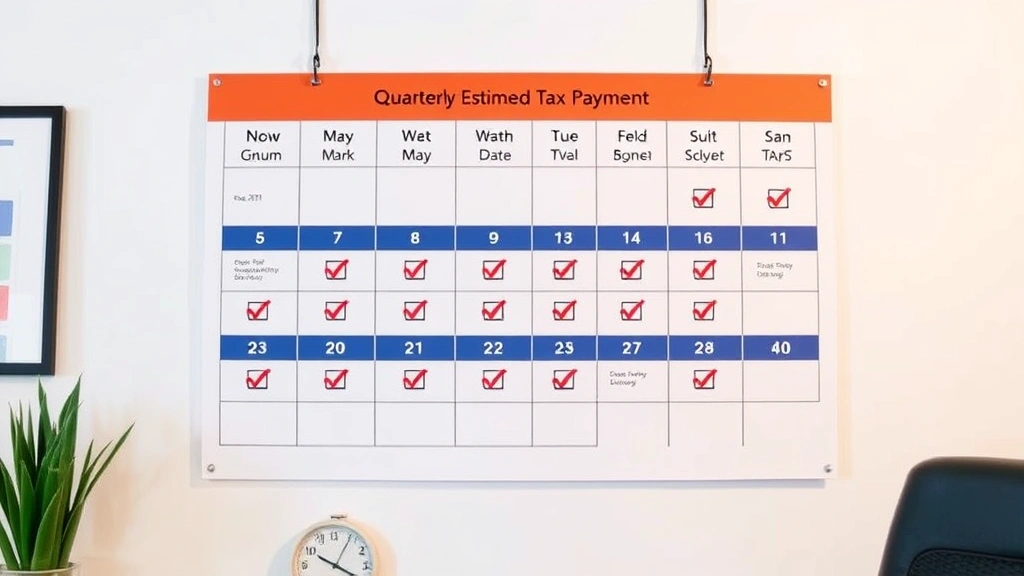
- Divide by four and pay each quarter (April 15, June 15, September 15, January 15)
- Use Form 1040-ES to calculate payments
- Pay via IRS Direct Pay, EFTPS, or credit card
Underpaying estimated taxes results in penalties and interest. The IRS calculates these based on the federal short-term interest rate plus 3%. If you owe $10,000 and miss a quarter, you could owe $300+ in penalties and interest.
Many S-corp owners also need to pay state estimated taxes if they operate in income-tax states. Coordinate federal and state payments to avoid surprises.
Common S-Corp Mistakes
We’ve helped countless business owners navigate S-corp taxation. Here are the mistakes we see repeatedly:
Underpaying yourself: Taking a $20,000 salary on a $200,000 business is asking for an audit. The IRS has algorithms that flag unreasonable compensation. Pay yourself what you’d earn elsewhere.
Forgetting payroll: You must run payroll and file quarterly 941 forms, even if you’re the only employee. Some owners skip this, thinking it’s optional for owner-only businesses. It’s not. The IRS expects W-2s.
Missing estimated tax deadlines: Quarterly estimated taxes aren’t optional. Missing even one quarter triggers penalties. Set calendar reminders or use accounting software.
Mixing personal and business expenses: S-corps require cleaner accounting than sole proprietorships. Deducting personal expenses as business deductions is a red flag during audits.
Failing to file the S-corp return: Some owners assume their personal return is enough. It’s not. Form 1120-S must be filed annually, regardless of profit.
Not maintaining corporate formalities: While S-corps are more flexible than C-corps, you still need to maintain basic records: meeting minutes, shareholder agreements, and separate bank accounts.
When to Elect S-Corp Status
S-corp elections make sense for some business owners but not others. Here’s when you should seriously consider it:
You earn $60,000+ in net profit: Below this threshold, the self-employment tax savings are modest compared to compliance costs. Above it, the savings become meaningful.
You’re in a low-tax state: If your state has no income tax or low franchise taxes, S-corp benefits are greater. In high-tax states, calculate carefully.
Your income is stable: S-corps work best when you can predict income and set a reasonable salary. Highly variable income makes salary setting difficult.
You have time for compliance: S-corps require quarterly payroll, annual returns, and careful record-keeping. If you’re already overwhelmed, an S-corp adds complexity.

You’re not taking major losses: S-corp losses pass through to your personal return, but the tax benefit is limited by “passive activity” rules. Sole proprietors can sometimes use losses more freely.
Conversely, skip the S-corp election if you’re earning under $60,000, operate in a high-tax state, or lack the time for compliance. An LLC taxed as a sole proprietorship might be simpler and equally tax-efficient.
Frequently Asked Questions
Can I elect S-corp status retroactively?
Yes, but it’s complicated. If you miss the March 15 deadline, you can file Form 2553 late with a statement explaining why. The IRS may grant relief if you have “reasonable cause.” However, the election might not be effective for the current year. Consult a tax professional before attempting a late election.
Do I need a business license to form an S-corp?
You need to form a legal entity (LLC or corporation) under state law first, then elect S-corp taxation. The S-corp election itself doesn’t require a separate license—it’s just a tax filing. However, your state’s business formation process might require licenses or registrations.
What if I have multiple shareholders?
S-corps can have up to 100 shareholders, but they must be U.S. citizens or residents and individuals (not other corporations). Each shareholder receives a K-1 showing their income share. Salaries still apply—you can’t avoid W-2 wages by having multiple owners. Tax topic 152 covers more complex entity questions.
Can I switch back to a sole proprietorship?
Yes. You can revoke the S-corp election by filing Form 2553 with a statement requesting revocation. However, there’s a five-year waiting period before you can re-elect. Plan carefully before switching.
How does an S-corp affect retirement contributions?
S-corp owners can contribute to SEP-IRAs or Solo 401(k)s based on W-2 wages and net profit. The calculation is slightly different than for sole proprietors, so work with an accountant to maximize contributions. Tax-sheltered annuities offer additional options for some business owners.
What happens if the IRS challenges my salary?
If audited and the IRS determines your salary is unreasonably low, they’ll reclassify distributions as wages. You’ll owe back self-employment taxes, plus interest and penalties (typically 20% accuracy-related penalties). The total bill can be substantial. This is why reasonable salary documentation is critical.
The Bottom Line on S-Corp Taxes
S-corp taxation for dummies boils down to this: It’s a tax election that can save you thousands in self-employment taxes, but only if you earn enough, operate in a favorable tax state, and maintain strict compliance. The self-employment tax savings are real and meaningful for profitable businesses, but they come with quarterly payroll filings, annual returns, and the reasonable salary requirement.
Before electing S-corp status, run the numbers with a CPA. Calculate your potential self-employment tax savings, factor in state taxes and compliance costs, and ensure you have the bandwidth for quarterly filings and payroll. For many small business owners earning $60,000 to $200,000 annually, an S-corp is worth it. For others, the complexity outweighs the benefits.
The key is making an informed decision based on your specific situation, not just following what other business owners do. Work with a tax professional, file your forms on time, and pay yourself a reasonable salary. Do that, and you’ll reap the real tax benefits of S-corp status without the audit risk.


