

Learning how do I apply for an estate tax identification number is one of the first critical steps you’ll take when managing an estate or trust. Whether you’re an executor, trustee, or estate administrator, obtaining an EIN (Employer Identification Number) for the estate is essential for filing tax returns, opening bank accounts, and managing the deceased’s assets legally and efficiently.
Table of Contents
What Is an Estate Tax ID?
An estate tax identification number, formally called an EIN or Federal Employer Identification Number, is a nine-digit code assigned by the IRS to identify your estate for tax purposes. Think of it as a Social Security number for the estate itself—it’s unique, permanent, and required whenever you interact with federal tax authorities.
The IRS uses this number to track income, expenses, and tax filings related to the estate. It’s different from a personal tax ID because the estate is treated as a separate legal entity once someone passes away. Even if the estate doesn’t have employees, it still needs this number if it generates income or meets certain criteria set by the IRS.
Why You Need an EIN for Estates
You might be wondering: “Do I really need to go through this process?” The short answer is yes, in most cases. Here’s why:
Legal Requirements: The IRS requires an EIN if the estate has a fiduciary responsibility to file Form 1041 (U.S. Income Tax Return for Estates and Trusts). This applies to most estates with income above certain thresholds.
Bank Account Management: Most banks won’t let you open an estate bank account without an EIN. This is crucial because you need a separate account to manage the deceased’s assets, pay bills, and distribute inheritances properly.
Creditor Dealings: When you contact creditors, insurance companies, or other financial institutions on behalf of the estate, they’ll ask for the EIN to verify your authority.
Liability Protection: Using the estate’s EIN instead of your personal Social Security number protects your personal tax situation and creates a clear legal separation between you and the estate’s finances.
If you’re dealing with Pennsylvania estates specifically, you may also want to review information about Pennsylvania inheritance tax requirements, which operate alongside federal estate tax rules.
Eligibility Requirements
Not every estate needs an EIN immediately, but most do. Let’s clarify when you’re required to get one:
You Must Get an EIN if: The estate has gross income of $600 or more during the tax year; the estate will file Form 1041; the estate has employees; the estate operates a business; the estate is a trust with taxable income; or the estate will hold assets in a bank account under the estate’s name.
You May Not Need an EIN if: The estate is very small with minimal income and will be closed quickly; all assets pass directly to a surviving spouse through a transfer-on-death arrangement; the estate qualifies as a “small estate” under state law and uses a simplified probate process.
Even if you’re unsure, it’s safer to apply. The application is free and straightforward, and having an EIN won’t hurt anything.
Step-by-Step Application Process
Here’s the roadmap for getting your estate’s tax ID:
Step 1: Gather Required Information Before you start, collect the following: the deceased’s Social Security number; the date of death; your name, address, and Social Security number (as the executor/administrator); the estate’s mailing address; and information about the estate’s income sources.
Step 2: Determine Your Role Confirm whether you’re the executor (named in the will), administrator (appointed by the court), or trustee (managing a trust). This matters because it affects how you’ll describe yourself on the application.
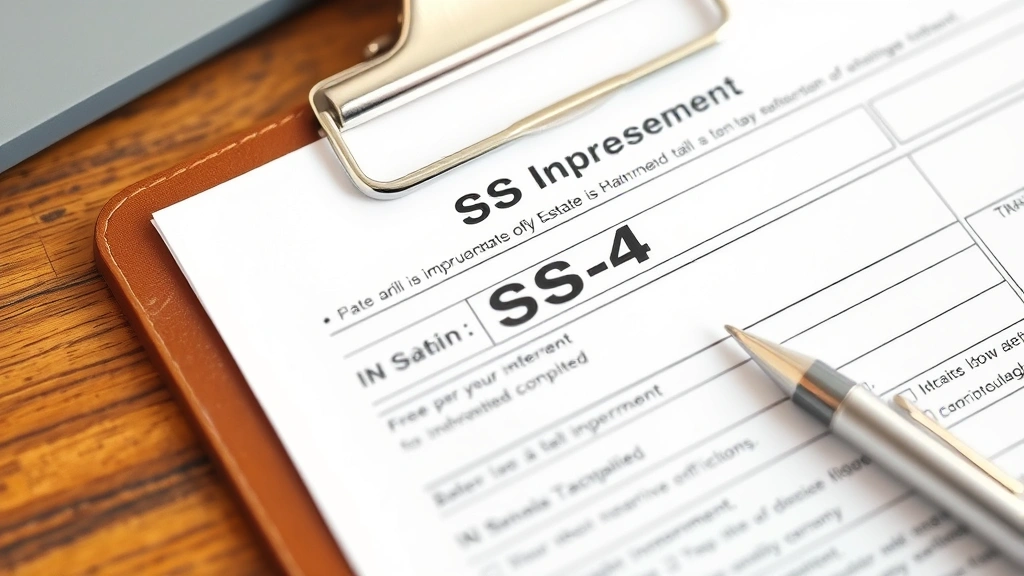
Step 3: Complete Form SS-4 This is the official Application for an Employer Identification Number. We’ll dive deeper into this form below.
Step 4: Submit Your Application You can apply online, by phone, by fax, or by mail. Online is fastest and most reliable.
Step 5: Receive Your EIN If you apply online or by phone, you’ll get your number immediately. By mail or fax, expect 4 weeks.
Completing Form SS-4
Form SS-4 is the heart of the application process. Let’s break down the key sections:
Legal Name of Entity: Enter the estate’s name. This is typically “Estate of [Deceased Person’s Full Name].” Some executors use variations like “[Deceased Name] Estate” or “Estate of [Deceased Name], Deceased.” Check your state’s probate rules for the preferred format.
Responsible Party Information: This is where you (the executor, administrator, or trustee) provide your details. You’ll need your Social Security number, name, title, and address.
Type of Entity: Select “Estate” from the dropdown menu. This is crucial—don’t select “Trust” or any other option unless you’re actually applying for a trust EIN.

Date Business Started: For an estate, this is the date of death. This tells the IRS when the estate came into existence.
Principal Business Activity: Describe what the estate does. “Estate administration” or “Trust estate” works fine. If the estate is running a business, describe that business.
Reason for Applying: Check the box for “Created a trust” or “Other” and specify “Estate administration.”
First Accounting Period: This refers to the estate’s tax year. Most estates use a calendar year (January to December), but some use a fiscal year. Discuss this with your tax professional or attorney.
Application Methods Available
The IRS gives you multiple ways to apply, each with different timelines and convenience levels:
Online Application (IRS.gov): This is the fastest and easiest method. Visit the IRS website, use the online EIN application tool, and you’ll receive your number immediately. You’ll need to create an account or log in with an existing one. After approval, you can print your confirmation letter right away.
Phone Application: Call the IRS Business & Specialty Tax Line at 1-800-829-4933. You’ll speak with a representative who guides you through the process. You get your EIN on the spot. Hours are Monday-Friday, 7 a.m. to 7 p.m. your local time.
Fax Application: Complete Form SS-4 and fax it to the IRS. Processing typically takes 4 business days. You’ll receive your EIN and confirmation by fax.
Mail Application: Send completed Form SS-4 to the IRS by mail. This is the slowest option—expect 4 weeks. Use this only if you can’t access other methods.
For most people, the online application is ideal. It’s convenient, secure, and instant. If you’re uncomfortable with online systems, the phone option is nearly as quick and lets you speak with someone directly.
Timeline & What to Expect
Understanding the timeline helps you plan accordingly:

Online or Phone: You’ll have your EIN within minutes to hours. You can use it immediately for opening bank accounts and filing documents.
Fax: Expect your EIN within 4 business days. The IRS will fax you a confirmation letter with your number.
Mail: Allow 4 weeks from the date the IRS receives your application. This is why mail is the least recommended option unless absolutely necessary.
After Receiving Your EIN: The IRS will mail you an official EIN confirmation letter (Form SS-4 with your assigned number) within 2-3 weeks, even if you applied online or by phone. Keep this letter in your estate files. You can also print it immediately from the online application or request a copy if needed.
Pro tip: If you’re dealing with a commercial tax officer or other professional, they can often assist with the application process and help ensure everything is completed correctly.
Common Mistakes to Avoid
Even though the process is straightforward, people make avoidable errors:
Using the Wrong Form: Some folks submit Form SS-5 or other IRS forms by mistake. Make sure you’re using Form SS-4 specifically for an estate EIN.
Incorrect Entity Type: Selecting “Trust” instead of “Estate” or vice versa causes delays and rejection. Double-check this field before submitting.
Missing Responsible Party Information: The IRS needs to know who’s managing the estate. Provide complete, accurate information for the executor or administrator.
Vague Business Activity Description: Don’t just write “other.” Specify “Estate administration” or describe any business the estate operates.
Wrong Date of Death: The date of death is the estate’s start date. Getting this wrong throws off your tax year and filing deadlines.

Not Keeping Documentation: Save your EIN confirmation letter, application, and all related documents. You’ll need them for years.
Applying Without Authorization: Only the executor, administrator, or trustee should apply. If you’re not the person legally responsible for the estate, you don’t have authority to request an EIN.
After Your EIN Is Approved
Congratulations—you have your estate’s EIN. Now what?
Open an Estate Bank Account: Visit a bank with your EIN confirmation letter, your ID, and your appointment as executor or administrator (court documents or will). Open a checking account in the estate’s name. This keeps the estate’s finances separate from your personal finances.
Update Financial Institutions: Provide the EIN to the deceased’s banks, investment firms, insurance companies, and creditors. They’ll use this number for all estate-related communications.
File Required Tax Returns: If the estate has income, you’ll file Form 1041 (U.S. Income Tax Return for Estates and Trusts) using the EIN. The deadline is typically April 15 following the tax year, though you can request an extension.
Report to Beneficiaries: Send K-1 forms (Schedules K-1) to each beneficiary showing their share of the estate’s income. They’ll use this information on their personal tax returns.
Keep Records: Maintain detailed records of all income, expenses, distributions, and tax filings. The IRS may request documentation years later, and you need to be able to prove everything.
If you have questions about tax-exempt status for certain estate income or need guidance on specific state requirements, consult with a tax professional or estate attorney.
Frequently Asked Questions
Can I use the deceased’s Social Security number instead of getting an EIN?
No. Once someone passes away, their Social Security number can’t be used for business or tax purposes. The IRS requires a separate EIN for the estate. This protects the deceased’s identity and creates a clear legal separation between the person and the estate entity.
How long is an estate EIN valid?
The EIN is permanent. It remains valid as long as the estate exists, even if it takes years to settle. Once the estate is fully distributed and closed, you stop using the EIN, but you don’t need to “cancel” it. The IRS simply stops seeing activity under that number.

Do I need an EIN if the estate is very small?
If the estate has less than $600 in gross income and won’t file Form 1041, you technically don’t need an EIN. However, most banks require one to open an estate account. It’s easier to get one upfront than deal with complications later.
What if I’m a trustee, not an executor?
The process is similar, but you’re applying for a trust EIN rather than an estate EIN. On Form SS-4, you’d select “Trust” as the entity type and provide the trust’s creation date instead of the date of death. The application process is otherwise identical.
Can I apply for an EIN on behalf of someone else?
Only the executor, administrator, or trustee—the person legally responsible for the estate—should apply. If you’re helping them, you can guide them through the process, but they should submit the application or authorize you in writing to do so.
What if I make a mistake on the application?
If you catch the error before submitting, simply correct it and resubmit. If the IRS assigns an EIN based on incorrect information, contact them immediately. You can request a new EIN if the error is significant (like wrong entity type). Keep all documentation of the correction.
Do I need to file taxes immediately after getting an EIN?
Not necessarily. You only file Form 1041 if the estate has taxable income. If the estate has no income or minimal income below the filing threshold, you may not need to file. However, consult with a tax professional to be certain.
Can I check my EIN status online?
Yes. If you applied online, you can check your status through the IRS website using your confirmation number. The online system shows whether your EIN has been assigned and provides your number immediately upon approval.
Final Thoughts
Applying for an estate tax identification number is a manageable task that protects both the estate and you personally. The process takes just minutes if you apply online, and having the EIN in place makes managing the estate’s finances significantly easier. You’ll be able to open bank accounts, communicate with creditors and financial institutions, and file required tax returns without complications.
The key is gathering your information beforehand, selecting the right application method (online is best), and keeping your confirmation letter safe. If you’re unsure about any part of the process—especially regarding tax filing obligations or state-specific requirements—don’t hesitate to consult with an estate attorney or tax professional. The cost of professional guidance is minimal compared to the headaches of getting things wrong.
Remember, you’re not alone in this process. Thousands of executors and administrators apply for estate EINs every year, and the IRS has streamlined the system to make it straightforward. Take it one step at a time, stay organized, and you’ll have your estate’s tax ID in hand quickly.
For more information about specific state requirements, such as franchise tax considerations or details about tax obligations and penalties, reach out to your state’s tax authority or a qualified tax professional.


