

The Augusta rule taxes represent one of the most underutilized tax strategies available to homeowners and real estate investors today. Named after a 1980 tax court case involving a home in Augusta, Georgia, this rule allows you to rent out your primary residence for up to 14 days per year while treating the rental income under special tax treatment. Understanding how the Augusta rule works can help you generate income from your home without converting it to a rental property, which means you keep valuable tax deductions while potentially pocketing rental revenue tax-free.
Table of Contents
What Is the Augusta Rule?
The Augusta rule is a tax provision that lets homeowners rent out their primary residence for a limited number of days without losing their primary residence tax treatment. The IRS allows you to rent your home for up to 14 days annually (or fewer than 15 days) while maintaining your eligibility for the home mortgage interest deduction, property tax deduction, and the capital gains exclusion when you eventually sell.
This rule gets its name from a 1979 Tax Court case, Bolend v. Commissioner, where a homeowner rented out her Augusta, Georgia home during the Masters Golf Tournament. The court ruled that short-term rentals of a primary residence don’t automatically convert the property into a rental property for tax purposes. Since then, tax professionals have used this principle to help clients generate rental income without triggering rental property rules.
The beauty of this strategy lies in its simplicity: you’re not running a rental business, you’re simply renting your home for a few days. That distinction matters enormously when it comes to taxes.
How the Augusta Rule Works
Here’s the practical mechanics: You own a home that qualifies as your primary residence. During the year, you rent it out for 14 days or fewer. The rental income you receive is typically not subject to income tax, and you don’t need to report it on your tax return in most situations. Meanwhile, you continue to deduct mortgage interest, property taxes, and other homeowner expenses as if you weren’t renting at all.
The IRS distinguishes between personal use days and rental days. Personal use includes any day you live in the home, plus days when family members stay there, plus days when you rent it at below fair market value. Days you rent it at fair market value to unrelated parties count as rental days. The 14-day threshold is the key: stay at or below it, and you avoid rental property classification.
When you file your tax return, you generally don’t report the rental income if you meet the Augusta rule criteria. This is different from traditional rental properties, where you must report all rental income and can deduct rental expenses. With the Augusta rule, you get the best of both worlds: income without reporting it, plus homeowner deductions.
Rental Income Tax Treatment
The tax treatment of Augusta rule rental income is where this strategy becomes genuinely powerful. Unlike standard rental properties, income from renting your primary residence for 14 days or fewer isn’t necessarily taxable. The IRS’s position is that you’re not in the business of renting property; you’re simply renting your home occasionally.
Here’s the critical distinction: If your home is rented for 14 days or fewer AND you use it as a personal residence for more than 14 days (or more than 10% of the days it’s rented, whichever is greater), then the property is classified as a personal residence. In this case, you don’t report the rental income, and you can’t deduct rental expenses.
This creates a tax advantage that’s hard to beat. A homeowner in a high-demand area—near a golf tournament, a major sporting event, a university town during graduation, or a vacation destination—can generate thousands in rental income without triggering self-employment tax, income tax, or the need to file Schedule E (Rental Income and Loss).

However, there’s a catch: you must track everything carefully. The IRS doesn’t make it easy to claim you received no taxable income. You’ll want documentation showing the fair market rental rate, the actual days rented, and your personal use days. When audited (and the IRS does scrutinize these claims), you need to prove your numbers.
Key Deduction Advantages
The primary advantage of the Augusta rule is maintaining homeowner deductions while generating rental income. Let’s break down what you keep:
Mortgage Interest Deduction: You continue deducting mortgage interest (up to $750,000 of mortgage debt for those filing jointly, or $375,000 if married filing separately). This deduction applies only to primary residences and second homes; rental properties have different rules.
Property Tax Deduction: State and local property taxes remain deductible up to $10,000 annually (the SALT cap). Again, this is a homeowner benefit you’d lose if your property became classified as a rental.
Capital Gains Exclusion: When you sell your home, you can exclude up to $250,000 in gains if you’re single, or $500,000 if married filing jointly. This applies only if the home was your primary residence for at least two of the five years before the sale. Using the Augusta rule doesn’t jeopardize this exclusion.
No Depreciation Recapture: Because the property remains classified as a personal residence, you’re not taking depreciation deductions. This means when you sell, you won’t owe depreciation recapture tax—a 25% tax on the depreciation you claimed.
These deductions can be worth thousands annually. For a homeowner with a $400,000 mortgage at 6% interest, that’s roughly $24,000 in mortgage interest deductions per year. Combined with property taxes, you’re looking at potentially $30,000+ in annual deductions you’d lose if the property became a rental.
Eligibility Requirements Explained
Not every homeowner can use the Augusta rule. The IRS has specific requirements, and understanding them is essential before you start advertising your home on Airbnb.
Primary Residence Status: The home must be your primary residence. The IRS defines this as the place where you live most of the time. You can’t use the Augusta rule on a vacation home or investment property you occasionally visit.

The 14-Day Threshold: You can rent the property for no more than 14 days per calendar year. Some tax professionals argue for 14 consecutive days or fewer days in a row, but the safest interpretation is 14 total days annually.
Fair Market Rent: You must charge fair market rent for the days you rent. Fair market rent is what an unrelated party would pay for similar accommodations in the same location. If you charge $500 per night when comparable homes rent for $2,000 per night, you’re not charging fair market rent, and the IRS may challenge your claim.
Personal Use Calculation: Your personal use days must exceed the rental days significantly. If you rent for 14 days and use the home personally for 14 days, you’re at the threshold. The safer approach is to rent for fewer days than you use it personally.
No Business Activity: You shouldn’t advertise extensively or operate the rental like a business. A few rentals through word-of-mouth or occasional listing is fine. Running it like a hotel is not.
Common Mistakes to Avoid
Even well-intentioned homeowners make errors with the Augusta rule. Here are the pitfalls that trigger IRS scrutiny:
Exceeding 14 Days: The most obvious mistake is renting for more than 14 days. Once you cross that threshold, the entire property becomes a rental property for tax purposes, and you must report all income and can deduct all expenses. One extra day can cost you thousands in deductions.
Undercharging Rent: If you rent your home for $500 per night when similar homes rent for $2,500, the IRS will question whether you’re actually charging fair market rent. They may impute income at the fair market rate, which defeats the purpose of the strategy.
Misclassifying Personal Use Days: Days when family members stay at the property count as personal use days. If your adult child lives there part-time, those days count. If your parents visit for a month, that’s 30 personal use days. Miscounting can flip your property’s classification.
Poor Documentation: The IRS wants to see evidence: rental agreements, payment records, fair market rent comparisons, a calendar showing rental and personal use days. Without documentation, you’re vulnerable to audit challenges. Use a tax strategist to help organize your records.

Mixing Business and Personal Use: If you maintain a rental listing year-round, advertise heavily, or treat the property like a business, the IRS may argue you’re operating a rental business regardless of the 14-day limit. Keep your approach casual and occasional.
Real-World Examples
Example 1: The Golf Tournament Home
Sarah owns a home near Augusta National Golf Club in Georgia. During Masters week (four days), she rents her home for $5,000 per night—fair market rent for that location during that event. She also rents it for 10 additional days during the year at $1,500 per night. Total rental days: 14. Total rental income: $35,000. Sarah uses the home personally for 200 days. Because she stayed within the 14-day limit and charged fair market rent, the $35,000 is not taxable income. She continues deducting her $18,000 annual mortgage interest and $4,000 in property taxes. Tax benefit: $22,000 in deductions plus $35,000 in non-taxable income.
Example 2: The College Town Home
James owns a home in a college town. He rents it for graduation weekend (3 days) at $800 per night and for homecoming weekend (3 days) at $700 per night. That’s 6 rental days at roughly $4,500 total income. He uses the home personally for 300 days. The income is not taxable, and he keeps his homeowner deductions. If James had classified this as a rental property, he’d owe income tax on the $4,500 plus self-employment tax, and he’d lose his mortgage interest and property tax deductions.
Example 3: The Vacation Destination Home
Maria owns a beachfront home. She rents it for 14 days during summer at $2,000 per night, generating $28,000. She uses it personally for 100 days. The $28,000 is not taxable. However, Maria makes a critical mistake: she continues to list the property year-round and accepts a 15th rental day in December. Now the property is classified as a rental. She must report all $28,000+ in income, can deduct rental expenses, and loses her homeowner deductions. The one extra day cost her thousands.
Strategic Planning Tips
Calculate Your Fair Market Rent: Before renting, research comparable properties in your area. Use Airbnb, VRBO, and local property management companies to determine the going rate. Document this research. If audited, you’ll need to show you charged fair market rent.
Use a Rental Agreement: Create a written rental agreement for each rental period, even if you’re renting to a friend. The agreement should specify the rental dates, the nightly rate, and payment terms. This documentation protects you in an audit.

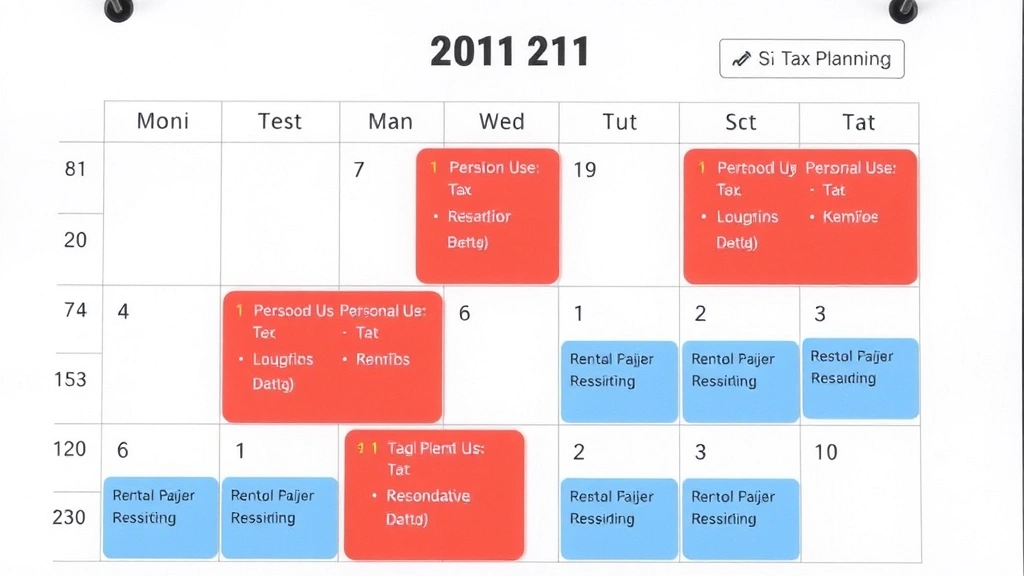
Maintain a Rental Calendar: Keep a detailed calendar showing which days were rental days and which were personal use days. Include family visits, maintenance days, and any other personal use. This is your primary defense in an IRS audit.
Track All Expenses Separately: Don’t deduct rental-related expenses. If you repaint the guest bedroom for rentals, don’t deduct it. Keep the property maintained as if you never rented it. This reinforces that you’re not operating a rental business.
Consider Your State’s Rules: Some states have their own rules about short-term rentals. Check local ordinances before renting. Some municipalities require licenses or limit short-term rentals. Violating local rules can complicate your tax situation.
Consult a Tax Professional: Before implementing the Augusta rule, discuss it with a tax strategist or CPA. They can review your specific situation, ensure you meet all requirements, and help you document everything properly. The cost of professional advice is minimal compared to the tax savings and audit risk.
Frequently Asked Questions
Can I use the Augusta rule on a second home?
No. The Augusta rule applies only to primary residences. A second home, vacation property, or investment property doesn’t qualify. The home must be where you live most of the time.
What counts as a personal use day?
Any day you live in the home counts as a personal use day. Days when family members stay there also count. Days when you rent the property below fair market value count as personal use days. Days when you’re maintaining the property or preparing it for rental typically don’t count, but this is debated among tax professionals.
Do I need to report the rental income?
Generally, no. If you meet all Augusta rule requirements, you don’t report the rental income on your tax return. However, if the IRS audits you and determines you don’t qualify, you’ll owe back taxes plus penalties and interest. This is why documentation is critical.
Can I deduct rental expenses?
No. If you’re using the Augusta rule, you can’t deduct rental expenses. You continue deducting homeowner expenses (mortgage interest, property taxes) but not rental-specific costs (cleaning, repairs, depreciation). If you deduct rental expenses, you’re essentially admitting the property is a rental, which disqualifies you from the Augusta rule.
What’s the difference between the Augusta rule and a rental property?
With the Augusta rule, you don’t report income and can’t deduct rental expenses, but you keep homeowner deductions. With a rental property, you report all income, deduct all expenses, but lose homeowner deductions and face depreciation recapture tax when you sell. The Augusta rule is designed for occasional rentals; rental properties are for business-like operations.
Can I use the Augusta rule if I have a mortgage?
Yes. The Augusta rule works regardless of whether you have a mortgage or own the home outright. The key benefit is preserving the mortgage interest deduction, which is why the Augusta rule is particularly valuable for mortgaged homes.
What if I rent for more than 14 days?
If you rent for more than 14 days, the Augusta rule doesn’t apply. The property becomes a rental property. You must report all rental income and can deduct all rental expenses. You also lose homeowner deductions and face depreciation recapture tax when you sell.
Does the Augusta rule apply to condos or townhomes?
Yes. The rule applies to any residential property that qualifies as your primary residence, whether it’s a single-family home, condo, townhome, or even a houseboat.
Can I use the Augusta rule with Airbnb or VRBO?
Yes, but be careful. These platforms report rental income to the IRS. If you list your property on these platforms and claim non-taxable income, the IRS may question whether you’re truly limiting rentals to 14 days. Use these platforms cautiously and maintain detailed records.
How does the Augusta rule affect my home’s basis for capital gains?
The Augusta rule doesn’t affect your home’s cost basis. When you sell, you still calculate your gain the same way (sale price minus cost basis). You still qualify for the $250,000/$500,000 capital gains exclusion. The Augusta rule preserves this benefit by keeping the property classified as a primary residence.
Conclusion
The Augusta rule taxes strategy is a legitimate, IRS-sanctioned way to generate rental income from your primary residence without triggering rental property classification and losing valuable homeowner deductions. By renting your home for 14 days or fewer at fair market rent, you can keep mortgage interest and property tax deductions while keeping rental income off your tax return.
However, this strategy requires careful execution. You must charge fair market rent, stay within the 14-day limit, maintain detailed documentation, and avoid operating like a rental business. One mistake—renting for 15 days, undercharging rent, or misclassifying personal use days—can disqualify you and cost thousands in lost deductions.
Before implementing the Augusta rule, consult with a tax strategist or CPA. They can review your specific situation, help you calculate fair market rent, and ensure you’re documenting everything properly. They can also help you understand how the Augusta rule interacts with other tax issues, like where your AGI appears on your tax return and whether the rental income affects your adjusted gross income in any way.
If you own a home in a desirable location—near a golf tournament, a major sporting event, a university, or a vacation destination—the Augusta rule could put thousands of dollars in your pocket annually while preserving your homeowner tax benefits. It’s one of the best-kept secrets in tax strategy, and it’s completely legal when done correctly.


