

An auto loan tax deduction isn’t something most people think about when they’re signing paperwork at the dealership, but understanding the rules could save you real money come tax time. The truth is, for most personal vehicle owners, you can’t deduct the interest you pay on a car loan—but there are important exceptions and workarounds that could apply to your situation.
Table of Contents
Personal vs. Business Use
Here’s where most people get confused: if you take out a loan to buy a car for personal commuting, you cannot deduct the interest. The IRS doesn’t allow it. But if you use that same vehicle for business purposes, things change dramatically.
The key distinction is how you use the vehicle. A daily commute to your office doesn’t count as business use—that’s considered personal transportation. However, if you’re self-employed and use your vehicle to visit clients, make deliveries, or conduct business-related travel, you might qualify for deductions. This is where the line gets blurry, and frankly, where a lot of taxpayers get audited.
The IRS considers business use any mileage driven for income-generating activities. If you’re a freelancer, contractor, or small business owner, this could include trips to meet with clients, supply runs, or traveling between job sites. The critical thing is that you’re using the vehicle in connection with your trade or business.
Self-Employed Vehicle Rules
If you’re self-employed, you have two main options for claiming vehicle expenses: the standard mileage deduction or the actual expense method. Let’s talk about how loan interest fits into each approach.
With the standard mileage deduction, you simply multiply your business miles by the IRS rate (currently 67 cents per mile for 2024). This method is simpler and doesn’t allow you to separately deduct loan interest—it’s all bundled into that per-mile rate. You just track your miles and you’re done.
With the actual expense method, you can deduct actual costs including loan interest, insurance, fuel, repairs, and depreciation. This is where your auto loan tax deduction becomes relevant. You’d calculate what percentage of your vehicle use is business-related, then deduct that same percentage of your loan interest. If you drive 60% for business and 40% personal, you deduct 60% of your annual interest payments.
Most taxpayers find the standard mileage method easier unless they have a high-interest loan or expensive vehicle where actual expenses significantly exceed the mileage rate.
Business Use Percentage Matters
This is critical: you must accurately calculate your business use percentage. The IRS doesn’t accept rough estimates. You need actual data.

Start tracking your mileage immediately. Use a mileage log, GPS app, or even a simple spreadsheet. Record the date, destination, business purpose, and miles driven for each trip. At the end of the year, total your business miles and divide by total miles driven.
Here’s a real example: Sarah is a consultant who drives 25,000 miles annually. Of those, 15,000 are for client meetings and business travel. Her business use percentage is 60% (15,000 ÷ 25,000). If her auto loan interest for the year is $3,000, she can deduct $1,800 (60% × $3,000).
But here’s where people mess up: if you claim 90% business use but the IRS audits you and finds you only drove 40% for business, you’re facing penalties, back taxes, and interest. Be conservative and honest with your calculations. The IRS has seen every trick.
Interest Deduction Limits
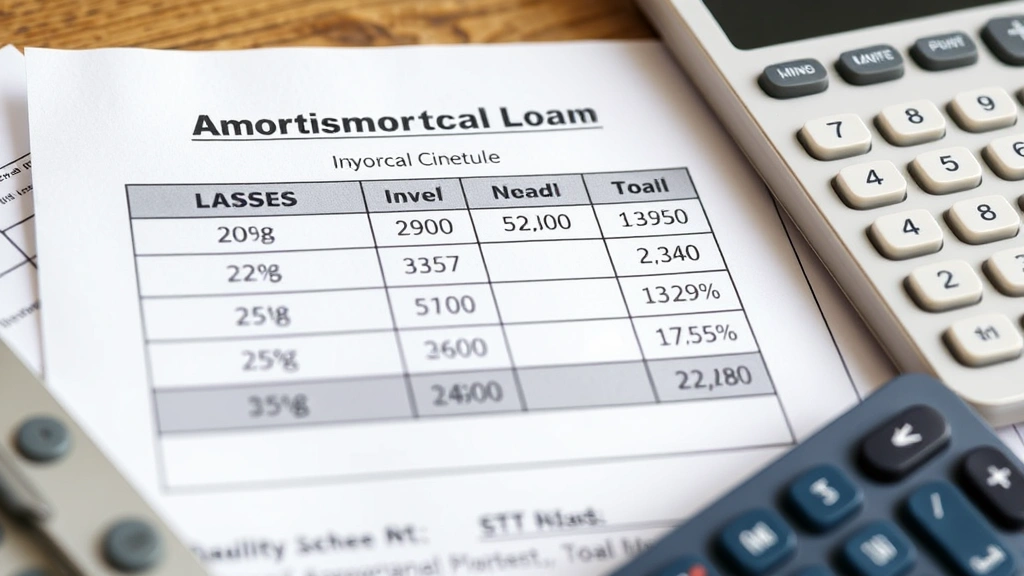
Even if you qualify for an auto loan tax deduction, there are limitations. First, you can only deduct the interest portion of your payment, not the principal. Your lender should provide an amortization schedule showing how much of each payment goes toward interest versus principal.
Second, if you use the actual expense method, the interest deduction is limited to the business-use percentage of the vehicle. You can’t deduct interest on the personal-use portion.
Third, there’s an annual limit on vehicle depreciation deductions for luxury vehicles. If you bought an expensive car, the IRS caps how much depreciation you can claim each year. This indirectly limits your overall deductions.
Finally, if you’re using the vehicle for business, you must be able to prove it’s used in your trade or business. Casual use doesn’t count. A real estate agent who occasionally shows properties probably qualifies. Someone who works in an office and occasionally drives to a meeting might not.
Documentation Requirements
The IRS loves documentation. Without it, you have no deduction. Period.

Maintain these records: your mileage log (date, destination, business purpose, miles), your loan documents showing the interest paid each year, and any receipts for vehicle-related expenses. The IRS requires contemporaneous documentation, which means you should keep records as you go, not reconstruct them months later.
Your lender will send you a Form 1098 or statement showing total interest paid during the tax year. Use this figure as your starting point. If you claimed 60% business use, you’d deduct 60% of that interest amount on your Schedule C (for self-employed) or Schedule 1 (for other business income).
Keep your vehicle registration, insurance documents, and any business contracts or invoices that support your business use claim. If you’re audited, these documents are your defense.
Depreciation vs. Standard Deduction
When using the actual expense method, you can also claim depreciation on your vehicle. This is separate from the loan interest deduction and often provides larger tax benefits.
Depreciation is the annual decline in your vehicle’s value. The IRS allows you to deduct this decline (for the business-use percentage) over several years using methods like MACRS (Modified Accelerated Cost Recovery System).
Here’s the strategic part: depreciation deductions are often larger in the early years of vehicle ownership. Combined with loan interest deductions, this can significantly reduce your taxable income. However, claiming depreciation reduces your vehicle’s cost basis, which affects your tax liability if you later sell it.
Conversely, if you use the standard mileage deduction, you’re already accounting for depreciation in that per-mile rate. You can’t claim depreciation separately. Choose whichever method gives you the larger deduction, but understand the long-term implications.
State Tax Implications
Federal tax rules are one thing, but your state might have different rules. Some states allow vehicle loan interest deductions; others don’t.
For example, if you’re looking at sales tax on a car in VA, you’re dealing with Virginia’s tax system, which has its own rules about vehicle deductions. Similarly, Missouri auto sales tax and Illinois state sales tax on cars are different considerations entirely.
Some states don’t have income tax, which simplifies things. Others allow deductions that mirror federal rules. A few states are more generous or restrictive. Check your state’s tax authority website or consult a tax professional familiar with your state’s rules.
This is especially important if you’re self-employed and operating across multiple states. You might owe taxes in states where you don’t live but conduct business, and those states might have different vehicle deduction rules.
Common Deduction Mistakes
Let me share the mistakes I see most often:
Mistake #1: Claiming personal commute as business use. Your drive to work doesn’t count. Period. The IRS is crystal clear on this. Only trips made for business purposes qualify.
Mistake #2: Overestimating business use percentage. If you claim 80% business use but can’t document it, the IRS will disallow the entire deduction or reduce it significantly. Be conservative.
Mistake #3: Forgetting to track mileage. You can’t go back and estimate. The IRS requires contemporaneous records. Start a mileage log now, even if you’ve already started the year.
Mistake #4: Mixing personal and business use without clear separation. If your family uses the vehicle for personal errands, you must account for that in your business-use percentage. Don’t pretend the car is 100% business-use when it’s not.

Mistake #5: Deducting interest without qualifying for business use. This is the biggest one. Most people can’t deduct auto loan interest because they don’t use the vehicle for business. Don’t guess—know your status.
Mistake #6: Not understanding the difference between interest and principal. You can only deduct interest, not the principal portion of your loan payments. Know the difference.
Frequently Asked Questions
Can I deduct auto loan interest if I use my car for work?
Only if you’re self-employed or use the vehicle in a business you own. If you’re an employee driving to your job, you cannot deduct the interest. If you’re self-employed and use the vehicle for client meetings or business travel, you can deduct the business-use percentage of your interest payments.
What’s the difference between the standard mileage deduction and actual expenses?
The standard mileage deduction is a per-mile rate set by the IRS that covers all vehicle costs, including depreciation and interest. You don’t separately deduct loan interest. The actual expense method lets you deduct specific costs, including loan interest, but requires detailed record-keeping. Choose whichever provides the larger deduction.
Do I need a business license to deduct vehicle expenses?
Not necessarily. You need to be engaged in a business or trade for profit. This includes self-employed individuals, freelancers, and contractors. You don’t need a formal business license in most cases, but you do need to report the income and legitimately conduct business activities.
What records do I need to claim an auto loan tax deduction?
You need a mileage log showing date, destination, business purpose, and miles driven for each trip. You also need your loan documents or lender’s statement showing annual interest paid, and any supporting documents that prove your business use (contracts, invoices, client communications).
Can I deduct the full loan interest or just the business-use portion?
Only the business-use portion. If you use your vehicle 60% for business and 40% personally, you deduct 60% of your annual interest payments. The IRS requires you to calculate this percentage accurately.
What happens if I overstate my business use percentage?
The IRS can disallow the entire deduction, assess back taxes and penalties, and potentially charge interest. They may also flag your return for audit in future years. It’s better to be conservative and claim only the business use you can clearly document.

Does the standard mileage deduction include loan interest?
Yes. The standard mileage rate is designed to cover all vehicle costs, including depreciation, fuel, insurance, and loan interest. You don’t separately deduct interest when using this method.
Can I deduct loan interest for a vehicle I use for personal and business purposes?
Yes, but only the business-use percentage. You must track your mileage carefully and calculate the percentage of miles driven for business purposes. Only that percentage of your loan interest is deductible.
Key Takeaways
An auto loan tax deduction is possible, but it requires meeting specific IRS criteria. You must be self-employed or use the vehicle in a business you own, and you must use the actual expense method rather than the standard mileage deduction. Even then, you can only deduct the interest portion of your loan payments, and only for the business-use percentage of your vehicle.
The most critical step is accurate documentation. Track your mileage contemporaneously, maintain your loan documents, and keep records supporting your business use. The difference between a successful deduction and an IRS audit often comes down to whether you have documentation.
If you’re unsure whether you qualify, consult a tax professional. The cost of professional advice is far less than the cost of an audit or penalties. And remember: being conservative with your deductions is always safer than being aggressive.
For more information on related tax topics, explore our guides on corporate tax planning and creditable withholding tax. If you’re also considering vehicle financing, our smart RV financing calculator offers insights into long-term financing strategies.
External Resources: For official guidance, visit the IRS Publication 587 on Business Use of Your Home, the IRS Publication 334 for Self-Employed Individuals, and IRS Topic 510 on Business Expenses.


