

The B and O tax (Business and Operations tax) is a gross receipts tax levied primarily in Washington State that catches many business owners off guard. Unlike income taxes that you pay on profit, the B and O tax applies to your total revenue—yes, even before expenses are deducted. If you’re running a business in Washington or considering expansion there, understanding this tax could save you thousands of dollars annually.
Table of Contents
What Is B and O Tax?
The B and O tax is Washington State’s unique approach to business taxation. Established in 1933, it’s a gross receipts tax—meaning you owe it based on the total money coming into your business, not your net income. This is fundamentally different from federal income tax and most state income taxes (Washington has no state income tax, which is why they rely on this alternative).
Think of it this way: if you run a retail shop and bring in $500,000 in sales, you calculate B and O tax on that full $500,000, regardless of whether you spent $400,000 on inventory and expenses. That’s what makes this tax so different and why business owners need to plan for it carefully.
The tax applies to all businesses operating in Washington, whether they’re incorporated, sole proprietorships, partnerships, or LLCs. Even if you’re based out of state but have economic activity in Washington, you likely owe B and O tax.
How It’s Calculated
Calculating your B and O tax requires understanding your tax classification first, but the basic formula is straightforward: Gross Receipts × Tax Rate = B and O Tax Owed.
The rates vary by classification, ranging from 0.471% to 1.75%. For example, if you’re classified as a Service and Other Activities business with a 1.5% rate and generate $300,000 in gross receipts, your B and O tax would be $4,500 annually ($300,000 × 0.015).
Washington allows a small business tax credit if your gross receipts are under $1.5 million, which can reduce or eliminate your B and O tax liability entirely. This is crucial—many small business owners don’t realize they qualify for this credit and overpay significantly.
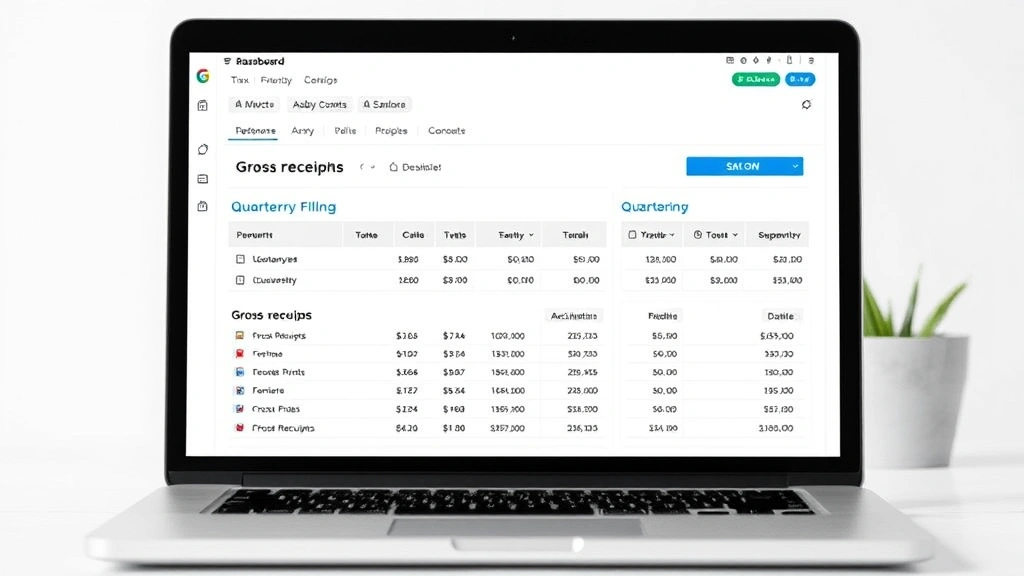
The tax is calculated quarterly and filed with the Washington Department of Revenue. You’ll need accurate gross receipts figures for each quarter, which means maintaining detailed financial records throughout the year.
Tax Classifications Explained
This is where B and O tax gets complicated. Washington categorizes businesses into four main classifications, each with different tax rates:
Retailing (0.471%): Selling tangible personal property at retail. This includes most e-commerce businesses and brick-and-mortar stores. It’s the lowest rate because the state wants to encourage retail commerce.
Wholesaling (0.484%): Selling tangible goods for resale or to other businesses. If you’re a distributor or manufacturer selling to retailers, you fall here. Slightly higher than retailing but still competitive.
Manufacturing (0.484%): Processing materials into finished goods. This includes some food production and custom manufacturing. Same rate as wholesaling.
Service and Other Activities (1.5%): Everything else—professional services, consulting, software, construction, hospitality. This catch-all category has the highest rate and affects the most business owners. Service providers often feel the sting of this rate most acutely.
Misclassifying your business can result in penalties and back taxes. The Washington Department of Revenue takes classification seriously, so if you’re unsure, it’s worth getting professional guidance. Some businesses operate in multiple classifications simultaneously, which requires careful allocation of receipts.
Deductions and Credits Available
While B and O tax doesn’t allow traditional business expense deductions like federal income tax does, Washington offers several legitimate ways to reduce your liability:
Small Business Tax Credit: If your gross receipts are under $1.5 million, you can claim a credit that reduces or eliminates B and O tax. Many qualifying businesses owe zero B and O tax thanks to this credit. You must apply for it—it doesn’t happen automatically.
Deduction for Retailing: If you’re classified as retailing, you can deduct the cost of goods sold. This significantly lowers your taxable gross receipts.
Deduction for Wholesaling and Manufacturing: Similar to retailing, you can deduct the cost of goods sold if you’re in these classifications.
Interstate Commerce Exemption: Sales to customers outside Washington may be exempt. If you’re selling to out-of-state customers, those receipts typically don’t count toward your B and O tax base.

Resale Certificates: If you’re purchasing goods for resale, use resale certificates to avoid paying B and O tax on your purchases. Your supplier handles the tax instead.
These deductions and credits require proper documentation. Keep detailed records of all transactions, especially those claiming interstate exemptions or resale status. The IRS and Washington Department of Revenue both appreciate businesses that can back up their tax positions with solid records.
Common Mistakes to Avoid
After years of working with business owners, I’ve seen predictable patterns in B and O tax mistakes:
Forgetting the Small Business Credit: This is the biggest one. Hundreds of Washington business owners pay B and O tax when they shouldn’t. If you’re under $1.5 million in gross receipts, apply for the credit immediately. It’s free money left on the table otherwise.
Misclassifying Your Business: Putting yourself in the wrong category can cost you significantly. A service business classified as retailing might pay far less than it owes. The Department of Revenue audits this regularly.
Including Out-of-State Sales: Many business owners mistakenly include all revenue, even sales to customers outside Washington. Only Washington-source income counts. This error inflates your tax base unnecessarily.
Not Keeping Adequate Records: When audited, you need to prove your gross receipts, classifications, and exemptions. Poor record-keeping leads to assessments and penalties. Use accounting software to track everything meticulously.
Ignoring Quarterly Filings: Missing quarterly deadlines triggers penalties and interest. Set calendar reminders for each quarter’s filing deadline. It’s not optional—it’s a legal requirement like federal quarterly estimated taxes.
Forgetting About Nexus: If you have any economic activity in Washington—even a single sale or an employee working remotely from Washington—you may have nexus and owe B and O tax. This catches many remote-first companies off guard.

Filing and Payment Requirements
Washington requires quarterly B and O tax filings with the Department of Revenue. Here’s what you need to know:
Quarterly Deadlines: Returns are due on the 25th of the month following each quarter (April 25, July 25, October 25, and January 25). Miss these and penalties accrue quickly.
Filing Methods: You can file online through the Department of Revenue’s MyDOR portal, by mail, or through an authorized tax professional. Online filing is fastest and most reliable.
Payment Options: Pay with the quarterly return. You can pay online, by mail, or through an authorized payment processor. Electronic payment is recommended to ensure timely posting.
Annual Reconciliation: At year-end, you’ll file an annual B and O tax return reconciling all quarterly filings. This is where you claim deductions, credits, and exemptions in detail.
Record Retention: Keep all supporting documentation for at least three years. This includes invoices, receipts, bank statements, and allocation records showing how you calculated gross receipts by classification.
Many business owners work with accountants or bookkeepers to handle quarterly filings. Given the complexity and penalty structure, professional help often pays for itself through proper classification and credit maximization.
Interstate Business Implications
If you operate across state lines, B and O tax gets more complex. Washington’s tax applies to gross receipts from Washington-source business activity only.
What Counts as Washington-Source? Sales to Washington customers, services performed in Washington, or property located in Washington. If you’re an online retailer shipping to Washington customers, those sales count. If you’re a consultant with a client in California, those fees don’t.
Apportionment for Multi-State Businesses: If your business operates in multiple states, you’ll need to apportion receipts. This requires clear documentation of where each sale originated and where services were performed. Related to franchise tax considerations, this requires careful tracking.
Nexus Triggers: You have Washington nexus if you have employees, property, or significant economic activity there. Even one remote employee working in Washington creates nexus. This is a common surprise for growing companies.
Other State Obligations: Remember that handling B and O tax doesn’t eliminate other Washington obligations. You still need to handle payroll taxes, sales tax (if applicable), and other state requirements. Understanding sales tax in other states helps contextualize how Washington’s approach differs.
Strategies to Minimize Liability
Smart business owners use several legitimate strategies to reduce B and O tax exposure:
Proper Classification: Work with a tax professional to ensure you’re classified correctly. If you operate in multiple categories, allocate receipts precisely. Proper classification alone can save thousands.
Maximize Deductions: If you’re retailing, wholesaling, or manufacturing, aggressively track and deduct cost of goods sold. These deductions directly reduce your taxable base. Keep receipts and invoices organized by category.
Document Interstate Sales: Maintain clear records separating Washington sales from out-of-state sales. Use order tracking systems that capture customer location. This documentation is essential during audits.
Claim All Available Credits: Beyond the small business credit, Washington offers credits for certain activities like research and development. Review the full list of available credits annually with your tax advisor.
Consider Entity Structure: In rare cases, your business entity type affects B and O tax treatment. While most entities are treated similarly, specific situations warrant discussion with a tax strategist. This ties into broader tax planning similar to understanding Schedule 1 tax forms for federal purposes.

Timing of Revenue Recognition: While you can’t manipulate when money arrives, you can be strategic about when you recognize revenue. Discuss timing strategies with your accountant, especially for service businesses with flexible billing dates.
Professional Guidance: The cost of a good tax professional often pays for itself through optimization. Even a one-hour consultation identifying misclassification or missed credits can save significantly. Some business owners find that tax preparation fees are a worthwhile business expense.
Frequently Asked Questions
Do I have to pay B and O tax if I’m a sole proprietor?
Yes. B and O tax applies to all business structures operating in Washington—sole proprietorships, partnerships, S-corps, C-corps, and LLCs. Entity type doesn’t exempt you, though it might affect how you calculate and file.
What if I work from home but have no Washington customers?
If you have no Washington-source income, you don’t owe B and O tax. However, if you have even one customer in Washington or any employees working from Washington, you likely have nexus and owe the tax on all your income (or the portion attributable to Washington activity).
Can I deduct business expenses from B and O tax?
Not like federal income tax. B and O tax is based on gross receipts. However, certain classifications allow deductions (cost of goods sold for retailers, wholesalers, and manufacturers). Service businesses cannot deduct operating expenses.
What happens if I miss a quarterly deadline?
You’ll face penalties and interest. The penalty starts at 5% and can increase to 25% for repeat violations. Interest accrues monthly. File late returns immediately and contact the Department of Revenue about penalty relief options if you have a legitimate excuse.
How do I know if I qualify for the small business credit?
If your gross receipts are under $1.5 million annually, you likely qualify. Calculate your total Washington-source gross receipts for the year. If under the threshold, apply for the credit on your annual return. It can reduce your liability to zero.
Is there a Washington B and O tax for online businesses?
Yes. If you have Washington customers, you have nexus and owe B and O tax. E-commerce businesses are classified as retailing (0.471% rate), which is favorable, but you still owe the tax. Many online retailers miss this obligation.
Conclusion
The B and O tax is a unique Washington State obligation that trips up many business owners. Unlike federal income tax, it’s based on gross receipts rather than profit, making it a fixed cost that doesn’t scale with your efficiency or expense management. Understanding your classification, claiming available credits, and maintaining meticulous records are your keys to compliance and minimizing liability.
If you’re operating in Washington, don’t assume you understand your B and O tax obligation. The small business credit alone could eliminate your tax entirely if you qualify. Misclassification could cost you thousands in overpayment or penalties. A few hours with a qualified tax professional—especially if you’re new to Washington or experiencing growth—often pays dividends through proper planning and optimization.
The good news? B and O tax is predictable and manageable once you understand the rules. Take time to classify your business correctly, track your gross receipts accurately, and claim every credit you’re entitled to. Your bottom line will thank you. For additional tax guidance on related topics like excise taxes, consider consulting with a tax professional who understands your specific business model.


