

If you’re buying a car in Illinois, understanding car sales tax in IL is crucial to your bottom line—and it’s more nuanced than you might think. Whether you’re purchasing from a dealership or a private seller, the tax implications can add hundreds or even thousands of dollars to your final bill. In this guide, we’ll break down exactly how Illinois calculates vehicle sales tax, show you legitimate ways to minimize what you owe, and help you avoid costly mistakes.
Table of Contents
Illinois Sales Tax Rate
Illinois has a state sales tax rate of 6.25%, which applies to vehicle purchases. However—and this is important—your actual tax rate depends on where you buy the car. Many counties and municipalities in Illinois add local sales taxes on top of the state rate, pushing your total tax burden anywhere from 6.25% to 8.5% or higher.
For example, if you buy a car in Cook County (which includes Chicago), you’re looking at a combined state and local rate of 8.625%. In DuPage County, it’s 7.75%. The variation matters because a $30,000 car purchase could cost you $2,587.50 in Cook County versus $2,325 in DuPage County—that’s a $262 difference just from location.
Before you shop, check your specific county’s rate on the Illinois Department of Revenue website or ask your dealer upfront. This transparency helps you budget accurately and avoid sticker shock.
How Tax Is Calculated
The sales tax calculation seems straightforward: multiply your purchase price by the applicable tax rate. If you’re buying a $25,000 vehicle at 8% tax, you owe $2,000. But here’s where it gets interesting—the “purchase price” isn’t always what you think it is.
Illinois taxes the sale price of the vehicle itself. If you negotiate the price down to $24,500, your tax is calculated on $24,500, not the sticker price. This is why negotiating the actual sale price (not just getting dealer discounts) matters so much. Every $1,000 you negotiate off reduces your tax by $60-$85 depending on your local rate.
The tax is due at the time of sale and is typically collected by the dealer or seller. You’ll see it itemized on your bill of sale or purchase agreement. Don’t skip reading those documents—verify the numbers are correct before signing.
Dealer vs. Private Sales
Buying from a dealership versus a private seller in Illinois has different tax implications, though the tax rate itself is the same.
Dealership purchases: The dealer collects the sales tax and remits it to the state. It’s built into your final payment, and you get a receipt. This is straightforward and transparent.

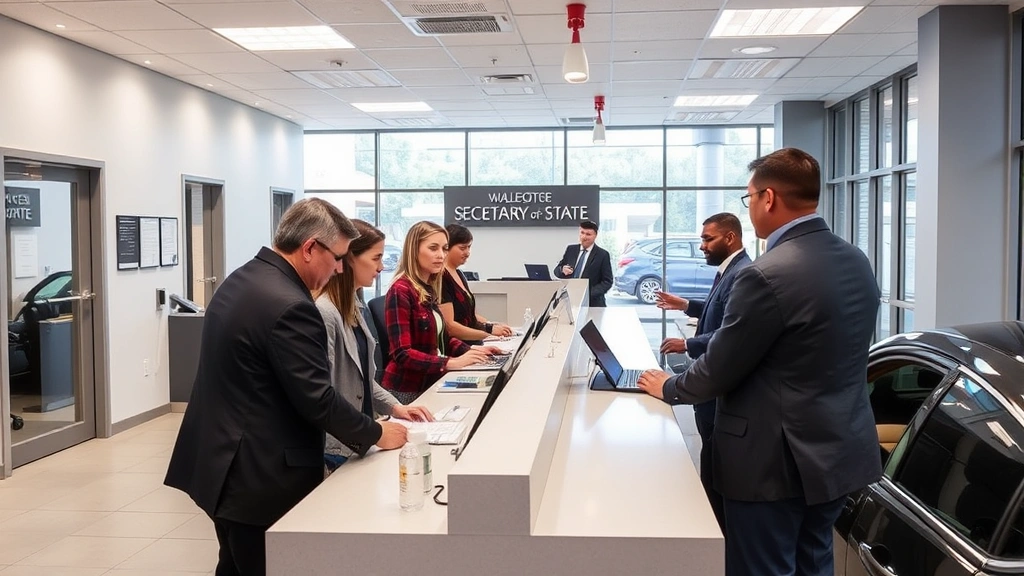
Private sales: Here’s where many people get confused. If you buy from a private seller in Illinois, you’re still responsible for paying sales tax—you don’t get a pass just because there’s no dealership involved. You must pay the tax when you register the vehicle at the Secretary of State’s office. You’ll need to provide proof of the purchase price (bill of sale) so they can calculate the correct amount.
This is actually a compliance issue the Illinois Secretary of State takes seriously. If you try to underreport the purchase price to reduce your tax liability, you could face penalties. It’s not worth the risk.
Trade-In Credit Benefit
Here’s one of the most valuable tax breaks available: if you’re trading in a vehicle as part of your purchase, you only pay sales tax on the net difference, not the full purchase price of the new car.
Let’s say you’re buying a $30,000 car and trading in your old vehicle valued at $8,000. Instead of paying tax on $30,000, you pay tax only on $22,000 ($30,000 – $8,000). At an 8% rate, that saves you $640 in taxes right there.
This is called the “trade-in allowance” and it’s one of the best reasons to trade in your vehicle rather than selling it privately. The dealer handles the tax calculation for you, so make sure they’re applying the trade-in credit correctly on your paperwork.
One caveat: the trade-in credit only applies to the extent of the new vehicle’s price. If you’re trading in a $10,000 car toward a $9,000 purchase, you don’t get to carry that extra $1,000 forward to reduce taxes on your next purchase.
Registration & License Fees
Sales tax is just one part of the total cost of buying a car in Illinois. You also need to budget for registration and title fees, which are separate from sales tax.
Illinois charges a vehicle registration fee based on the vehicle’s age and type. New vehicles typically cost more to register than used ones. You’ll also pay a title application fee (currently around $150) and a license plate fee if you need new plates. These fees aren’t subject to sales tax, but they’re mandatory costs you can’t avoid.
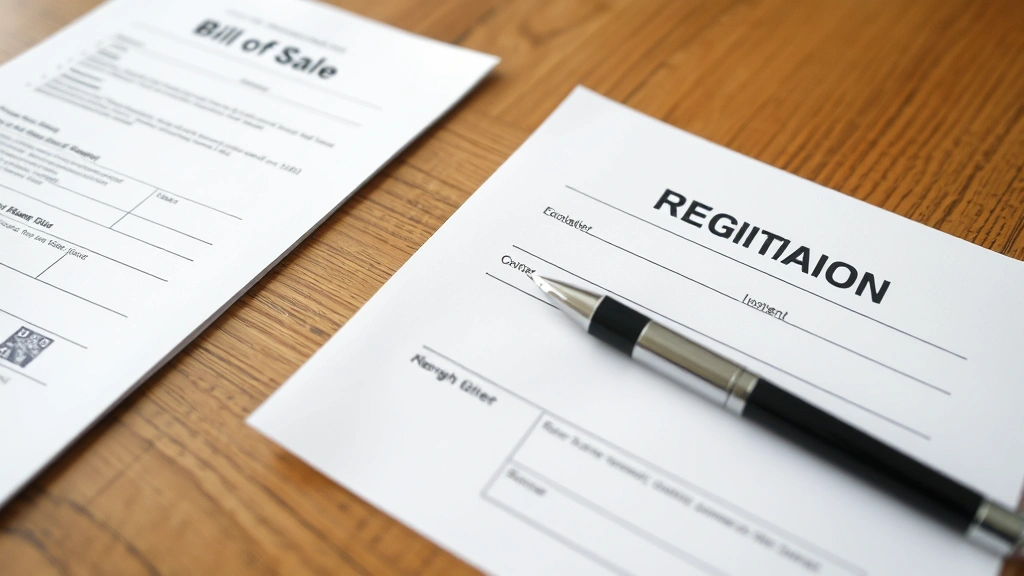
For a typical car purchase, expect to add $300-$500 in registration and title fees on top of your sales tax. If you’re financing the vehicle, your lender may require you to handle registration and title before they’ll release the funds, so plan accordingly.
Legitimate Savings Strategies
Beyond the trade-in credit, there are several legitimate ways to reduce your sales tax burden on a car purchase in Illinois:
Negotiate the purchase price aggressively. Every dollar you negotiate off the sale price reduces your tax dollar-for-dollar (times your tax rate). Spend time getting multiple quotes and don’t accept the first offer.
Time your purchase strategically. While Illinois doesn’t have tax-free car buying events like some states, you might find better deals at specific times of year (end of month, end of quarter, or when new model years arrive).
Consider certified pre-owned vehicles. Older used cars sometimes have lower negotiating floors, meaning you might get a better absolute price and thus lower taxes.
Buy in a lower-tax county if feasible. If you live near a county border, buying in a lower-tax jurisdiction can save money. However, you must register the vehicle in the county where you actually live, so this only works if you’re genuinely making the purchase in that location.
Don’t fall for tax-avoidance schemes. Some people try to structure deals as “gifts” or underreport the purchase price to avoid taxes. This is fraud and carries serious penalties. The Illinois Secretary of State’s office actively audits suspicious transactions, so it’s not worth the risk.
Timing Your Purchase
Unlike some states (like Texas with its tax-free weekend), Illinois doesn’t have a specific tax-free period for vehicle purchases. However, timing still matters for getting the best deal overall.
End-of-month and end-of-quarter sales periods often bring dealer incentives and better negotiating leverage. Dealers have sales quotas, and if they’re close to hitting them, they’re more willing to negotiate on price—which directly reduces your tax.
Similarly, when new model years arrive (typically late summer/early fall), dealers want to clear out prior-year inventory and may offer significant discounts. A $2,000 price reduction on a $28,000 car saves you $160 in taxes at 8%.
If you’re buying a used vehicle, the end of the month is also when dealers most aggressively price their inventory to move units. Do your homework on fair market value using resources like Kelley Blue Book or NADA Guides, then use that data when negotiating.
Common Tax Mistakes
I’ve seen people make preventable errors that cost them money. Here are the most common mistakes when buying a car in Illinois:
Not checking the local tax rate before shopping. Some buyers are shocked when they realize their county has a higher rate than they expected. Know your rate upfront so you can budget accurately.
Forgetting about the trade-in credit. Dealers sometimes fail to apply it correctly, or buyers don’t think to ask about it. Always mention your trade-in and verify it’s reflected on your final paperwork.
Underreporting the purchase price to the Secretary of State. This is tax fraud. The dealer has records, and the Secretary of State cross-references. It’s not a gray area.
Not negotiating because you assume tax is fixed. Tax rate is fixed, but the tax amount depends on the price you pay. Negotiating matters.
Buying out-of-state to “avoid” Illinois tax. If you’re an Illinois resident, you owe Illinois sales tax regardless of where you buy. We’ll cover this more below.
Out-of-State Buying Rules
Some people think they can save money by buying a car in another state with a lower tax rate. It doesn’t work that way if you’re an Illinois resident.
Illinois taxes vehicle purchases based on where the buyer resides, not where the purchase occurs. If you buy a car in Indiana (which has 7% sales tax) but you’re an Illinois resident, you still owe Illinois sales tax when you register the vehicle here. The Secretary of State will assess the tax based on the purchase price and Illinois’s rate for your county.
The only scenario where out-of-state buying might make sense is if you’re genuinely relocating to another state and registering the vehicle there. Otherwise, you’re adding travel time and hassle for no tax benefit.
If you do buy out-of-state legitimately, keep your bill of sale and purchase documentation. The Secretary of State may ask for proof of the purchase price to calculate Illinois tax owed.
Frequently Asked Questions
What’s the total cost of buying a car in Illinois beyond the sales tax?
Beyond sales tax, budget for registration fees ($150-$300), title application fees (~$150), and license plate fees if needed. If you’re financing, you might also have loan origination fees. Total additional costs typically range from $300-$500 for a standard purchase.
Can I deduct car sales tax on my federal income taxes?
Not anymore. The federal deduction for sales tax expired after 2017. However, if you itemize deductions on your state return, some states allow a sales tax deduction—check with a tax professional about Illinois-specific rules.
Do I have to pay sales tax on a vehicle I inherit?
No. Inherited vehicles are exempt from sales tax in Illinois. You’ll need to provide a copy of the will or inheritance document to the Secretary of State when registering the vehicle. You’ll still pay registration and title fees, but not sales tax.
What if I buy a car from a private seller—how do I pay the tax?
You pay the sales tax when you register the vehicle at your local Secretary of State office. Bring your bill of sale showing the purchase price, and they’ll calculate the tax owed. You can pay it at registration.
Is there a grace period to register my car in Illinois?
You must register your vehicle within 30 days of purchase. After that, you face late fees and penalties. Get it done promptly to avoid extra costs.
Do electric vehicles get a sales tax break in Illinois?
Not a sales tax break, but Illinois offers an EV tax credit (up to $4,000) on your state income tax return if you purchase a qualifying electric vehicle. This is separate from sales tax and worth researching if you’re considering an EV.
What if the dealer made an error on my sales tax calculation?
Contact the dealer immediately with your paperwork. If they overcharged you, they can file an amended return with the Department of Revenue and refund the difference. If you underpaid, you’ll owe the difference plus potential penalties, so get it corrected promptly.
Final Thoughts
Car sales tax in IL is unavoidable, but it’s not unmanageable if you understand the rules and plan accordingly. The key takeaways: know your local tax rate, negotiate the purchase price aggressively (since tax is calculated on that price), use trade-in credits to reduce your taxable amount, and don’t try to game the system with out-of-state purchases or underreported prices.
If you’re comparing car-buying costs across states, check out our guides on sales tax on a car in VA, Texas vehicle sales tax, and Alabama car sales tax to see how Illinois compares. For broader sales tax context, our article on sales tax in Missouri provides additional perspective on state-by-state variations.
The bottom line: spend time negotiating the actual purchase price, verify the tax calculation on your paperwork, and budget for registration and title fees in addition to sales tax. A little upfront knowledge saves real money at the dealership.


