
If you own property in the county of Ventura property tax jurisdiction, understanding how your property taxes work is essential to managing your finances effectively. Located in Southern California, Ventura County has its own assessment and collection system that differs from other regions, and knowing the ins and outs can help you identify legitimate deductions and potential savings.
Table of Contents
How Ventura Property Taxes Work
The county of Ventura property tax system operates under California’s Proposition 13 framework, which caps property tax rates at 1% of assessed value. However, understanding the full picture requires knowing what goes into that assessment and how local agencies add to your bill.
When you purchase property in Ventura County, the Assessor’s Office determines the assessed value based on the purchase price or fair market value. This becomes your base year value. Each year, the assessment can increase by up to 2% (inflation adjustment) unless the property changes ownership or undergoes major improvements. Unlike states that reassess annually at market rates, California’s approach keeps long-term homeowners’ taxes relatively stable—but it also means newer buyers pay significantly more.
Your total property tax bill includes the base 1% rate plus any voter-approved bonds and assessments. These might include school district bonds, fire protection assessments, or infrastructure improvements. The Ventura County Treasurer-Tax Collector handles collection and distribution to various agencies.
The Assessment Process Explained
Understanding how the Ventura County Assessor determines your property value is crucial. The assessment process begins with data collection—the Assessor’s Office uses comparable sales, income approach (for rental properties), and cost approach methods to establish fair market value.
When you buy property, the sale price typically becomes the new assessed value. If you inherited property or received it as a gift, the assessed value resets to fair market value on the transfer date. This is where many property owners face unexpected tax increases. For example, inheriting a home that was purchased decades ago could result in a significant reassessment, jumping your taxes substantially. Understanding capital gains tax on inherited property becomes important in these situations.
The Assessor’s Office conducts regular inspections and maintains records of improvements. Adding a room, upgrading your roof, or installing solar panels can trigger a reassessment of that portion of your property. However, routine maintenance doesn’t typically increase assessed value.
Understanding Tax Rates
Ventura County property tax rates vary by location because different areas have different voter-approved bonds and assessments. The base rate remains 1% statewide, but what comes on top varies.
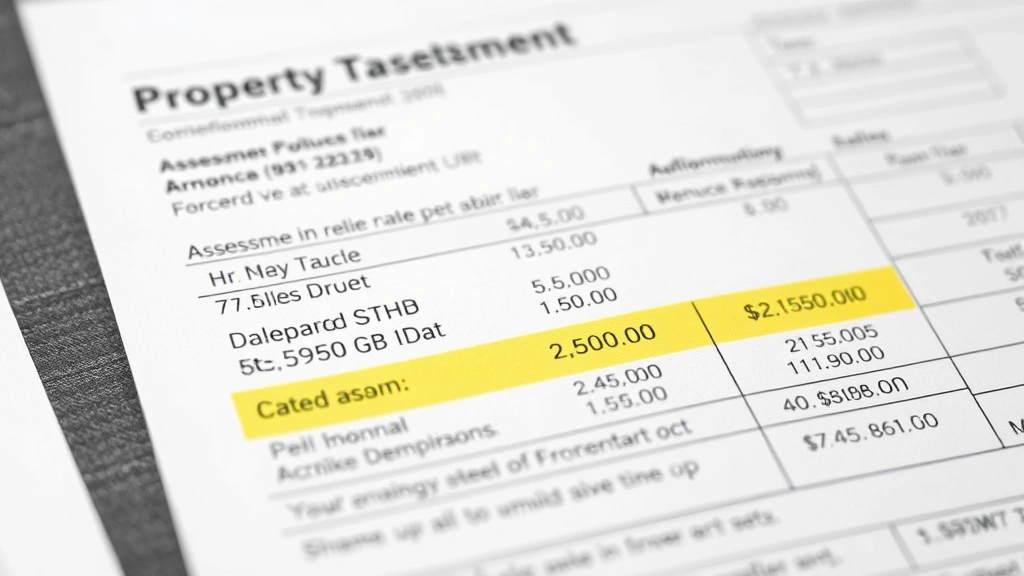
For example, a property in Ojai might have a different total rate than one in Thousand Oaks due to local school bonds, fire protection districts, or infrastructure assessments. Your property tax bill statement breaks down each component, showing the base 1% charge plus all supplemental assessments. This transparency helps you understand exactly where your money goes.
Many Ventura County residents don’t realize they can compare rates across different neighborhoods. If you’re considering a move within the county, the effective tax rate (total taxes divided by assessed value) should factor into your decision. A property with the same market value might carry different tax burdens depending on its location and which special districts serve it.
Proposition 13 Impact
Proposition 13, passed in 1978, fundamentally changed California property taxation and continues to shape Ventura County taxes today. The proposition limited property tax rates to 1% of assessed value and capped annual increases at 2%, unless the property sold or underwent major improvements.
This creates a significant advantage for long-term homeowners. Someone who bought a $200,000 home in 1990 might pay property taxes on an assessed value around $400,000 today, while a neighbor who just bought an identical home at market value (say $900,000) pays taxes on that full amount. The difference in annual taxes could exceed $6,000.
Proposition 13 also protects commercial property owners, which has become controversial. A commercial building that hasn’t changed hands in decades might be assessed at a fraction of its current market value, creating tax advantages for long-term business owners.
Understanding Proposition 13’s implications helps you make informed decisions about property transfers, inheritance planning, and whether improvements are worth the reassessment risk. Some homeowners avoid renovations specifically because they’ll trigger a reassessment and higher taxes.
Available Exemptions & Deductions
Ventura County offers several exemptions that can reduce your taxable assessed value. The homeowner’s exemption provides a $7,000 reduction in assessed value for owner-occupied homes. This isn’t automatic—you must file an application with the Assessor’s Office if you haven’t already claimed it.
If you own agricultural land, you may qualify for agricultural exemptions that assess the land based on agricultural value rather than development potential. This can result in dramatic tax reductions for working farms and ranches in Ventura County’s rural areas.
Disabled veterans can receive exemptions up to $8,000 of assessed value, with higher limits for those with service-connected disabilities rated at 100%. Blind persons also qualify for exemptions. These require documentation from the VA or appropriate agencies.

Religious organizations, educational institutions, and charitable organizations may qualify for exemptions if they meet specific criteria. Government-owned property is typically exempt as well.
One often-overlooked exemption involves property damaged by disaster. If your home was damaged in a fire, flood, or other disaster, you may be eligible for a temporary reduction in assessed value while repairs are underway. The Assessor’s Office can provide details on this relief program.
Payment Deadlines & Procedures
Ventura County property taxes are due in two installments. The first installment (July through August) covers July 1 through December 31 of that fiscal year. The second installment (December through April) covers January 1 through June 30. If you don’t pay by the deadline, penalties and interest accrue.
The first installment becomes delinquent on August 31, and the second on February 28. A 10% penalty applies to delinquent payments, plus interest at 1.5% per month. After five years of non-payment, the county may foreclose on the property.
You can pay through the Ventura County Treasurer-Tax Collector’s office online, by mail, or in person. Many homeowners set up automatic payments through their mortgage servicer, which bundles property taxes with their monthly mortgage payment. This ensures you never miss a deadline.
If you’re struggling financially, contact the Treasurer-Tax Collector about payment plans or deferrals. Some relief programs exist for seniors and disabled persons, and the county may work with you on alternative arrangements.
How to Appeal Your Assessment
If you believe your property is overassessed, you have the right to appeal. The Ventura County Assessment Appeals Board handles these cases, and the process is straightforward enough that many homeowners handle it themselves without hiring an appraiser.
First, file a Proposition 13 Assessment Appeal application with the Assessment Appeals Board. You have 30 days from the date the assessment roll is open (usually in July) to file, though some extensions are available. The filing fee is typically $25 to $30.
Your appeal should include evidence supporting a lower value: comparable sales of similar properties, photographs showing property condition issues, or documentation of deferred maintenance. You don’t need a professional appraisal, though one strengthens your case if the assessed value is significantly higher than recent comparable sales.
The Appeals Board will review your evidence and may approve a reduction. If you disagree with the Board’s decision, you can appeal to Superior Court, though this involves attorney fees and is typically only worthwhile for high-value properties.
Many successful appeals occur when recent comparable sales show properties selling below assessed value, especially after market downturns. If your home was assessed at $600,000 but three similar homes on your street sold for $520,000 recently, you have strong appeal grounds.
Senior & Disabled Relief Programs
California offers a Property Tax Postponement Program for seniors (65+), disabled persons, and blind individuals with limited incomes. This program allows you to postpone paying property taxes, with the state paying them instead. You repay the deferred taxes (plus interest) when you sell the property or pass it to your heirs.
To qualify, your household income must be below $47,000 (2024 figure; this adjusts annually). Your home must be your principal residence, and your equity in the home must be at least 40% of its market value. Many seniors use this program to stay in their homes while managing cash flow challenges.
The Senior Assessment Protection Program (Prop 60/90) allows seniors and disabled persons to transfer the assessed value from a previous home to a replacement home, even if the new home is more valuable. This protects your tax basis when you downsize or move to a more appropriate home. You must be 55 or older (or disabled or blind at any age) to qualify.
These programs require applications and documentation. Contact the Ventura County Assessor’s Office for current income limits, procedures, and required forms. Missing deadlines can cost you thousands in tax savings.
Smart Tax Reduction Strategies
Beyond exemptions and appeals, several strategies can reduce your Ventura County property tax burden. First, ensure you’re claiming the homeowner’s exemption. Many property owners don’t realize they haven’t filed for it, leaving thousands in deductions on the table.

Second, document improvements carefully. While major improvements trigger reassessment, you should still track them for potential capital gains tax purposes when you sell. Improvements that extend your home’s life or add significant value (new roof, foundation work, kitchen remodel) increase your cost basis, reducing capital gains taxes when you eventually sell.
Third, consider the timing of major property transfers. If you’re planning to gift property to adult children or transfer it through your estate, understand how Proposition 13 applies. Direct transfers to spouses don’t trigger reassessment, but transfers to adult children do. Strategic planning with an estate attorney can minimize tax impacts.
Fourth, if you own rental property, ensure you’re claiming all legitimate deductions. Unlike owner-occupied homes, rental properties don’t receive homeowner exemptions, but you can deduct depreciation, maintenance, property management fees, and other business expenses on your federal tax return. Consider consulting with a California property tax specialist for rental properties.
Fifth, stay informed about special assessments. Many homeowners pay special assessments without realizing they might be challengeable or that alternatives exist. Review your property tax bill annually to understand what you’re paying for and whether new assessments have been added.
Finally, if you’re considering major renovations, get a pre-improvement assessment estimate from the Assessor’s Office. Some improvements might not trigger reassessment if they’re considered maintenance rather than improvements. Others might justify the reassessment through increased home value and eventual sale proceeds.
Frequently Asked Questions
What is the current property tax rate in Ventura County?
The base property tax rate in Ventura County is 1% of assessed value, as mandated by Proposition 13. However, your total tax rate varies by location due to voter-approved bonds and local assessments. Your property tax bill statement shows your specific rate. Most properties in Ventura County have effective rates between 1.1% and 1.3% when all local assessments are included.
Can I appeal my Ventura County property tax assessment?
Yes, you can appeal through the Assessment Appeals Board if you believe your property is overassessed. You have 30 days from when the assessment roll opens (usually July) to file your appeal. The process is relatively simple and doesn’t require hiring an appraiser, though comparable sales data strengthens your case. The filing fee is typically $25 to $30.
How often is property reassessed in Ventura County?
Property is reassessed when it changes ownership or when major improvements are made. Otherwise, the assessed value increases by a maximum of 2% annually (the inflation adjustment). This means long-term homeowners benefit from stable, predictable tax bills, while new buyers face full market-value assessments.

What is the homeowner’s exemption in Ventura County?
The homeowner’s exemption reduces your assessed value by $7,000 for owner-occupied homes. This isn’t automatic—you must file an application with the Assessor’s Office. If you haven’t claimed it, you can apply retroactively to recover previous years’ tax savings, though there are time limits.
Are property taxes deductible on my federal tax return?
Yes, property taxes are deductible on your federal return, but with limitations. The Tax Cuts and Jobs Act capped state and local tax (SALT) deductions at $10,000 per year. This means if your property taxes, state income taxes, and other state/local taxes combined exceed $10,000, you can only deduct $10,000 total. Many high-income California homeowners hit this cap.
What happens if I don’t pay my property taxes?
If you don’t pay by the delinquent date, a 10% penalty applies plus 1.5% monthly interest. After five years of non-payment, the county can foreclose on your property. If you’re facing financial hardship, contact the Treasurer-Tax Collector about payment plans or relief programs before missing a payment.
Do I need to pay property taxes while my home is in probate?
Yes, property taxes continue to accrue during probate. The executor or administrator is responsible for paying them. If the estate doesn’t have sufficient liquid assets, the property may need to be sold to cover taxes and other estate expenses. This is why proper estate planning is crucial.
Can I use the Senior Assessment Protection Program if I move within Ventura County?
Yes, if you’re 55 or older (or disabled/blind at any age), you can transfer your assessed value from your previous home to a replacement home, even if the new home is more valuable. This protects your tax basis when moving within Ventura County or to other participating California counties. You must file an application within two years of purchasing the new home.
Final Thoughts on Ventura County Property Taxes
Understanding your county of Ventura property tax obligations and opportunities puts you in control of a significant expense. Whether you’re a longtime homeowner benefiting from Proposition 13’s protections, a new buyer facing full market-value assessment, or a senior exploring relief programs, knowledge is your best tool.
Start by reviewing your property tax bill carefully. Ensure you’re claiming all available exemptions, understand what special assessments fund, and don’t hesitate to appeal if you believe your assessment is too high. The Ventura County Assessor’s Office and Assessment Appeals Board exist to ensure fair taxation, and using these resources is your right.
For complex situations—inherited property, rental properties, or significant real estate transactions—consulting with a tax professional or financial advisor familiar with California property tax law can save you thousands. The same applies if you’re exploring estate tax calculator tools or trying to understand capital gains implications of property sales.
Property taxes represent a substantial ongoing expense, but they’re also one of the most controllable parts of your financial life. By staying informed and taking action, you can legitimately reduce your burden and keep more money in your pocket.