

If you’re buying a car in Connecticut, understanding CT sales tax on cars is non-negotiable—it could save you hundreds or even thousands of dollars. Connecticut’s sales tax on vehicle purchases currently sits at 6.35%, which applies to the purchase price of your vehicle. But here’s what most buyers miss: there are legitimate strategies to reduce your tax burden, timing tricks that actually work, and common mistakes that could cost you more than you expect.
Table of Contents
Connecticut’s Current Sales Tax Rate
Connecticut applies a 6.35% sales tax to vehicle purchases, and this rate applies uniformly across the state—there’s no local variation like you might find in other states. This is actually middle-of-the-road compared to national averages; some states charge as little as 0% (Oregon, Montana, New Hampshire) while others exceed 9%. The 6.35% rate in Connecticut has remained stable for several years, though it’s always worth checking the Connecticut Department of Revenue Services for any legislative changes.
When you’re calculating your total out-of-pocket cost, don’t just multiply the sticker price by 6.35%. The tax applies to the negotiated sale price, which means every dollar you negotiate off the vehicle price directly reduces your tax liability. This is why haggling matters more than people realize—a $1,000 price reduction saves you $63.50 in taxes alone.
How Sales Tax Gets Calculated
The math seems straightforward until you dig into the details. Connecticut calculates sales tax on the vehicle’s sale price, but the calculation happens at the point of title transfer. If you’re buying from a dealer, they typically collect the tax upfront and remit it to the state. If you’re buying privately, you’ll pay the tax when you register the vehicle with the Connecticut DMV.
Here’s the critical part: the taxable amount is the actual sale price you negotiate, not the manufacturer’s suggested retail price (MSRP). This is where understanding the process saves real money. If the MSRP is $30,000 but you negotiate down to $28,500, your tax is calculated on $28,500. That’s a $95.25 difference right there.
One nuance many buyers overlook: if you’re trading in a vehicle, the tax calculation changes. We’ll cover this in detail in the next section, but the short version is that your trade-in value reduces the taxable amount, not the final price tag.
Trade-In Vehicle Credits Explained
Connecticut allows you to apply your trade-in vehicle’s value as a credit against the sales tax calculation. This is one of the most misunderstood aspects of Connecticut’s vehicle tax system, and getting it right can save substantial money.
Here’s how it works: If you’re buying a $35,000 vehicle and trading in a car worth $8,000, the taxable amount is $27,000 (not $35,000). You pay 6.35% on $27,000, which equals $1,714.50. Without the trade-in credit, you’d pay $2,222.50 on the full $35,000. That’s a $508 savings just from having a trade-in vehicle.
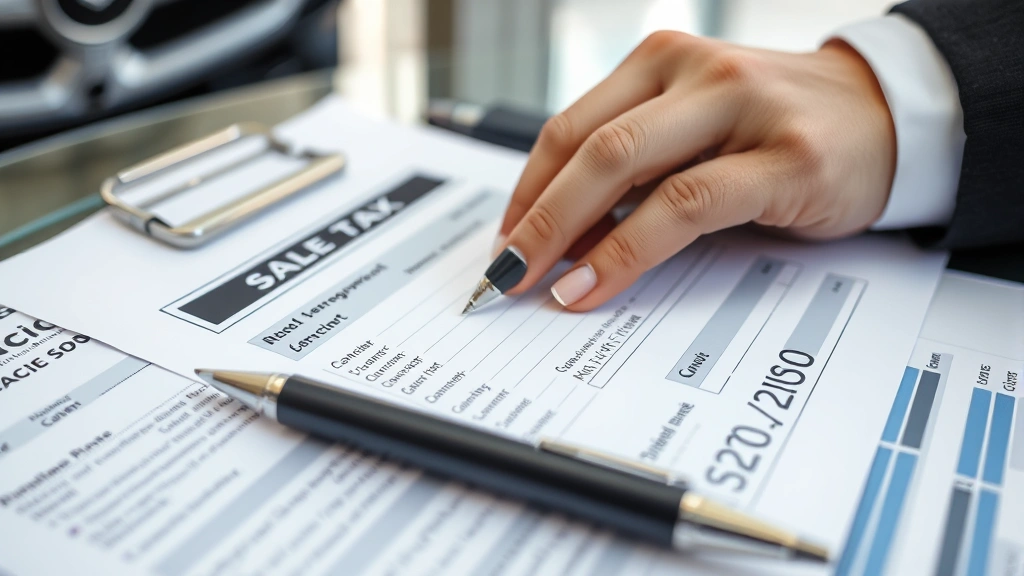
The key requirement: the trade-in vehicle must be for personal use, and you must have owned it. You can’t use a borrowed vehicle or one you’re renting as a trade-in credit. Also, the dealer will need to see proof of ownership (your title or registration) before they can apply the credit. If you’re selling your old car privately rather than trading it in, you won’t get this tax benefit—which is worth calculating before you decide which route to take.
Private Sale vs Dealer Purchase
Buying from a private party versus a dealer changes how and when you pay sales tax in Connecticut, and this distinction matters for your wallet and your paperwork.
Dealer purchases: The dealer collects sales tax at the point of sale and remits it to the state. You pay upfront, and the dealer handles the paperwork. This is straightforward but offers fewer opportunities to reduce your tax burden since the dealer will calculate it based on the agreed purchase price.
Private sales: You pay sales tax when you register the vehicle with the Connecticut DMV, not at the point of purchase. This means you need to bring proof of the sale price (the bill of sale) when you register. The DMV will calculate and collect the tax based on the sale price you report. This method gives you slightly more flexibility in timing—you could buy in December and register in January if you wanted to spread the financial impact, though the tax liability itself doesn’t change.
Here’s a critical point: Connecticut requires you to report the actual sale price on private sales. You can’t artificially deflate the purchase price to reduce taxes—the state takes a dim view of this, and penalties can exceed the tax savings. We’ve seen people try to report a $25,000 purchase as $20,000 to a friend; the DMV has seen this too, and they have authority to assess penalties and interest.
Registration & Documentation Fees
Sales tax isn’t your only cost when buying a car in Connecticut. Registration and documentation fees add up quickly, and many buyers are surprised by these additional charges.
Connecticut’s vehicle registration fees depend on the vehicle’s age and weight. A new passenger vehicle typically costs $110-$150 for an initial two-year registration. Used vehicles have different rates—generally lower for older cars. There’s also a $25 documentation fee that covers the cost of title transfer and registration processing.

If you’re financing the vehicle, add a $25 lien fee. If you’re buying from out of state, there may be additional documentation requirements. The total of these fees typically ranges from $160-$200 for a standard passenger vehicle purchase, but it varies based on your specific situation.
These fees aren’t negotiable and don’t vary based on the vehicle’s price, so they’re easy to overlook. But when you’re budgeting for your total purchase cost, don’t forget them. A $30,000 vehicle purchase with 6.35% sales tax ($1,905) plus registration and documentation fees ($165-$200) means your actual cost is nearly $2,100 above the purchase price.
Strategic Timing for Tax Savings
Here’s where many Connecticut car buyers miss an opportunity: the timing of your purchase can legally reduce your tax burden through strategic planning.
End-of-month purchases: Dealers often have monthly sales quotas and are more willing to negotiate on price at month-end. A $500 price reduction saves you $31.75 in taxes. Over the course of a year, this adds up.
End-of-year considerations: If you’re buying a vehicle you’ll use for business purposes, purchasing before year-end allows you to deduct depreciation on your 2024 taxes. While this doesn’t reduce the sales tax itself, it reduces your overall tax burden through business deductions. (See our guide on lease vs. finance options for more on business vehicle strategies.)
Model year transitions: When new model years arrive (typically August-September), dealers discount previous year models aggressively. A $3,000 price difference means $190.50 in tax savings. This is legitimate negotiating leverage.
The private sale timing advantage: If you buy privately in December but register in January, you’re not reducing taxes—you’re just spreading the cash flow. The tax liability is the same. However, if you’re waiting for a bonus or tax refund, this timing might make financial sense for your cash flow situation.
Leasing Alternative Tax Considerations
Some Connecticut residents can reduce their overall vehicle costs by leasing instead of buying, and the sales tax implications are one reason why.
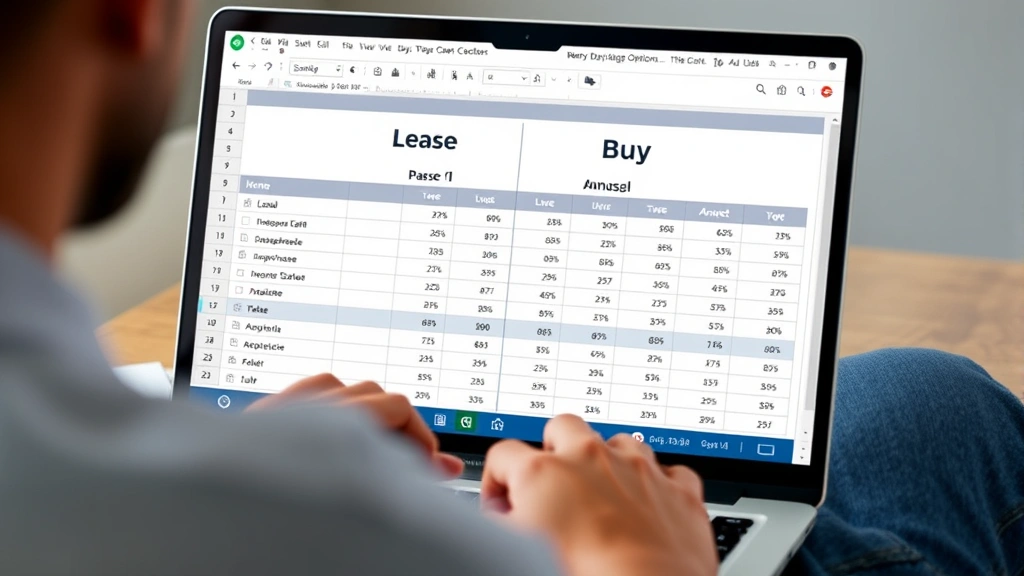
When you lease a vehicle in Connecticut, you don’t pay sales tax on the full vehicle value. Instead, you pay sales tax only on the monthly lease payments. This can result in significantly lower tax payments over the lease term, especially for higher-priced vehicles.
Example: A $40,000 vehicle purchased would cost $2,540 in sales tax upfront. The same vehicle leased for 36 months at $450/month means paying tax on approximately $16,200 of lease payments ($450 × 36 = $16,200), resulting in roughly $1,028 in sales tax over the lease term. That’s a $1,512 difference in tax payments.
However, leasing has trade-offs: mileage restrictions, wear-and-tear charges, and the fact that you never build equity in the vehicle. For detailed analysis of whether leasing or buying makes sense for your situation, check our lease vs. finance guide.
Mistakes That Cost You Money
After years of helping people navigate vehicle purchases, we’ve seen the same costly mistakes repeatedly. Here’s what to avoid:
Mistake #1: Not negotiating the price. Many people focus on financing terms and forget that every dollar negotiated off the price reduces your tax bill. A $2,000 price reduction saves $127 in taxes—that’s free money if you negotiate effectively.
Mistake #2: Forgetting about the trade-in credit. We mentioned this earlier, but it bears repeating: if you have a vehicle to trade in, always ensure the dealer applies the credit to reduce the taxable amount. Don’t let them hide it in the financing terms.
Mistake #3: Paying tax on a vehicle you’ll use for business. If you’re self-employed or a business owner, you may be able to claim a sales tax deduction on your business taxes. Keep your documentation.
Mistake #4: Buying before comparing to neighboring states. While you must pay Connecticut sales tax on vehicles purchased and registered in Connecticut, understanding rates in Massachusetts, Rhode Island, and New York helps you understand whether you’re getting a reasonable deal. (Note: You cannot avoid Connecticut sales tax by buying out of state and registering in Connecticut—the state will assess tax regardless.)
Mistake #5: Not budgeting for total costs. Focusing only on the purchase price and sales tax while ignoring registration, documentation, and insurance costs leads to financial surprises. Budget for the complete picture.
Mistake #6: Misreporting the sale price on private sales. We mentioned this, but it’s critical: don’t try to underreport the price to reduce taxes. Penalties exceed any savings, and the DMV has sophisticated systems to catch discrepancies.
Frequently Asked Questions
What is Connecticut’s sales tax rate on vehicles?
Connecticut charges 6.35% sales tax on vehicle purchases. This applies to both new and used vehicles, and the rate is uniform across the state with no local variations.
Can I avoid paying sales tax by buying out of state?
No. If you register a vehicle in Connecticut, you owe Connecticut sales tax regardless of where you purchased it. The state assesses tax based on registration location, not purchase location. Some states like Illinois and Missouri have similar policies.
How does a trade-in vehicle reduce my sales tax?
Connecticut allows you to deduct your trade-in vehicle’s value from the purchase price before calculating sales tax. If you’re buying a $30,000 vehicle and trading in one worth $5,000, you pay 6.35% tax on $25,000, not $30,000.

Do I pay sales tax on a leased vehicle?
You pay sales tax on lease payments, not the full vehicle value. This typically results in lower total sales tax paid over a lease term compared to purchasing the same vehicle.
When do I pay sales tax—at purchase or registration?
It depends on whether you buy from a dealer or private party. Dealers collect tax at purchase. Private sales require you to pay tax when you register with the DMV.
What registration fees should I expect?
Connecticut charges approximately $110-$150 for a two-year registration on a new passenger vehicle, plus a $25 documentation fee. Used vehicles have lower rates. Financed vehicles incur an additional $25 lien fee.
Can I deduct vehicle sales tax on my income taxes?
Generally, no. However, if you use the vehicle for business purposes, you may be able to deduct depreciation or claim a business deduction. Consult a tax professional for your specific situation.
Is there a way to reduce the sales tax I owe?
The primary way is to negotiate a lower purchase price—every dollar off reduces your tax proportionally. Trading in a vehicle also reduces the taxable amount. Timing your purchase strategically (month-end, model year transitions) can help you negotiate better prices.
Final Thoughts on Connecticut Vehicle Sales Tax
Understanding CT sales tax on cars puts you in control of your purchase. The 6.35% rate is fixed, but your actual tax bill depends on decisions you make: the price you negotiate, whether you trade in a vehicle, whether you lease or buy, and how you time your purchase.
The biggest takeaway? Every dollar you negotiate off the purchase price saves you $0.0635 in taxes. That’s real money. Combined with maximizing trade-in credits and considering lease versus buy scenarios, you can legitimately reduce your vehicle purchase costs by hundreds of dollars.
Before you sign paperwork, run the numbers. Calculate your sales tax, add registration fees, and factor in your total cost of ownership. You’ll make a smarter financial decision—and you’ll know exactly what you’re paying and why.


