

A foreign tax identifying number is a unique identifier issued by a foreign country’s tax authority to individuals or entities for tax compliance purposes. If you’re working abroad, earning international income, or managing cross-border finances, understanding what a foreign tax ID is and how to obtain one could save you thousands in penalties and streamline your tax reporting significantly.
Table of Contents
What Is a Foreign Tax ID?
Think of a foreign tax identifying number as your passport to tax compliance in another country. It’s essentially the international equivalent of a Social Security Number (SSN) or Employer Identification Number (EIN) in the United States. Each country maintains its own system—the UK uses a National Insurance Number, Canada issues a Social Insurance Number (SIN), Australia has a Tax File Number (TFN), and so on.
This identifier serves as the backbone of tax filing, employment registration, and financial transactions in that country. When you’re working for a foreign employer, opening a local bank account, or running a business abroad, you’ll almost certainly need one. The foreign tax identifying number links all your income, deductions, and tax obligations to a single account in that nation’s tax system.
The IRS recognizes these foreign identifiers and actually requires you to report them on certain forms when you have U.S. tax obligations. This is where things get tricky for expats and international workers—you’re often juggling multiple tax systems simultaneously.
Why You Need One (And It’s Not Optional)
Let’s be honest: dealing with tax authorities is intimidating enough in your home country. Add a foreign jurisdiction into the mix, and it becomes genuinely stressful. But here’s the reality—a foreign tax identifying number isn’t a nice-to-have; it’s essential if you’re:
- Employed by a foreign company
- Self-employed or running a business abroad
- Earning rental income from foreign property
- Receiving investment income from a foreign account
- Sponsoring dependents in another country
Without one, you can’t legally work in most countries, open business bank accounts, or file tax returns. More importantly, the absence of proper tax identification can trigger audits, penalties, and serious legal consequences. The IRS takes unreported foreign income very seriously—we’re talking potential fraud charges if you’re not careful.
If you’re dealing with complex international remittances, you’ll want to understand how NRI remittance tax works, as this often intersects with foreign tax ID requirements.
Types of Foreign Tax IDs by Country
Here’s where it gets country-specific. There’s no universal foreign tax identifying number—each nation has its own naming convention and issuance process:
United Kingdom: National Insurance Number (NIN). This 9-digit alphanumeric code is assigned by HMRC (Her Majesty’s Revenue and Customs) and is required for employment, self-employment, and benefit claims.
Canada: Social Insurance Number (SIN). A 9-digit number issued by Service Canada, required for all employment and tax filing.
Australia: Tax File Number (TFN). An 11-digit number administered by the Australian Taxation Office, essential for employment and tax purposes.
Germany: Steuernummer (Tax Number) and Steueridentifikationsnummer (Tax ID Number). Germany actually uses two numbers—one for income tax purposes and another for VAT if you’re self-employed.
France: Numéro de Sécurité Sociale (Social Security Number) and Numéro SIRET for businesses. The French system ties tax identification directly to social security.
Japan: My Number (マイナンバー). A 12-digit personal identification number used for tax, social insurance, and disaster relief purposes.
The process, requirements, and timeline vary dramatically depending on which country you’re targeting. A UK National Insurance Number takes weeks to obtain, while some countries require in-person visits to government offices.
How to Obtain Your Foreign Tax Identifying Number
The application process differs by country, but here’s the general roadmap most expats follow:
Step 1: Gather Initial Documentation
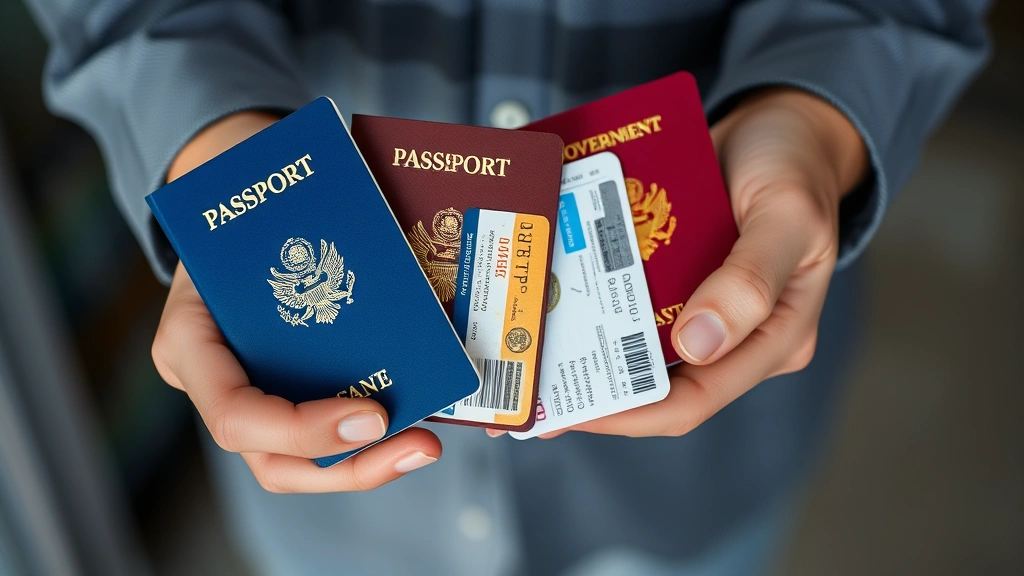
Start with your passport, proof of residence (utility bill, rental agreement), and proof of employment or business registration. Most countries won’t issue a tax ID without evidence that you’re legitimately in their jurisdiction.
Step 2: Register with the Tax Authority

Contact the relevant tax authority directly. In the UK, you’d reach out to HMRC. In Canada, it’s Service Canada. In Australia, the Australian Taxation Office (ATO) handles applications. Many countries now allow online applications, which speeds things up considerably.
Step 3: Complete the Application Form
Each country has specific forms. The UK uses form CA8421 for non-residents, while Australia uses the Application for a Tax File Number form. These forms ask about your personal details, employment status, and reason for needing the number.
Step 4: Submit and Wait
Processing times range from a few days (online applications in some countries) to several weeks. Some nations require in-person submission at a government office, which can add travel time to the equation.
Step 5: Receive Your Number
Once approved, you’ll receive your foreign tax identifying number via mail or digital notification, depending on the country. Keep this information secure—it’s as sensitive as your SSN.
If you’re also managing U.S. tax obligations, you’ll need to understand where AGI appears on your tax return, as this affects how you report foreign income.
Documentation You’ll Need to Gather
Don’t start the application process without these items ready:

- Valid Passport: Most countries require a current passport as proof of identity and citizenship.
- Proof of Residence: Utility bills, lease agreements, or official government correspondence showing your address in that country. This typically needs to be dated within the last 3 months.
- Employment Documentation: An employment contract, job offer letter, or business registration certificate proving you’re working in that jurisdiction.
- Bank Account Information: Some countries require proof of a local bank account or at minimum a bank reference letter.
- Tax Identification from Your Home Country: Your U.S. SSN or EIN if you’re an American applying for a foreign number.
- Completed Application Form: The specific form required by that country’s tax authority.
- Translation Documents: If your documents are in a language other than the country’s official language, certified translations may be required.
Pro tip: Make copies of everything and keep originals in a secure location. You’ll likely need these documents for multiple purposes—employment verification, bank account opening, and more.
Common Mistakes to Avoid When Applying
I’ve seen expats make preventable errors that delayed their tax ID issuance by months. Here’s what not to do:
Mistake #1: Incomplete or Inaccurate Applications Double-check every field. A misspelled name or incorrect date of birth can trigger rejection and require resubmission. Take your time filling out these forms.
Mistake #2: Using Unofficial Channels Some people try to expedite the process through unofficial intermediaries or agents. This rarely works and can actually complicate your application. Go directly to the official tax authority.
Mistake #3: Not Understanding Address Requirements Many countries require your proof of residence to match your application address exactly. If you’re staying with a friend temporarily, get written permission from the property owner and include that with your application.
Mistake #4: Forgetting to Report to the IRS As a U.S. citizen or resident alien, you need to report your foreign tax identifying number to the IRS if you’re filing U.S. tax returns. Failing to do this creates compliance issues down the line.
Mistake #5: Assuming One Number Covers Everything Some countries issue multiple tax identification numbers for different purposes (income tax vs. VAT, for example). Don’t assume one number is sufficient for all your tax obligations.
Understanding uncertain tax positions can help you navigate gray areas where you’re unsure about reporting requirements.
Reporting Your Foreign Tax ID to the IRS
Here’s where U.S. citizens and resident aliens need to pay attention. If you have a foreign tax identifying number and you’re required to file a U.S. tax return, you must report it to the IRS. This happens in several ways:

Form 1040 (U.S. Individual Income Tax Return) includes a line asking for your foreign tax identification number. This is straightforward—just enter the number you received from the foreign tax authority.
FATCA (Foreign Account Tax Compliance Act) Reporting requires U.S. citizens with foreign financial accounts exceeding $10,000 to file FinCEN Form 114 (FBAR). Your foreign tax ID connects you to these accounts.
Form 5471 (Information Return of U.S. Persons With Respect to Certain Foreign Corporations) requires your foreign tax ID if you own a foreign corporation or partnership.
The IRS uses your foreign tax identifying number to cross-reference your foreign income with what you’re reporting on your U.S. return. Discrepancies trigger audits. Intentional non-reporting of foreign income is considered tax evasion.
If you’re unsure about your reporting obligations, consulting with a tax professional who specializes in international taxation is worth the investment. The IRS penalties for non-compliance are steep—we’re talking 75% of the underpaid tax plus interest.
Timeline and Processing Expectations
Patience is essential here. Processing times vary wildly by country:
Fast-Track Countries (1-4 weeks): Canada, Australia, and the UK typically process applications within 2-4 weeks if submitted online. Some Australian applications are processed in as little as 5 business days.
Moderate Timeline (4-8 weeks): Germany, France, and Japan typically take 4-8 weeks. These countries often require more documentation and in-person verification.
Longer Timeline (8+ weeks): Some developing nations and countries with less digitized systems can take 2-3 months or longer. Always plan ahead.

Variables That Affect Timeline:
- Whether you apply online or in-person
- Completeness of your application
- Accuracy of your documentation
- Current application volume at the tax authority
- Whether additional verification is required
My advice? Apply immediately upon arrival in a new country. Don’t wait until you’ve been working illegally for three months—that creates a mess with both the foreign tax authority and the IRS.
Frequently Asked Questions
Can I use my foreign tax identifying number as an ITIN with the IRS?
Not directly. The IRS requires either a Social Security Number (SSN) or an Individual Taxpayer Identification Number (ITIN) for U.S. tax purposes. Your foreign tax ID is separate and used for cross-referencing. If you don’t have an SSN, you’ll need to apply for an ITIN from the IRS, which is a different process entirely. The foreign number and ITIN work together in your tax file, but they’re distinct identifiers.
What happens if I don’t get a foreign tax identifying number?
Legally, you can’t work, open business bank accounts, or file tax returns in that country. Practically, you’re risking deportation, fines, and legal action. For U.S. tax purposes, you’re also non-compliant if you’re earning foreign income without reporting it. The consequences compound—employment penalties from the foreign government plus tax evasion penalties from the IRS.
Do I need separate tax IDs for each country I work in?
Yes. Each country issues its own tax identification number. If you work in three different countries, you’ll have three different foreign tax identifying numbers. You’ll also need to report your foreign income to the U.S. if you’re a U.S. citizen or resident alien. This is why international workers often need professional tax help—the complexity multiplies with each jurisdiction.
Can I apply for a foreign tax ID before I move?
Most countries require proof of residence, which typically means you need to be physically present in that country. Some allow you to apply online once you have a local address, but you can’t apply from abroad without an established address in that country. Plan to apply within your first week of arrival.
Is my foreign tax identifying number permanent?
Generally yes, but it can be cancelled if you leave the country permanently or stop meeting the requirements for that jurisdiction. If you return to that country later, you might reactivate the same number or need to apply for a new one. Check with the specific tax authority’s rules about dormant accounts.
How do I report foreign tax paid to the IRS?
You use Form 1118 (Foreign Tax Credit) or claim the Foreign Earned Income Exclusion on Form 2555. Your foreign tax identifying number connects your foreign tax payments to your U.S. return, allowing you to claim credits or exclusions to avoid double taxation. This is where professional tax help really pays for itself—optimizing this can save thousands annually.


