

A goodwill tax receipt is your golden ticket to claiming charitable donations on your tax return, but only if you understand what the IRS actually accepts. Whether you’re donating clothes to Goodwill, dropping off furniture at the Salvation Army, or contributing cash to your local food bank, the paperwork you receive—and how you document it—can mean the difference between a legitimate deduction and an audit nightmare.
Table of Contents
- What Is a Goodwill Tax Receipt?
- IRS Requirements for Deductible Receipts
- Documentation Rules That Matter
- How to Value Your Donations
- Itemized Deductions vs. Standard
- Mistakes That Cost You Money
- Strategies to Maximize Tax Benefits
- Smart Record-Keeping Systems
- Frequently Asked Questions
- Key Takeaways
What Is a Goodwill Tax Receipt?
A goodwill tax receipt is documentation from a qualified charitable organization proving you made a donation. It’s not just a store receipt—it’s your proof to the IRS that you gave something of value to a legitimate nonprofit. The receipt should show the organization’s name, the date of your donation, and ideally, a description of what you donated.
Here’s the thing: the organization doesn’t have to list the value on the receipt. That’s your job. You determine the fair market value of what you gave, and that’s the number you report on your tax return. This is where people get tripped up. The IRS expects you to be reasonable and honest about valuation, not creative.
Think of it like this—if you donate a five-year-old winter coat, the receipt proves you made the donation, but you need to figure out what that coat is actually worth today, not what you paid for it in 2019.
IRS Requirements for Deductible Receipts
The IRS has specific rules about what makes a charity “qualified” and what documentation you actually need. First, the organization receiving your donation must be a qualified charitable organization. Most 501(c)(3) nonprofits qualify, but not all charities do. You can check the IRS Tax Exempt Organization Search tool to verify.
For donations under $250, you need a written communication from the charity showing:
- The charity’s name
- The date and location of your contribution
- A detailed description of what you gave
- The charity’s tax identification number or website
For donations of $250 or more for a single item or group of similar items, you need a written acknowledgment from the charity that includes the amount you claim as deductible. This is different from the receipt—it’s a specific statement about value. Many people miss this requirement and lose deductions entirely.

Your goodwill tax receipt from the donation center typically covers the first requirement, but for larger donations, you’ll need additional documentation. That’s why smart donors keep detailed records beyond what the charity provides.
Documentation Rules That Matter
Let’s get real about documentation. The IRS doesn’t mess around here. If you claim a deduction and can’t back it up, you lose it. Period. No second chances, no “I thought I had it.”
You need to keep your goodwill tax receipt AND a separate written record showing:
- How you determined the value of each item
- The condition of items when donated
- The date and location of the donation
- Photos (especially for items over $500)
For clothing and household items, the IRS expects you to use reasonable values. A used shirt isn’t worth $20 just because you paid that five years ago. Be honest about condition and age. If the IRS audits you, they’ll compare your valuations to similar items sold on eBay, Goodwill’s own pricing, or thrift store standards.
Keep receipts and acknowledgments in a dedicated folder—physical or digital. When tax time comes, you’ll have everything organized and ready. This is especially important if you make multiple donations throughout the year.
How to Value Your Donations
This is where most people either leave money on the table or get too aggressive and invite an audit. Fair market value means what a willing buyer would pay a willing seller—not what you paid, not what you wish it was worth.

For clothing and household items, use the Goodwill valuation guide or similar thrift store pricing. A button-up shirt in good condition? $3-5. A winter coat? $10-20. Designer jeans? $8-15. These aren’t random numbers—they’re based on what these items actually sell for at secondhand stores.
For furniture, look at Facebook Marketplace or Craigslist in your area. What are similar pieces actually selling for? That’s your value. For electronics, check what similar used items cost online.
The IRS publishes the Charitable Contributions Publication 561, which gives detailed guidance on valuation. It’s worth reading if you’re donating anything significant. For most people, using conservative estimates based on actual secondhand market prices keeps you safe and honest.
Pro tip: take photos of items before you donate them, especially anything over $500. This isn’t just for your records—it’s proof you actually owned what you claimed to donate. Sounds cynical, but the IRS has seen it all.
Itemized Deductions vs. Standard
Here’s the hard truth: your goodwill tax receipt only helps if you itemize deductions on your tax return. If you take the standard deduction (which most people do), charitable donations don’t reduce your taxable income at all.
For 2024, the standard deduction is $14,600 for single filers and $29,200 for married couples filing jointly. If your total itemized deductions don’t exceed these amounts, you’re better off taking the standard deduction, and your donations don’t matter tax-wise.

However, if you have significant deductions from other sources—mortgage interest, property taxes, medical expenses—then adding charitable donations might push you over the standard deduction threshold. This is where strategic giving comes in.
Some people “bunch” charitable donations into certain years to exceed the standard deduction threshold. Instead of donating $5,000 every year, they donate $10,000 one year and nothing the next. This lets them itemize in the high-donation year and take the standard deduction in the other year. It’s perfectly legal and can save real money.
Mistakes That Cost You Money
Let me walk you through the errors I see constantly that people don’t recover from:
Mistake 1: Losing the receipt. You donate items to Goodwill, get the receipt, and it ends up in the car’s cup holder. Six months later, you’re filing taxes and can’t find it. Your deduction is gone. Keep receipts in a designated spot immediately.
Mistake 2: Overvaluing items. You donate a 10-year-old television and claim it’s worth $300 because that’s what similar new ones cost. The IRS knows better. This raises red flags and can trigger an audit of your entire return.
Mistake 3: Donating to unqualified organizations. That local community group helping neighbors? Might not be a qualified charity. Always verify 501(c)(3) status before donating anything substantial.
Mistake 4: No documentation for cash donations. You hand someone $100 in cash for their nonprofit. Without a written acknowledgment from the organization, the IRS won’t accept it. Verbal promises don’t count.
Mistake 5: Combining donations without detail. You donate 15 items to Goodwill but only write “clothing and household items” on your record. If audited, you can’t substantiate individual values. List everything separately.
Strategies to Maximize Tax Benefits
If you’re going to donate anyway, you might as well structure it smartly. Here are legitimate ways to maximize your tax benefit:
Strategy 1: Donate appreciated assets. Instead of donating cash, donate stocks or mutual funds that have increased in value. You get a deduction for the current fair market value, but you avoid capital gains tax on the appreciation. This can be significantly more valuable than a cash donation.
Strategy 2: Bunch donations strategically. As mentioned earlier, concentrate donations in years when you’ll exceed the standard deduction. This requires planning, but it works.
Strategy 3: Use donor-advised funds. You contribute to a donor-advised fund, get an immediate deduction, and then recommend grants to charities over time. This gives you a deduction now and flexibility later.

Strategy 4: Document everything contemporaneously. Don’t wait until tax time to figure out what you donated. Keep a running list with dates, descriptions, and values as you donate. This is faster, more accurate, and easier to defend if audited.
Strategy 5: Take photos of significant donations. Visual evidence of what you donated is powerful. It proves you actually had the items and that your valuation is reasonable based on condition.
Smart Record-Keeping Systems
You don’t need fancy software, but you do need a system. Here’s what works:
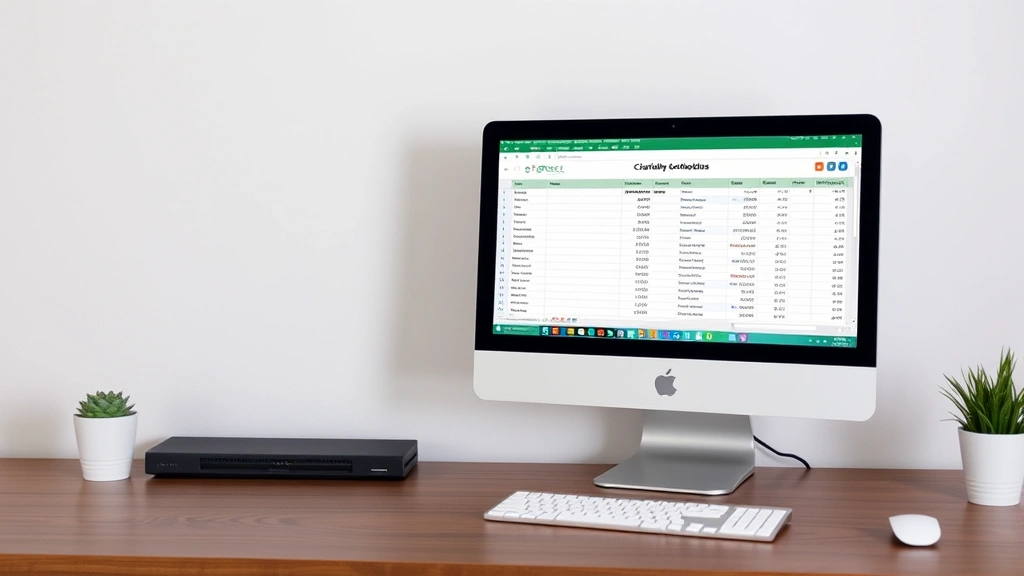
The Spreadsheet Method: Create a simple spreadsheet with columns for date, charity name, item description, quantity, condition, fair market value per item, and total value. This is searchable, sortable, and easy to share with your tax preparer.
The Photo Method: Take a photo of items before donation, upload to a folder organized by month/charity, and keep receipts in the same folder. When you need to reference a donation, you have visual proof.
The Hybrid Method: Use a spreadsheet for tracking and keep physical receipts in a folder organized by month. Digital copies of receipts (scanned or photographed) live with the spreadsheet.

Whichever system you choose, consistency matters more than complexity. If you can’t maintain it, it’s not the right system for you.
One more thing: keep records for at least three years after filing your return. The IRS can audit back three years as a standard rule, so having documentation available is essential. For larger deductions (over $5,000), keep records longer—the statute of limitations can be extended if the IRS suspects underreporting.
Frequently Asked Questions
Do I need a goodwill tax receipt to claim charitable donations?
Yes, for amounts under $250, you need written acknowledgment from the charity. For amounts $250 or more, you need a written acknowledgment from the charity specifically stating the deductible amount. The receipt from Goodwill or similar organizations typically satisfies the first requirement, but you still need to document the value yourself.
Can I deduct donations if I take the standard deduction?
No. Charitable donations are only deductible if you itemize deductions on Schedule A. If you take the standard deduction, charitable contributions don’t reduce your taxable income. However, you might consider bunching donations into certain years to exceed the standard deduction threshold.
What if I donate items but lose the receipt?
You can contact the charity and request a duplicate receipt. Provide the date, location, and description of what you donated. Most organizations will recreate documentation if you can provide these details. Without any receipt, the IRS won’t accept the deduction.
How do I value vintage or antique items?
For items over $5,000, you need a qualified appraisal from a professional appraiser. For smaller vintage items, use comparable sales on eBay, Etsy, or antique dealer websites. The IRS expects documentation of how you determined value, so keep records of comparable items you found.

Can I deduct donations made through church giving?
Yes, church donations are tax deductible if the church is a qualified charitable organization (which most are). You need written acknowledgment from the church showing the amount and date. Many churches provide year-end donation statements specifically for tax purposes.
What happens if I overvalue donations and get audited?
The IRS can disallow the deduction entirely and may assess penalties for substantial overstatement. In egregious cases, they might apply accuracy-related penalties. This is why honest, conservative valuations protect you. It’s better to claim $200 and keep your deduction than claim $500 and lose it all plus penalties.
Key Takeaways
Your goodwill tax receipt is only valuable if you understand what the IRS actually requires. The receipt proves you made a donation to a qualified charity, but you’re responsible for documenting and valuing what you gave.
Keep these principles in mind: verify the charity is qualified, get written acknowledgment from the organization, document the fair market value of items using reasonable standards, take photos of significant donations, and organize everything systematically. If you itemize deductions, these steps can meaningfully reduce your tax bill. If you take the standard deduction, the deduction won’t help you—but strategic giving and bunching donations in certain years can change that math.
The IRS is most concerned with overvaluation and lack of documentation. Conservative valuations based on actual secondhand market prices, combined with organized records, keep you safe and honest. When you’re ready to file, you’ll have everything backed up and ready to go.
Remember: charitable giving is wonderful, and the tax deduction is a bonus. But the deduction only works if you document it properly. Your goodwill tax receipt is the starting point, not the finish line.


