
An insulation tax credit is a federal tax incentive that reimburses you for upgrading your home’s insulation to improve energy efficiency. Under current tax law, you can claim up to $1,200 in credits for qualifying insulation improvements, making this one of the most accessible energy-related tax breaks available to homeowners.
Table of Contents
What Is the Insulation Tax Credit?
The insulation tax credit, formally known as the Energy Efficient Home Improvement Credit under Section 25C of the Internal Revenue Code, allows homeowners to claim a percentage of the cost of qualifying energy-efficient improvements. Think of it as the government saying “thanks for making your home more efficient” by giving you money back on your taxes.
This credit isn’t new, but it’s been significantly expanded in recent years. The Inflation Reduction Act of 2022 made the credit more generous and extended its availability through 2032. For most homeowners, this means real money back—we’re talking $500 to $1,200 depending on what you upgrade.
Here’s what makes this different from a tax deduction: a credit directly reduces your tax liability dollar-for-dollar. If you owe $3,000 in taxes and claim a $1,200 credit, you now owe $1,800. That’s way better than a deduction, which only reduces your taxable income.
Who Qualifies for This Credit?
Not everyone can claim an insulation tax credit, and that’s important to understand upfront. The IRS has specific requirements:
- Primary residence only: The improvements must be made to your main home, not vacation properties or rental units.
- U.S. property: Your home must be located in the United States.
- You must own the home: Renters and tenants cannot claim this credit for improvements they don’t own.
- Income limits apply: For 2024, you must have a modified adjusted gross income (MAGI) below $200,000 if filing single or $400,000 if filing jointly. If you’re unsure where to find your AGI, check our guide on locating your AGI on your tax return.
The income limit is significant. If your household income exceeds these thresholds, you cannot claim the credit at all. This is one of those rules that catches people off-guard, so verify your eligibility before spending time gathering documentation.
Which Improvements Qualify?
Not every insulation upgrade qualifies for the insulation tax credit. The IRS is specific about what counts. Here’s the breakdown:
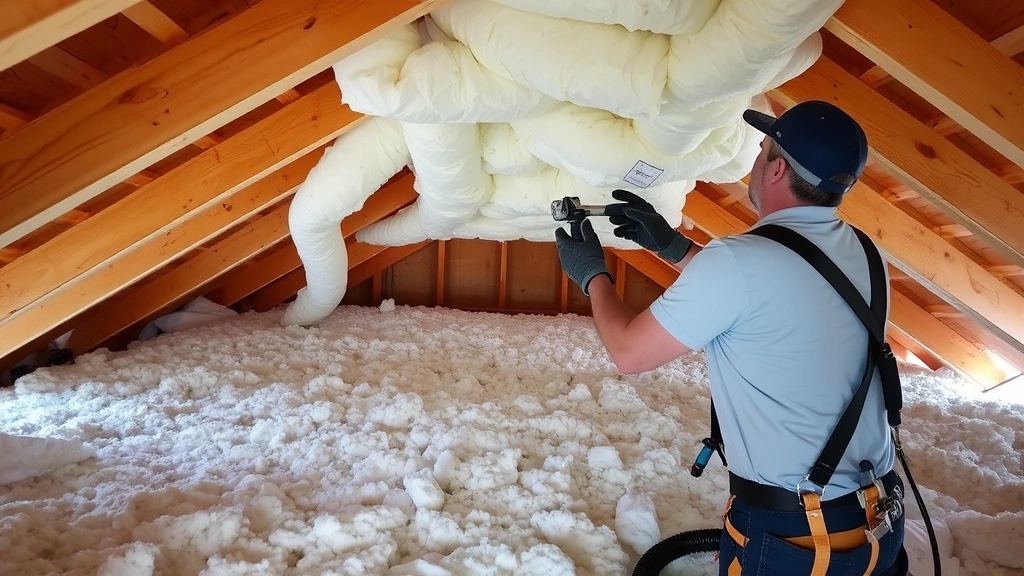
- Attic insulation: Insulation added to your attic, including blown-in cellulose, fiberglass, or mineral wool.
- Basement insulation: Insulation for basement walls or basement rim joists.
- Crawl space insulation: Insulation installed in crawl spaces beneath your home.
- Wall insulation: Insulation added to exterior walls (though this is less common in retrofits).
- Pipe insulation: Insulation for hot water pipes.
The key requirement is that the insulation must meet or exceed the R-value requirements set by the Department of Energy for your climate zone. You can’t just install any insulation and claim the credit—it needs to be the right type and thickness for your region.
What doesn’t qualify? Insulation that’s part of a new construction project, insulation for outbuildings, or insulation that doesn’t meet DOE specifications. Also, you can’t claim this credit if you’ve already claimed a similar federal credit for the same improvement in a prior year.
Credit Amounts and Limits
Here’s where the $1,200 figure comes in. Under current law, the maximum insulation tax credit you can claim is $1,200 per year. However, the actual amount you receive depends on what you install:
- Attic insulation: Up to $600 (30% of cost, capped at $2,000 in expenses).
- Basement/crawl space insulation: Up to $600 (30% of cost, capped at $2,000 in expenses).
- Pipe insulation: Up to $600 (30% of cost, capped at $2,000 in expenses).
The credit is calculated as 30% of your qualifying expenses, with a $2,000 per-category cap. This means if you spend $5,000 on attic insulation, you’d calculate 30% of $2,000 (the cap), which equals $600.
You can claim multiple categories in the same year, up to the $1,200 annual limit. So if you insulate your attic ($600 credit) and your basement ($600 credit), you’ve hit the $1,200 ceiling.
How to Claim the Credit
Claiming an insulation tax credit involves a few straightforward steps:

- Complete Form 5695: This is the official IRS form for residential energy credits. You’ll fill in details about your improvements and costs.
- Attach receipts and invoices: The IRS wants proof of what you spent and that the work was done.
- Include the form with your tax return: File Form 5695 along with your Form 1040 when you submit your return.
- Report the credit on your return: Transfer the credit amount to the appropriate line on your Form 1040.
If you’ve already filed your return for the year you made the improvements, you can still claim this credit. Check out our guide on how to amend your tax return if you already filed to learn about filing an amended return using Form 1040-X.
The process is manageable for most homeowners, though working with a tax professional can ensure you don’t miss anything. If you’re not comfortable with tax forms, a CPA or tax software that handles energy credits can walk you through it.
Documentation You’ll Need
The IRS doesn’t mess around when it comes to documentation for the insulation tax credit. Here’s what you need to keep:
- Contractor invoices and receipts: Show the date of work, description of materials, and costs.
- Proof of payment: Bank statements, credit card statements, or cancelled checks showing you actually paid.
- Manufacturer certifications: Documentation that the insulation meets DOE R-value requirements for your climate zone.
- Energy audit or contractor certification: Some contractors provide documentation certifying that the work meets energy code requirements.
- Proof of residency: A utility bill or mortgage statement showing the property is your primary residence.
Keep these documents for at least three years after filing your return. The IRS has a three-year statute of limitations for most audits, and they do spot-check energy credit claims.
Mistakes to Avoid
I’ve seen homeowners leave money on the table or get audited because of preventable errors with the insulation tax credit. Here’s what not to do:
- Claiming without proper documentation: The #1 mistake. You need receipts. Period. Don’t estimate or guess.
- Forgetting the income limit: If you’re over the MAGI threshold, you can’t claim this credit, full stop.
- Including ineligible improvements: Just because you insulated something doesn’t mean it qualifies. Stick to the IRS-approved list.
- Double-dipping: You can’t claim both this credit and a state energy credit for the same improvement in some cases. Check your state’s rules.
- Claiming for rental property: This credit is for your primary residence only. Rental properties have different rules.
- Exceeding the annual cap: You can’t claim more than $1,200 per year, even if you spent $10,000. Unused credits don’t carry forward.
The most common audit trigger I see is missing documentation. The IRS will ask for receipts, and if you can’t provide them, you lose the credit and may face penalties.

Related Energy Tax Credits
The insulation tax credit isn’t the only energy-related break available. You might also qualify for:
- Heat pump credit: Up to $2,000 for installing a qualifying heat pump.
- Water heater credit: Up to $1,200 for an energy-efficient water heater.
- Window credit: Up to $600 for qualifying energy-efficient windows.
- Roof credit: Up to $1,200 for qualifying cool roofs.
- HVAC credit: Up to $2,000 for a qualifying air conditioner or furnace.
You can claim multiple credits in the same year, as long as each one is for a different type of improvement and you stay within the overall $3,200 annual energy credit limit. This is where things get interesting—you could potentially combine an insulation credit with a heat pump credit, for example.
Filing Timeline and Deadlines
Here’s what you need to know about timing for the insulation tax credit:
- Work must be completed by December 31: You can claim a credit for improvements completed in the tax year you’re filing for.
- Return must be filed by April 15: Typically, this is the deadline for filing your tax return (or October 15 if you get an extension).
- No carryforward: Unlike some tax credits, unused insulation credits don’t roll over to future years. If you max out at $1,200 in 2024 and had $500 in additional qualifying expenses, that extra $500 is gone.
- Amended returns: You have up to three years to file an amended return and claim credits you missed.
Planning matters here. If you’re considering multiple energy improvements, timing them strategically can help you maximize your credits across tax years.
Frequently Asked Questions
Can renters claim the insulation tax credit?
No. The credit is only available to homeowners who own their primary residence. Renters cannot claim this credit for improvements made by their landlord or themselves, as they don’t own the property.
What if I exceed the $1,200 annual limit?
You’re out of luck for the excess. The $1,200 annual cap is firm, and unused credits don’t carry forward to future years. This is why planning multiple improvements strategically across different tax years can be beneficial.

Do I need a contractor to install the insulation?
No, you can do it yourself. However, you’ll need proper documentation that the insulation meets DOE requirements. If you hire a contractor, they typically provide this certification. If you DIY, you’ll need to research and document the R-value requirements for your climate zone.
Can I claim this credit if I already claimed it for a different improvement?
Yes, you can claim the credit for multiple types of improvements (attic, basement, crawl space, pipes) in the same year, up to the $1,200 limit. However, you can’t claim it twice for the same improvement.
What happens if the IRS audits my claim?
The IRS will ask for documentation. Provide your receipts, invoices, proof of payment, and manufacturer certifications. If you have proper documentation, you’re fine. If you don’t, you’ll lose the credit and potentially face penalties.
Are there state tax credits in addition to the federal credit?
Many states offer their own energy tax credits or rebates. These typically work alongside the federal credit. Check your state’s tax authority website for details. For example, if you’re in Georgia, review Georgia tax forms for state-specific energy incentives, or if you’re in California, learn about California tax resources for additional credits.
Do I have to itemize deductions to claim this credit?
No. The insulation tax credit is a non-refundable credit that reduces your tax liability directly. You can claim it whether you itemize or take the standard deduction.
Is the credit refundable?
No, it’s non-refundable. This means it can reduce your tax liability to zero, but it won’t result in a refund if the credit exceeds your tax liability. For example, if you owe $800 in taxes and claim a $1,200 credit, your liability becomes zero—but you don’t get a $400 refund.
Can I claim this credit for a second home or investment property?
No. The credit is limited to your primary residence. Second homes, vacation properties, and rental properties don’t qualify.
What if I hire a contractor who’s a 1099 independent contractor?
That’s fine. You can claim the credit based on the contractor’s invoice and your payment to them. If you’re the one hiring the contractor, you’re responsible for ensuring the work meets the requirements. For more on contractor tax matters, see our guide on tax forms for contractors.
Bottom Line
The insulation tax credit is a legitimate, straightforward way to get money back from the IRS for making your home more energy-efficient. Up to $1,200 per year is real savings, and the process is manageable if you keep proper documentation.
The key is understanding your eligibility (income limits, primary residence requirement), knowing which improvements qualify, and keeping receipts. Don’t overthink it—this credit is designed to incentivize homeowners to upgrade their insulation, and the IRS wants you to claim it.
If you’ve made qualifying improvements in the past year or are planning to, gather your documentation and file Form 5695 with your tax return. If you’ve already filed and missed this credit, you have up to three years to file an amended return. Either way, this is money you’ve earned by making smart home improvements.