
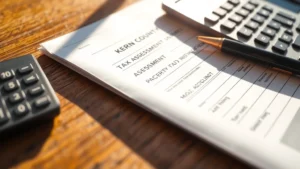
Let’s be real—property taxes in Kern County can feel like a punch to the gut, especially when you’re already juggling a mortgage, insurance, and maintenance costs. If you own property in Kern County, California, you’re probably wondering why your tax bill keeps climbing and what you can actually do about it. The good news? There are legitimate strategies to reduce your Kern County property tax burden, and most homeowners don’t know about them.
Property ownership comes with responsibilities, but it shouldn’t come with surprise tax bills that drain your savings. Whether you’re a first-time homebuyer or a seasoned investor, understanding how Kern County property tax works—and where the loopholes are—can save you thousands of dollars over the life of your ownership. This isn’t about dodging taxes (that’s illegal and dumb). It’s about paying what you actually owe, nothing more.
In this guide, I’ll walk you through the mechanics of Kern County property tax, show you proven strategies to lower your bill, and help you navigate the appeals process if your assessment feels unfair. Let’s dig in.
How Kern County Property Tax Works
Here’s the basic framework: Your property tax bill in Kern County is calculated by taking your property’s assessed value and multiplying it by the tax rate (called the “millage rate”). Sounds simple, right? It is—until you realize that the assessed value might not reflect what your home is actually worth, and the tax rate itself is made up of multiple layers.
The Kern County Assessor’s Office determines your property’s assessed value. This is not the same as your home’s market value. In fact, thanks to California’s Proposition 13 (more on that in a moment), your assessed value is often significantly lower than what your home would sell for today. The assessed value is the foundation of your entire tax bill, so getting this number right is critical.
Your tax rate includes several components:
- Base rate: 1% of assessed value (this is the state minimum)
- Voter-approved bonds: Additional taxes for schools, water districts, fire protection, etc.
- Special assessments: Fees for specific improvements or services in your area
The total effective tax rate in Kern County typically ranges from 0.76% to 1.25% of assessed value, depending on your specific location and which special districts serve your property. If your assessed value is $400,000, you might pay $3,000 to $5,000 annually—before any exemptions kick in.
Pro Tip: Request your property tax bill and assessment notice from the Kern County Assessor. These documents show exactly how your bill is calculated. Most homeowners have never actually looked at them. Don’t be that person.
Proposition 13 and Your Assessment: The Weird California Rule That Saves You Money
Proposition 13, passed in 1978, is one of the most misunderstood tax laws in California. Here’s what it does: It caps your property tax assessment increases at 2% per year, regardless of how much your home’s market value actually increases. This is huge.
Think of it like this: You buy a house in Kern County for $300,000. Your initial assessed value is $300,000. The next year, the housing market booms and your home is now worth $330,000. Under normal circumstances, your assessment would jump to $330,000, and so would your taxes. But under Prop 13, your assessment only increases by 2%, to $306,000. Your tax bill stays relatively flat.
This protection continues year after year, until you sell. The moment you transfer the property, it gets reassessed at current market value. So if you held that $300,000 house for 10 years while the market doubled, you might have been paying taxes on an assessed value of around $366,000 (with the 2% annual increases). But when you sell, the new owner’s assessed value resets to the actual sale price.
This is why Prop 13 is such a big deal for long-term homeowners—and why it can shock new buyers. If you’re purchasing property in Kern County, expect your property tax bill to be based on the actual purchase price, not some artificially low assessed value from decades ago.
Warning: Prop 13 resets on property transfers. If you inherit property or transfer it to a family member, the reassessment rules can be complex. The Parent-Child Exclusion allows some transfers to avoid reassessment, but there are strict eligibility requirements. Talk to a tax professional before transferring property.
Homeowner Exemptions and Deductions You Might Qualify For
California offers several exemptions that can reduce your taxable assessed value. These aren’t deductions on your income tax return—they’re actual reductions to the value the county uses to calculate your property tax bill. The difference is significant.
The Homeowner’s Exemption is the most common. If your primary residence is in Kern County, you can claim an exemption that reduces your assessed value by $7,000. This means if your home is assessed at $400,000, the taxable value becomes $393,000. On a 1% tax rate, that’s $70 in annual savings. It doesn’t sound like much, but over 30 years, that’s $2,100 in your pocket.
To claim the Homeowner’s Exemption, file an application with the Kern County Assessor. The deadline is typically the end of the fiscal year (June 30) for properties purchased before that date. If you just bought a home, you can still apply, but you might miss the deadline for the current year.
Disabled Veteran’s Exemption is another option. If you’re a disabled veteran with a service-connected disability rated by the VA, you may qualify for an exemption that can reduce your assessed value by $100,000 to $200,000 (depending on your disability rating). This is a substantial benefit and worth exploring if you qualify.
Senior Citizens’ Property Tax Exemption applies if you’re 65 or older with a household income below a certain threshold (currently around $24,000 for a single person). This exemption can reduce your assessed value by $7,000, similar to the standard homeowner’s exemption.
If you own rental or investment property in Kern County, you might also qualify for rental property tax deductions at the federal level, though these are separate from your local property tax bill. Understanding both is essential for maximizing your overall tax efficiency.
The Appeal Process: Fighting an Unfair Assessment

Your assessed value isn’t set in stone. If you believe the Kern County Assessor overvalued your property, you have the right to appeal. This is where many homeowners leave money on the table—they simply accept the assessment without question.
The appeal process in California has two main phases:
- Informal Review (Administrative Appeal): You submit a written request to the Assessor’s office, usually within 30 days of receiving your assessment notice. You’ll need evidence supporting your claim that the assessment is too high. This might include recent appraisals, comparable sales data, or documentation of property defects that reduce value.
- Formal Appeal (Assessment Appeals Board): If the Assessor denies your informal appeal, you can file a formal appeal with the Assessment Appeals Board. This is a more formal process, but it’s still accessible to homeowners without an attorney. You’ll present your case before a three-member panel.
The strongest evidence in an appeal is a recent professional appraisal showing a lower value than the Assessor’s assessment. You can also use comparable sales data from public records, though the Assessor will likely argue that these aren’t as reliable as their own valuation methods.
Timing matters. Assessment notices are mailed in late summer or early fall. You typically have 30 days to file an informal appeal. Mark your calendar. Missing the deadline can cost you thousands in unnecessary taxes.
Pro Tip: If your home suffered significant damage (fire, flood, major structural issues), document it immediately with photos. Damage that reduces market value can justify a lower assessment. Don’t wait—the Assessor’s office conducts periodic inspections, and they’ll eventually notice improvements or damage themselves.
Investment Property Strategies for Kern County
If you own rental property or investment real estate in Kern County, your property tax situation is different from owner-occupied homes. You don’t qualify for the Homeowner’s Exemption, and your assessed value is based purely on the property’s income-generating potential and market value.
However, you have other advantages. Investment property owners can deduct mortgage interest, property taxes, maintenance costs, property management fees, and depreciation on their federal income tax returns. These deductions can significantly offset your rental income. If you’re not currently taking advantage of these, you’re overpaying federal taxes.
For a deeper dive into maximizing your investment property tax situation, check out our guide on rental property tax deductions. Understanding the relationship between your local Kern County property tax and your federal deductions is critical for overall tax planning.
One strategy many investors overlook: Cost Segregation Studies. This is a detailed analysis of your property that identifies components that can be depreciated faster than the building itself. For example, the parking lot, landscaping, and certain interior finishes can be depreciated over 5-15 years instead of 27.5 years. This accelerates your tax deductions in early years, improving your cash flow. It’s complex and requires professional help, but for significant investments, the savings can be substantial.
Another consideration: If you’re evaluating whether to buy investment property in Kern County versus another location, use a tax equivalent yield calculator to understand the true after-tax returns. A property with a 6% gross yield might have a very different after-tax yield depending on your tax bracket and the local property tax rate.
Common Mistakes to Avoid
Mistake #1: Not Filing for the Homeowner’s Exemption
This is the easiest money you can leave on the table. If you own your primary residence in Kern County and haven’t claimed the exemption, you’re overpaying every single year. File immediately. It’s a simple form, and the Kern County Assessor’s office will walk you through it.
Mistake #2: Assuming Your Assessment Is Correct
The Assessor’s office is professional and generally accurate, but they’re not infallible. If your home’s market value has declined (especially relevant during economic downturns), your assessment might not reflect current reality. Pull comparable sales data and compare it to your assessed value. If there’s a significant gap, appeal.
Mistake #3: Ignoring the Reassessment When You Buy
New buyers in Kern County are often shocked by their first property tax bill because they weren’t expecting the assessed value to reset to the purchase price. This is normal and legal, but it’s something to factor into your purchase decision. Use the IRS guidance on property taxes to understand what portion of your mortgage payment goes to taxes versus principal and interest.
Mistake #4: Not Documenting Property Improvements or Damage
If you make major improvements to your property, the Assessor might increase your assessed value. If your property suffers damage, they might not automatically decrease it. Keep detailed records of improvements, repairs, and any damage. Photos are invaluable if you need to appeal.
Mistake #5: Missing Appeal Deadlines
California’s appeal deadlines are strict. Miss the 30-day window for an informal appeal, and you might not get another chance for several years. Set calendar reminders. Treat assessment notices like you’d treat an IRS letter—with respect and urgency.
Mistake #6: Confusing Local Property Tax with State and Federal Taxes
Your Kern County property tax bill is separate from your federal income tax return. Don’t assume that reducing your property tax bill reduces your federal taxes (though if you itemize deductions, property taxes can reduce your federal liability). Similarly, strategies like understanding your state tax refund eligibility in other states won’t directly apply to Kern County property taxes, but understanding how different states handle property taxes can inform your long-term financial planning.
Frequently Asked Questions
What is the current property tax rate in Kern County?
– The base rate is 1% of assessed value, as set by California law. However, your total effective rate depends on voter-approved bonds and special assessments in your specific area. Most properties in Kern County pay between 0.76% and 1.25% of assessed value. Check your tax bill or the Kern County Assessor’s website for your exact rate.
Can I appeal my Kern County property tax assessment?
– Yes, absolutely. You have 30 days from receiving your assessment notice to file an informal appeal with the Assessor’s office. If denied, you can file a formal appeal with the Assessment Appeals Board. Bring evidence like recent appraisals or comparable sales data.
Do I qualify for the Homeowner’s Exemption?
– If your primary residence is in Kern County and you own it (or have a long-term lease), you likely qualify. The exemption reduces your assessed value by $7,000. File an application with the Kern County Assessor’s office. The deadline is typically June 30 for the current fiscal year, but you can file even if you miss the deadline—you’ll just start receiving the exemption the following year.
What happens to my property taxes if I inherit property in Kern County?
– This depends on the type of inheritance and your relationship to the deceased. The Parent-Child Exclusion allows some transfers between parents and children to avoid reassessment under Prop 13. However, other transfers typically trigger reassessment at current market value. Consult a tax professional or estate attorney before the transfer occurs.
Are property taxes in Kern County deductible on my federal income tax return?
– Yes, but only if you itemize deductions on your federal return. You can deduct up to $10,000 in state and local taxes (including property taxes) combined. If your property taxes exceed this limit, you can’t deduct the excess. Many homeowners find that the standard deduction is higher than their itemized deductions, so they don’t benefit from this deduction at all.
How often is my property reassessed in Kern County?
– Your assessed value increases by a maximum of 2% per year under Prop 13, unless there’s a change in ownership or new construction. When you sell or transfer the property, it’s reassessed at current market value. The Assessor also conducts periodic property inspections to ensure assessed values reflect current conditions.
Can I reduce my property taxes by making energy-efficient improvements?
– California offers a solar energy exemption that excludes solar panels from your assessed value. This means adding solar doesn’t increase your property tax bill (though you still benefit from the energy savings). Other energy-efficient improvements don’t receive the same exemption, but they may increase your home’s value, which could eventually lead to a higher assessment.
What’s the difference between assessed value and market value?
– Market value is what your home would sell for today. Assessed value is what the county uses to calculate your property tax bill. Under Prop 13, your assessed value increases by only 2% per year, so it often lags significantly behind market value. This is actually beneficial for long-term homeowners but can shock new buyers.
How do I find my property’s assessed value?
– Visit the Kern County Assessor’s website and use their property search tool. You can also call their office or visit in person. Your assessment notice (mailed annually) also shows your assessed value and tax bill.


