

The Monterey County CA tax collector is your gateway to understanding and managing property taxes, vehicle registration fees, and other local tax obligations in one of California’s most beautiful coastal regions. Whether you’re a homeowner, business owner, or new resident, knowing how to work with the Monterey County tax system can save you money, headaches, and time.
Table of Contents
Understanding the Tax Collector Role
The Monterey County tax collector serves as the official custodian of tax collection and records for the entire county. This office handles everything from property tax billing and collection to vehicle registration renewals and penalty assessments. Think of them as the financial backbone of local government—without their work, schools wouldn’t open, roads wouldn’t get fixed, and emergency services wouldn’t function.
The tax collector’s office maintains detailed records for every parcel of land in Monterey County. They’re responsible for billing property owners twice yearly, processing payments, and managing delinquent accounts. If you own property in Monterey County, you’ll interact with this office regularly, whether you realize it or not.
Understanding how the tax collector’s office operates isn’t just bureaucratic knowledge—it’s practical information that affects your wallet. Late payments trigger penalties. Missing exemptions means overpaying. Not knowing your rights could cost you thousands over time.
Property Tax Basics in Monterey
California’s property tax system, governed by Proposition 13, sets the baseline for how Monterey County assesses and collects property taxes. Your property tax bill is based on the assessed value of your home or land, which typically equals the purchase price (with annual increases capped at 2% unless there’s a change in ownership).
In Monterey County, the property tax rate is approximately 0.76% of assessed value, though this varies slightly by specific location and tax districts. A home valued at $800,000 would generate roughly $6,080 in annual property taxes. These funds support schools, fire departments, parks, and other essential services.
Your property tax bill includes several components: county taxes, school district taxes, special assessment districts, and voter-approved bonds. The Monterey County tax collector’s office bills and collects all of these together, making it a one-stop shop for your local tax obligations. If you’re confused about what each line item represents on your bill, the tax collector’s office can provide detailed breakdowns.
For context on how California property taxes compare to other regions, check out our guide on property tax in Palo Alto, which shows similar dynamics in neighboring counties.
How to Pay Your Taxes
The Monterey County tax collector accepts payments through multiple convenient channels. You can pay in person at the tax collector’s office located in Salinas, by mail, online through their official website, or by phone using a credit or debit card (though fees apply).
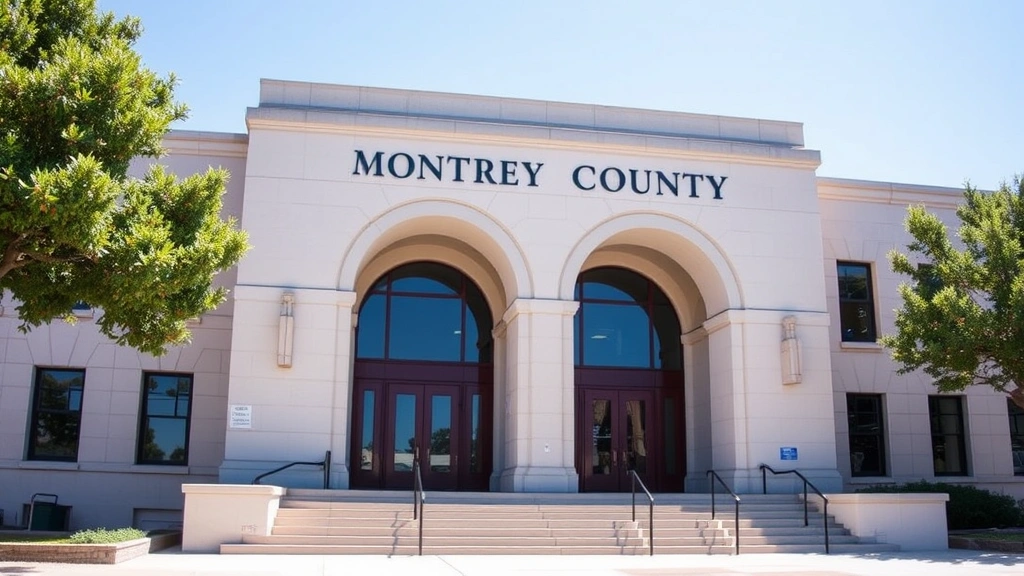
Online payment is the fastest and most convenient option. The county’s secure portal allows you to search for your parcel number, view your bill, and make immediate payments 24/7. You’ll need your property parcel number or vehicle registration information to access your account. Payment processing typically takes 1-2 business days.
If you prefer paying by mail, send checks or money orders to the Monterey County Tax Collector’s Office in Salinas. Always include your parcel number on the check memo line. Mail payments should arrive at least 10 days before the deadline to ensure they’re posted on time—late fees apply to payments received after the due date, regardless of when you mailed them.
Phone payments offer another option, though credit card companies charge convenience fees (typically 2-3%). Some people set up automatic payments through their bank’s bill-pay service, which often costs nothing and ensures you never miss a deadline.
Important Payment Deadlines
Monterey County property taxes are billed in two installments: the first installment is due November 1st and becomes delinquent December 10th, and the second installment is due February 1st and becomes delinquent April 10th. Mark these dates on your calendar—the difference between paying on time and paying late can mean hundreds of dollars in penalties.
Delinquent taxes accrue a 10% penalty immediately after the deadline passes. If you miss the April 10th deadline on the second installment, an additional 1.5% monthly penalty kicks in. After five years of non-payment, the county can initiate tax deed proceedings, potentially leading to foreclosure on your property.
If you’re struggling to pay your full bill by the deadline, contact the tax collector’s office immediately. Many counties offer payment plans or hardship considerations. Waiting until after the deadline and then contacting them is much harder to resolve than calling proactively.
Vehicle registration fees follow different timelines. Your registration renewal notice will specify your renewal deadline—typically based on your vehicle’s license plate number. Missing vehicle registration deadlines results in fines and potential registration suspension.
Online Services and Tools
The Monterey County tax collector’s website offers robust online tools that make managing your taxes significantly easier. The parcel search tool lets you look up any property in the county to view ownership information, assessed value, and tax history. This is useful if you’re considering buying property or want to verify information about a neighbor’s assessment.
The bill search feature allows you to locate your current property tax bill by parcel number or owner name. You can view detailed breakdowns of what you owe, which agencies receive your payment, and your payment history. This transparency is invaluable for understanding exactly where your tax dollars go.
Many residents don’t realize they can set up account notifications through the county website. You can opt to receive email alerts about upcoming due dates, payment confirmations, or changes to your assessment. These reminders eliminate the excuse of “I forgot” and help you stay organized.
The online payment portal is secure and PCI-compliant, meaning your financial information is protected to the same standards as major banks. You can pay with debit cards, credit cards, or electronic bank transfers. Keep your confirmation number for your records—it serves as proof of payment.
Appeals and Tax Exemptions
If you believe your property has been assessed incorrectly, you have the right to appeal. The Monterey County Assessor’s Office determines assessed values, but the tax collector’s office can explain the appeals process. Most property owners don’t realize they can challenge their assessment—and many should.
Common grounds for appeal include: the property was assessed at more than market value, the property has structural damage or defects affecting value, or comparable properties in your area were assessed at lower values. You typically have 30 days after receiving your assessment notice to file an appeal, though this timeline varies.
Several exemptions can reduce your property tax bill. Homeowners over 65 with limited income may qualify for the Senior Property Tax Exemption. Disabled veterans might be eligible for a disabled veteran exemption. Nonprofit organizations and religious institutions often qualify for exemptions. The tax collector’s office can direct you to the Assessor’s Office to explore whether you qualify.
Property tax reassessment in California occurs when there’s a change in ownership. If you’re purchasing property, understand that property tax reassessment will likely increase your taxes compared to the previous owner’s bill. This is a crucial consideration in your purchase decision.
Vehicle Registration and Fees
The Monterey County tax collector’s office also handles vehicle registration renewals and related fees. California vehicle registration includes multiple components: the base registration fee, county fees, and various state assessments. The total can be substantial, especially for newer or higher-value vehicles.

You’ll receive a renewal notice 60 days before your registration expires. You can renew online through the DMV website, by mail through the tax collector’s office, or in person at a DMV office. Online renewal through the state DMV is typically fastest and most convenient.
If you move to Monterey County from another state, you’ll need to register your vehicle with California within 20 days. The tax collector’s office can provide guidance on this process, though the DMV handles most vehicle registration matters. Vehicle registration fees in California are significantly higher than in many other states—another reason to understand exactly what you’re paying for.
Hybrid and electric vehicles receive reduced registration fees in California. If you drive a qualifying vehicle, make sure you’re taking advantage of this discount. The tax collector’s office can verify your vehicle’s eligibility.
Common Tax Issues and Solutions
One frequent problem is owners not receiving their property tax bills. If your bill doesn’t arrive by October, contact the tax collector’s office immediately. Address changes with the post office don’t automatically update with the county. You’re responsible for paying on time regardless of whether you received the bill.
Another common issue involves incorrect parcel numbers on payments. If you write the wrong parcel number on your check, your payment might be credited to the wrong property. Always verify your parcel number before mailing a payment. The tax collector’s office can help if this happens, but it’s much easier to get it right initially.
Some owners struggle with understanding their bill’s components. A single property tax bill includes payments to multiple agencies: the county, school district, special districts, and sometimes voter-approved bonds. Each line item serves a different purpose. The tax collector’s office provides detailed explanations if you request them.
Property ownership disputes occasionally arise, particularly with inherited properties or those involved in divorce settlements. The tax collector’s office maintains official records but cannot resolve ownership disputes—that’s a legal matter requiring court involvement or agreement between parties.
For broader context on California taxes, our article on sales tax in Irvine CA explains how local taxes work across the state, and our guide on real estate capital gains tax covers what happens when you sell property.
Contact Information and Resources
The Monterey County Tax Collector’s Office is located at 168 W. Alisal Street, Salinas, CA 93901. Phone: (831) 755-3300. Website: www.montereycountytaxcollector.us. Office hours are typically Monday-Friday, 8 AM to 5 PM, though hours may vary seasonally.
For property assessment questions, contact the Monterey County Assessor’s Office. For vehicle registration matters, the California DMV website (dmv.ca.gov) is your best resource. For tax deduction questions related to property taxes on your federal return, consult the IRS website.
The Monterey County Library system also offers financial literacy resources and tax assistance programs. Some libraries host free tax preparation clinics during tax season, and librarians can help you navigate government websites and resources.
Summary: Taking Control of Your Monterey County Taxes
Managing your Monterey County tax obligations doesn’t have to be complicated. The key is understanding the basics: when bills are due, how to pay them, what services are available, and where to get help when you need it. The Monterey County tax collector’s office exists to serve you—they want you to pay on time and understand your bill.
Start by locating your parcel number and accessing the county’s online portal. Set up account notifications so you never miss a deadline. Review your bill carefully to understand what you’re paying for. If something seems wrong, ask questions—that’s what the office is there for.
Property taxes represent one of the largest expenses for homeowners. Taking 30 minutes to understand your Monterey County tax situation could save you hundreds or thousands of dollars over the years through better planning, identifying exemptions, or catching billing errors early. That’s time well spent.
Frequently Asked Questions
When are Monterey County property taxes due?
Property taxes are billed in two installments: the first installment is due November 1st (delinquent December 10th), and the second installment is due February 1st (delinquent April 10th). Both dates are firm—late payments incur a 10% penalty plus additional monthly penalties.
Can I pay my Monterey County taxes online?
Yes, the Monterey County tax collector’s office offers a secure online payment portal at www.montereycountytaxcollector.us. You can search for your bill by parcel number or owner name and pay immediately using a debit card, credit card, or electronic bank transfer. Payments typically process within 1-2 business days.

What if I can’t pay my full property tax bill by the deadline?
Contact the tax collector’s office immediately before the deadline. Many counties offer payment plans or hardship considerations. Waiting until after the deadline makes resolution much more difficult. Partial payments are accepted and credited to your account.
How do I appeal my property tax assessment?
If you believe your property was assessed incorrectly, contact the Monterey County Assessor’s Office. You typically have 30 days after receiving your assessment notice to file an appeal. Common grounds include assessment exceeding market value, property damage affecting value, or comparable properties assessed lower. The tax collector’s office can provide contact information for the Assessor’s Office.
What exemptions might reduce my property tax bill?
Several exemptions exist: Senior Property Tax Exemption (age 65+ with limited income), disabled veteran exemptions, nonprofit and religious organization exemptions, and homeowner exemptions in some cases. Contact the Monterey County Assessor’s Office to determine your eligibility.
What happens if I don’t pay my property taxes?
Unpaid property taxes accrue penalties and interest. After five years of non-payment, the county can initiate tax deed proceedings, potentially leading to foreclosure. Your property could be sold at a tax sale to recover the unpaid taxes, penalties, and costs. This is a serious consequence—never ignore property tax bills.
How do I renew my vehicle registration in Monterey County?
You’ll receive a renewal notice 60 days before expiration. Renew online through the California DMV website (dmv.ca.gov), by mail through the tax collector’s office, or in person at a DMV office. Online renewal is fastest. If you have a hybrid or electric vehicle, you may qualify for reduced registration fees.
Where can I find my parcel number?
Your parcel number appears on your property tax bill. You can also find it through the Monterey County tax collector’s website by searching by owner name or address. Your parcel number is essential for all tax-related inquiries and payments.


