
A mortgage tax calculator is one of the smartest financial tools you can use to understand exactly how much of your mortgage payment goes toward taxes and interest deductions. Most homeowners leave thousands of dollars on the table every year simply because they don’t know what they’re entitled to claim. Let me show you how to change that.
Table of Contents
- How Mortgage Tax Calculators Work
- Mortgage Interest Deduction Basics
- Property Taxes and SALT Limits
- Calculate Your Actual Tax Savings
- Itemizing vs. Standard Deduction
- Avoid These Calculator Mistakes
- Refinancing and Tax Impact
- State-Specific Mortgage Tax Benefits
- Frequently Asked Questions
- Final Thoughts
How Mortgage Tax Calculators Work
When you use a mortgage tax calculator, you’re essentially running numbers through the IRS rulebook to see what deductions apply to your situation. Here’s what happens behind the scenes:
The calculator takes your mortgage principal amount, interest rate, and loan term, then separates the interest portion from the principal portion of each payment. Why? Because only the interest is tax-deductible—not the principal. This is where most people get confused. Your monthly mortgage payment is split roughly 70/30 (interest to principal) in the early years, but that ratio shifts dramatically as your loan matures.
A quality mortgage tax calculator also factors in your property tax payments and evaluates whether you should itemize deductions or take the standard deduction. This comparison is critical. The average tax rate formula helps determine your actual tax liability, but mortgage-specific calculators go deeper by isolating housing-related write-offs.
The tool compares your total itemized deductions (mortgage interest + property taxes + other eligible expenses) against the standard deduction for your filing status. If itemizing wins, you get the bigger tax break.
Mortgage Interest Deduction Basics
Let’s talk about the mortgage interest deduction—it’s the single biggest tax benefit homeowners get, and it’s worth understanding thoroughly.
For tax year 2024, you can deduct mortgage interest on loans up to $750,000 (or $375,000 if married filing separately). If your mortgage predates December 16, 2017, you can deduct interest on up to $1 million. This is the mortgage principal limit, and it applies to your primary residence and one second home.
Here’s a practical example: Say you have a $400,000 mortgage at 6.5% interest. In year one, you’ll pay roughly $25,800 in interest. If you itemize deductions and you’re in the 24% tax bracket, that interest deduction saves you about $6,192 in federal taxes. That’s real money.
But—and this is important—you only get this deduction if you itemize. Many homeowners don’t realize the standard deduction has increased significantly. For 2024, it’s $14,600 for single filers and $29,200 for married couples filing jointly. Your mortgage interest deduction only matters if your total itemized deductions exceed these numbers.
Property Taxes and SALT Limits
Property taxes are another major homeowner deduction, but here’s where it gets complicated: the SALT (State and Local Taxes) cap.
Starting in 2018, you can only deduct up to $10,000 in combined state and local taxes—including property taxes, income taxes, and sales taxes. This cap is in effect through 2025 (though there’s political discussion about extending or removing it).
For homeowners in high-tax states, this SALT cap is painful. If you live in California, New York, New Jersey, or Massachusetts, your property taxes alone might exceed $10,000, leaving no room for state income tax deductions. A mortgage tax calculator that accounts for SALT limits is essential for understanding your true tax position.
Here’s the strategy: Some high-income homeowners prepay property taxes in December to maximize deductions in that tax year, then carry forward unused deductions. It’s not a perfect solution, but it’s one tactic worth discussing with a CPA.
Calculate Your Actual Tax Savings
To calculate your actual tax savings, you need three numbers:
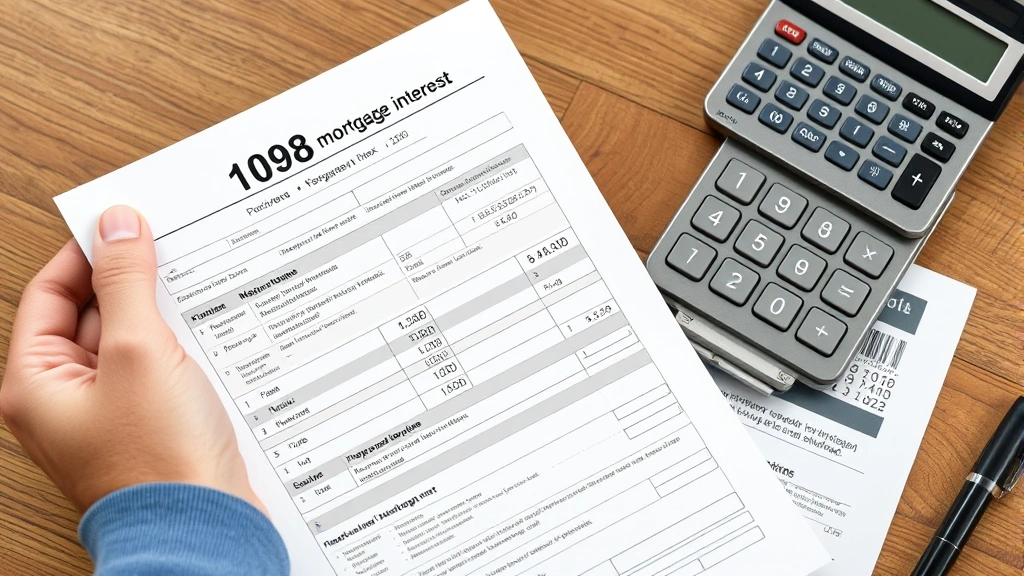
- Your mortgage interest paid (from your 1098 form or loan statement)
- Your property taxes paid (from your property tax bill)
- Your marginal tax bracket (the rate on your last dollar earned)
Let’s work through an example. Assume:
- Mortgage interest: $18,000
- Property taxes: $8,000
- Other itemized deductions: $3,000
- Your marginal tax bracket: 24%
Total itemized deductions = $29,000. This exceeds the standard deduction of $29,200 (married filing jointly), so you’d itemize and save $29,000 × 24% = $6,960 in federal taxes. That’s the power of understanding these numbers.
A mortgage tax calculator automates this entire process, but knowing the logic helps you verify the results and catch errors. Many calculators also show you year-by-year breakdowns, which is invaluable for long-term planning.

Itemizing vs. Standard Deduction
This is the decision point that makes or breaks your tax strategy. Should you itemize or take the standard deduction?
The standard deduction is the “easy button.” You don’t need receipts, documentation, or a calculator. You just claim the fixed amount and move on. For 2024, it’s $14,600 (single) or $29,200 (married filing jointly).
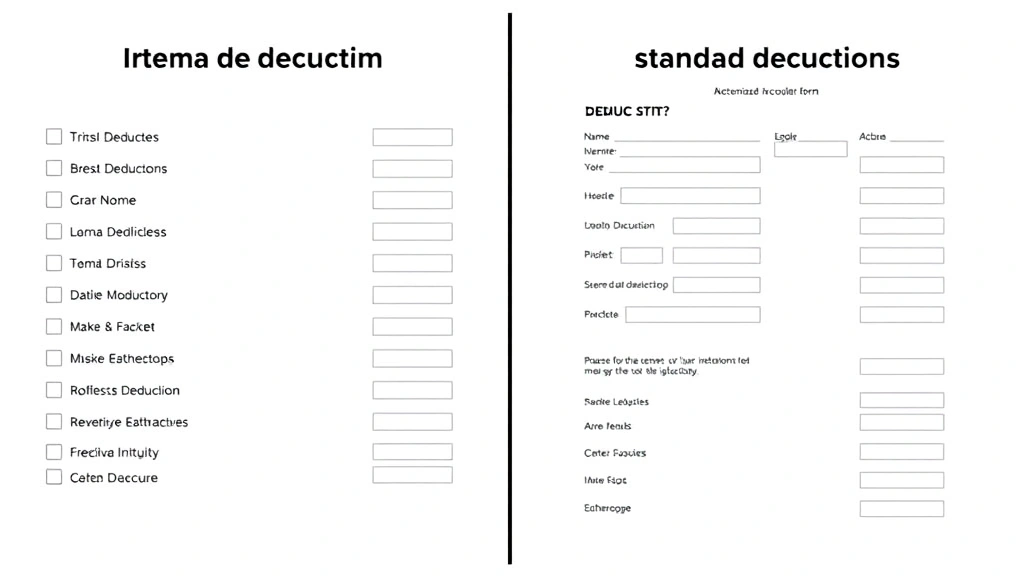
Itemizing requires you to list out deductions: mortgage interest, property taxes (up to $10,000 due to SALT cap), charitable contributions, medical expenses, and so on. You only get the benefit if your total exceeds the standard deduction.
Here’s the reality: About 90% of taxpayers take the standard deduction because their itemized deductions don’t exceed it. But if you own a home with a mortgage and live in a state with significant property taxes, you’re likely in the 10% that should itemize.
A mortgage tax calculator handles this comparison automatically. It tells you which option wins and by how much. That’s the value of the tool—it removes guesswork from the equation.
Avoid These Calculator Mistakes
Even the best tools produce garbage output if you feed them garbage input. Here are the mistakes I see most often:
Mistake #1: Using the wrong mortgage balance. Some calculators ask for your original loan amount. That’s wrong. Use your current balance or the amount you paid interest on during the tax year. Your 1098 form shows the correct interest paid.
Mistake #2: Forgetting about points. If you paid points to buy down your interest rate, you can deduct them. Some calculators don’t account for this. Check your closing disclosure.
Mistake #3: Ignoring the SALT cap. This is the biggest error I see. Homeowners add up their property taxes without remembering the $10,000 limit. Any excess is wasted.
Mistake #4: Not updating your tax bracket. Your marginal tax bracket isn’t your effective rate. It’s the rate on your last dollar earned. If you’re married filing jointly and earned $200,000, you’re in the 24% bracket, not 15%. Using the wrong bracket throws off your entire calculation.
Mistake #5: Assuming all mortgage interest is deductible. Remember the $750,000 limit? If your mortgage exceeds that, only interest on the first $750,000 qualifies. A good calculator enforces this rule automatically.
Refinancing and Tax Impact
When you refinance, the tax picture changes significantly. Here’s what happens:
First, if you paid points to refinance, you can’t deduct them all in year one. The IRS requires you to amortize refinance points over the life of the new loan. If you paid $6,000 in points on a 30-year loan, you deduct $200 per year. This is different from purchase points, which are fully deductible in year one.
Second, refinancing changes your interest-to-principal ratio. If you refinanced after paying down your original loan, you’re starting fresh with a higher interest portion again. That sounds bad for taxes, but it actually increases your deduction in the short term.
Third, if you cash-out refinance (borrowing more than you owe), only the interest on the portion used to improve your home is deductible. Interest on cash-out used for other purposes doesn’t qualify. This is a critical distinction that many calculators miss.
Run your numbers through a mortgage tax calculator before and after refinancing to understand the true cost. Sometimes the tax impact tips the scales against refinancing, even if the rate is lower.

State-Specific Mortgage Tax Benefits
Beyond federal deductions, some states offer their own mortgage tax breaks. Understanding these can unlock additional savings.
For example, Texas offers unique financial advantages for homeowners, including no state income tax (so the SALT cap doesn’t hurt as much). Other states like California and New York have additional property tax deferrals or exemptions for seniors and disabled homeowners.
Some states also allow deductions for mortgage insurance premiums (PMI), which federal law doesn’t permit anymore (though there’s ongoing debate about restoring it). A few states have first-time homebuyer credits or property tax relief programs.
Your mortgage tax calculator should account for your state of residence. If it doesn’t, you’re leaving money on the table. Check your state’s tax authority website or consult a local CPA to identify state-specific benefits.
Additionally, if you’re considering energy-efficient home improvements, look into credits like the insulation tax credit, which can reduce your tax liability dollar-for-dollar.
Frequently Asked Questions
Can I deduct mortgage interest if I take the standard deduction?
No. Mortgage interest is only deductible if you itemize deductions. If you claim the standard deduction, you cannot also deduct mortgage interest. The standard deduction is an all-or-nothing choice.
What if my mortgage interest changes each month?
On adjustable-rate mortgages (ARMs), your interest rate and payment change periodically. A good mortgage tax calculator recalculates the interest-to-principal split when rates adjust. Your 1098 form shows your actual interest paid for the year, so use that number in your calculator.
Do I need to report my mortgage interest to the IRS?
Yes. Your lender sends you a 1098 form showing interest paid. You report this on Schedule A if you itemize. The IRS cross-checks this with what your lender reports, so accuracy matters.

Can I deduct interest on a home equity line of credit?
Only if you use the HELOC to buy, build, or improve your home. Interest on HELOCs used for other purposes (paying off credit cards, funding a vacation) is not deductible. A mortgage tax calculator that handles HELOCs should distinguish between these uses.
What happens to my deduction if I pay off my mortgage early?
Once you pay off your mortgage, you lose the mortgage interest deduction. This is a major consideration for people planning to pay off their home. Run the numbers through a calculator to see if accelerating payoff makes financial sense after accounting for lost tax benefits.
Are PMI premiums deductible?
Not anymore at the federal level. The deduction expired December 31, 2023, though Congress occasionally discusses extending it. Check with your state, as some allow state-level PMI deductions.
How do mortgage points affect my taxes?
Points paid at purchase are fully deductible in year one. Points paid at refinance must be amortized over the loan term. If you pay off the loan early, you can deduct remaining unamortized points in the year of payoff. A mortgage tax calculator should handle this automatically.
Final Thoughts
A mortgage tax calculator isn’t just a nice-to-have—it’s essential for understanding your true tax position as a homeowner. The difference between itemizing and taking the standard deduction can be thousands of dollars annually. The difference between knowing your SALT cap and ignoring it can cost you even more.
Here’s my advice: Run your numbers through a calculator before tax season arrives. Use your 1098 form, property tax bill, and current mortgage statement as inputs. Compare the itemize-vs.-standard-deduction scenarios. Then, discuss the results with a CPA or tax professional to ensure you’re optimizing across federal and state taxes.
The time you spend understanding your mortgage’s tax impact today will pay dividends for decades. And remember—the IRS isn’t going to call you and say, “Hey, you missed a deduction!” It’s on you to claim what you’re entitled to. A mortgage tax calculator is your first step toward reclaiming thousands in tax savings.