

If you’re self-employed, a freelancer, or earn income outside traditional W-2 employment in Pennsylvania, PA estimated tax payments are likely part of your financial reality. These quarterly payments ensure you’re paying your fair share of taxes throughout the year instead of facing a massive bill come April. Let’s walk through what you need to know to stay compliant and penalty-free.
Table of Contents
- What Are Estimated Tax Payments?
- Who Needs to Make Estimated Payments?
- PA vs. Federal Requirements
- Payment Deadlines and Schedule
- Calculating Your Quarterly Amount
- How to Submit Your Payments
- Penalties for Missing Payments
- Safe Harbor Rules Explained
- Adjusting Payments Mid-Year
- Frequently Asked Questions
What Are Estimated Tax Payments?
Estimated taxes are quarterly payments you make to both the federal government and Pennsylvania when you expect to owe $500 or more in taxes at year-end. Unlike traditional employees who have taxes withheld from paychecks, self-employed individuals and business owners need to manually send in these payments to avoid underpayment penalties.
Think of estimated taxes as a way to spread your tax liability across the year. Without them, you’d be writing a check to the IRS and Pennsylvania Department of Revenue for potentially thousands of dollars in April. Nobody enjoys that surprise, and the IRS certainly doesn’t appreciate waiting until then to collect.
The concept applies whether you’re earning income from a side gig, rental property, investment gains, or running a full-time business. If the income isn’t subject to employer withholding, estimated payments are your responsibility.
Who Needs to Make Estimated Payments?
Not everyone is required to make estimated tax payments. The IRS and Pennsylvania have specific thresholds. Generally, you need to make estimated payments if:
- You’re self-employed and expect to owe $500 or more in federal taxes
- You have significant investment income not subject to withholding
- You received a large inheritance or settlement (see our settlement tax calculator for help)
- You’re an S-corp owner (learn more about S-corp tax brackets here)
- You own rental property generating taxable income
Pennsylvania has its own estimated tax requirement for state income tax. If you expect to owe $500 or more in PA state income tax, you’ll need to make PA estimated tax payments separately from your federal payments.
The key question: will your total tax liability exceed $500? If yes, start planning your quarterly payments now.
PA vs. Federal Requirements
Here’s where it gets a bit tricky. Pennsylvania and the federal government don’t always align perfectly on estimated tax rules, though they’re quite similar.
Federal estimated taxes are filed using Form 1040-ES and submitted to the IRS. Pennsylvania requires PA estimated tax payments using Form PA-40-ES, submitted to the Pennsylvania Department of Revenue. You’ll essentially make two separate payments each quarter—one federal, one state.
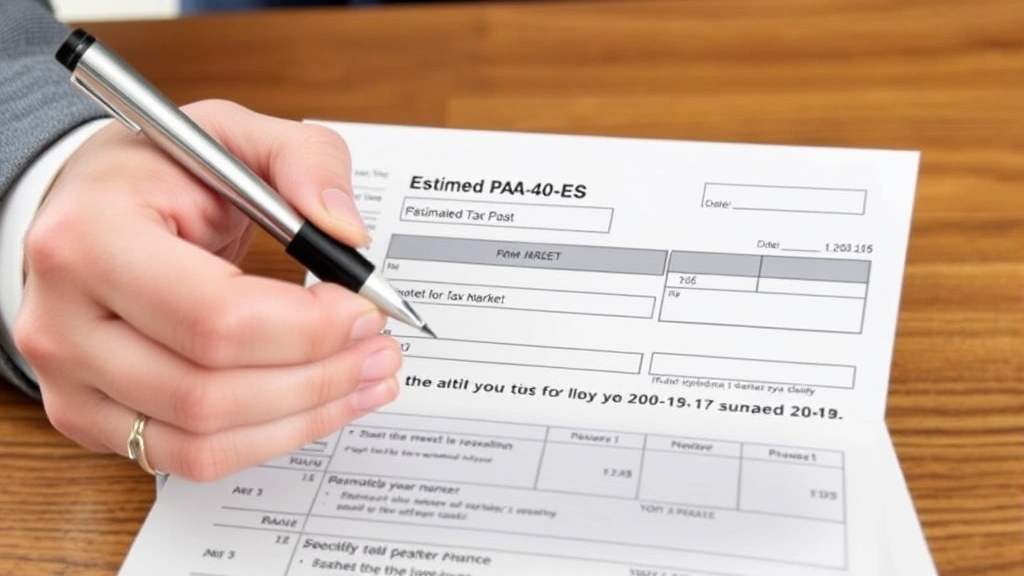
Pennsylvania’s tax rate is a flat 3.07% on earned income, making the calculation relatively straightforward compared to federal brackets. However, if you have capital gains or investment income, the treatment may differ between state and federal returns, affecting your estimated payment amounts.
Pro tip: don’t assume that paying federal estimated taxes covers Pennsylvania. They’re independent systems, and missing PA payments can trigger state-specific penalties separate from federal ones.
Payment Deadlines and Schedule
Estimated tax payments are due four times per year, aligned with quarterly periods:
- Q1 (January-March): Due April 15
- Q2 (April-May-June): Due June 15
- Q3 (July-August-September): Due September 15
- Q4 (October-November-December): Due January 15 of the following year
These deadlines are firm. If a due date falls on a weekend or holiday, the deadline shifts to the next business day. Missing even one quarterly payment can trigger penalties, so mark these dates in your calendar or set phone reminders.
The January 15 deadline for Q4 is particularly easy to miss since it’s early in the new year when tax season feels distant. Yet the IRS is watching, and Pennsylvania is too.
Calculating Your Quarterly Amount
The math seems simple: estimate your annual income, calculate your tax liability, divide by four. But real life is messier.
Start by projecting your total income for the year. Include all sources: self-employment income, rental income, capital gains, interest, dividends—anything taxable. Then subtract deductions you expect to claim. For self-employed folks, that’s 50% of your self-employment tax plus business deductions. For investors, it might be investment-related expenses.
Once you have your estimated taxable income, apply the appropriate tax rates. For federal taxes, use the 2024 tax brackets. For Pennsylvania, apply the 3.07% flat rate to earned income. Don’t forget to factor in self-employment tax (an additional 15.3% on net self-employment income, though you can deduct half).

If your income is lumpy—high some months, low others—you have options. You can either divide your annual estimate evenly across four quarters, or use the annualized income method to pay more in quarters when you actually earned more. The annualized method can save you money if your income is uneven.
Use Form 1040-ES for federal estimates and Form PA-40-ES for Pennsylvania. Both include worksheets to walk you through the calculation. If you own an S-corp, consult our S-corp tax brackets guide for specific considerations.
How to Submit Your Payments
You have several options for making PA estimated tax payments:
Federal Payments (IRS): Use the IRS Direct Pay system at IRS.gov, which is free. You can also pay through an approved payment processor, credit card (with fees), or mail a check with Form 1040-ES voucher. Electronic payment is fastest and safest.
Pennsylvania Payments: Visit the Pennsylvania Department of Revenue website to pay online through their system. You can also mail a check with Form PA-40-ES voucher. Pennsylvania also accepts electronic payments through their approved processors.
Electronic payment is highly recommended. It’s faster, creates an immediate record, and eliminates the risk of your check getting lost in the mail. Plus, you get confirmation right away.
Keep detailed records of every payment: date submitted, amount, confirmation number, and which quarter it covers. When you file your annual return, you’ll need to reconcile these payments against your actual tax liability.
Penalties for Missing Payments
The IRS and Pennsylvania don’t take kindly to missed estimated tax payments. Here’s what happens:

Underpayment Penalty: If you don’t pay enough throughout the year, you’ll owe a penalty on the shortfall. The rate compounds quarterly and is based on the federal short-term interest rate plus 3%. For 2024, that’s roughly 8% annually, though it varies. It might not sound like much, but it adds up quickly on large underpayments.
Interest: Beyond the penalty, you’ll owe interest on any unpaid taxes from the original due date until you pay. This also compounds daily.
State Penalties: Pennsylvania has its own underpayment penalty, typically 5% per month of underpayment, with a maximum of 25%. This stacks on top of federal penalties, making the total hit substantial.
Late Payment Penalties: If you miss a quarterly deadline entirely, Pennsylvania charges an additional penalty. Even paying late by a few days triggers this.
A real-world example: if you owe $8,000 in annual taxes and make zero estimated payments, you might face $400-600 in combined federal and state penalties alone, plus interest. That’s money that could’ve stayed in your pocket with proper planning.
Safe Harbor Rules Explained
The IRS and Pennsylvania offer safe harbors—rules that protect you from penalties even if you underpay, provided you meet certain conditions.
Federal Safe Harbor: You avoid underpayment penalties if you pay the greater of:
- 90% of your 2024 tax liability, OR
- 100% of your 2023 tax liability (110% if your 2023 AGI exceeded $150,000)
This is huge. If your 2023 tax bill was $10,000, you can pay that amount in 2024 estimated taxes and avoid penalties, even if your 2024 liability is higher. This works well if your income is relatively stable year-to-year.

Pennsylvania Safe Harbor: Pennsylvania follows a similar approach: pay 90% of current year tax or 100% of prior year tax to avoid state penalties.
The safe harbor is your safety net. If you’re uncertain about your exact income, aim for 100% of last year’s tax liability. You’ll be protected from penalties, and any overpayment becomes a credit or refund.
Adjusting Payments Mid-Year
Life happens. Your business booms, or it tanks. You get a bonus, or you lose a client. Your estimated taxes might be way off by mid-year.
The good news: you can adjust your estimated payments. If you realize you’ll earn more than projected, increase your Q2 or Q3 payment. If income drops, you can reduce future payments without penalty, as long as you still meet safe harbor rules.
The key is being proactive. Don’t wait until December to realize you’ve underpaid. Review your income quarterly and adjust if needed. This is especially important for business owners whose income fluctuates significantly.
For those with capital gains, investment income, or property income, use our settlement tax calculator and Schedule D tax worksheet to refine your estimates as the year progresses.
Frequently Asked Questions
Do I need to make estimated tax payments if I’m married filing jointly?
Yes, if your household income includes self-employment or other unwithheld income, you’ll need to make estimated payments. You can file jointly on your annual return, but estimated payments are based on your combined projected liability. One spouse can make the payments on behalf of both, or you can split them—just ensure the total covers your combined estimated tax.
What happens if I overpay my estimated taxes?
Overpayment isn’t a problem. Any excess is credited toward your annual tax liability when you file your return. If you overpay significantly, you can request a refund, or you can apply the overpayment to next year’s estimated taxes. Many people prefer to overpay slightly to ensure they meet safe harbor rules and avoid penalties.

Can I deduct estimated tax payments on my return?
No, estimated tax payments aren’t deductible. They’re prepayments of your actual tax liability. However, when you file your annual return, these payments reduce what you owe or increase your refund. They’re credited dollar-for-dollar against your total tax bill.
What if I’m a contractor but my client withholds taxes?
If your client is withholding federal or state income tax from your payments (which is rare for true contractors), those withholdings count toward your annual tax liability. You’d still need to make estimated payments for any income not subject to withholding. Calculate your total projected tax and subtract the expected withholding to determine your estimated payment amount.
Do I need to make estimated payments in my first year of self-employment?
Yes, if you expect to owe $500 or more in taxes. Even in your first year, if you’re earning significant self-employment income, you should make estimated payments. Use your projected annual income to calculate the amount. If you’re unsure, it’s safer to make payments than to skip them and face penalties.
Can I pay my estimated taxes monthly instead of quarterly?
The IRS and Pennsylvania require quarterly payments on specific dates. You can’t change the schedule to monthly. However, you can pay more than required in any quarter if you prefer. Some people pay monthly to their own savings account, then transfer to the IRS quarterly, which helps with cash flow management.
Staying Compliant and Penalty-Free
PA estimated tax payments might feel like an extra burden, but they’re actually a gift: they let you spread your tax liability across the year instead of facing a massive April bill. The key is understanding your obligations, calculating accurately, and meeting deadlines.
Start by determining whether you owe estimated taxes using the $500 threshold test. If you do, project your income, calculate your liability using Forms 1040-ES and PA-40-ES, and mark those quarterly deadlines. Use safe harbor rules to protect yourself from penalties, and adjust your payments if your income changes mid-year.
Electronic payment through the IRS and Pennsylvania Department of Revenue is fast, secure, and creates an immediate record. Keep meticulous documentation of every payment. And if you’re unsure about your calculations, consider consulting a CPA or tax professional—the cost of advice is far less than the cost of penalties and interest.
Remember, the IRS and Pennsylvania are patient with honest mistakes, but they’re unforgiving about missed deadlines. Stay organized, stay proactive, and you’ll avoid surprises come tax time.


