

Understanding Portland sales tax is crucial whether you’re a business owner, frequent shopper, or someone relocating to Oregon’s largest city. Unlike many states, Oregon has a unique tax structure that directly impacts how much you’ll pay at checkout—and it might surprise you.
Table of Contents
Oregon’s No Sales Tax Policy
Here’s the thing that makes Portland different from most American cities: Oregon has no state sales tax. Zero. Not even 1%. This has been the case since the state’s inception, and it’s one of only five states without a sales tax (alongside Montana, New Hampshire, Delaware, and Alaska).
When you walk into a store in Portland and grab an item priced at $100, you pay $100—not $108 or $110 like you would in California or Washington. This single fact makes Portland significantly cheaper for retail purchases compared to neighboring states.
However—and this is important—the absence of sales tax doesn’t mean Oregon residents get off easy. The state compensates through other taxation mechanisms, primarily personal income tax, which is among the highest in the nation. So while you’re saving at the register, you’re likely paying more when you file your taxes.
Portland-Specific Local Taxes
Portland isn’t entirely tax-free, though. The city and Multnomah County impose several local taxes that affect residents and businesses:
Business Income Tax: Portland levies a 1.4375% tax on net business income for companies operating within city limits. This is in addition to Oregon’s state business income tax and federal taxes. If you’re running a business in Portland, this is a significant consideration.
Payroll Tax: While Portland doesn’t have a traditional payroll tax, the business income tax effectively impacts employee compensation structures.
Property Tax: Multnomah County assesses property taxes, which are used to fund schools, public services, and infrastructure. The effective property tax rate in Portland is approximately 0.97% of assessed value, which is moderate compared to national averages.
For comparison, if you’re looking at sales tax in other regions, check out our guide on Sales Tax San Francisco to see how Portland’s approach differs from California’s approach.
Business Income Tax Implications
The Portland business income tax is where things get complicated for entrepreneurs and small business owners. Here’s what you need to know:

The 1.4375% rate applies to net income—meaning you only pay tax on profits after deducting legitimate business expenses. For a business generating $500,000 in annual revenue with $350,000 in expenses, you’d owe approximately $2,156.25 in Portland business income tax (on the $150,000 net income).
This tax is separate from:
- Oregon state business income tax (varies by entity type)
- Federal income tax on business profits
- Self-employment tax (if you’re self-employed)
- Estimated quarterly tax payments (required if you expect to owe $500+)
Many Portland business owners use accounting software or hire CPAs to navigate these overlapping tax obligations. It’s not optional—the city actively enforces compliance through the Portland Bureau of Revenue & Financial Services.
What You Actually Pay in Portland
Let’s get practical. Here’s what a typical Portland resident or visitor actually pays in taxes:
At the Register: Zero sales tax on purchases. A $50 coffee maker costs $50.
On Your Paycheck: Oregon state income tax ranges from 4.75% to 9.9% depending on your income bracket. This is one of the highest state income tax rates in America. Combined with federal income tax (10-37%), you’re looking at 14.75% to 46.9% in total income tax.
On Groceries: Unprepared food is exempt from Oregon’s income tax in some contexts, but this doesn’t apply to Portland sales tax (since there isn’t one). However, prepared foods and restaurant meals are subject to different treatment under Oregon tax law.
On Services: Unlike many states, Oregon doesn’t tax services. A haircut, dental cleaning, or consulting fee—no sales tax. This is actually a significant advantage over states like Sales Tax in CT, where services are often taxed.
How Portland Compares to Other Cities
To understand whether Portland’s tax structure is advantageous, let’s compare it to nearby and similar cities:

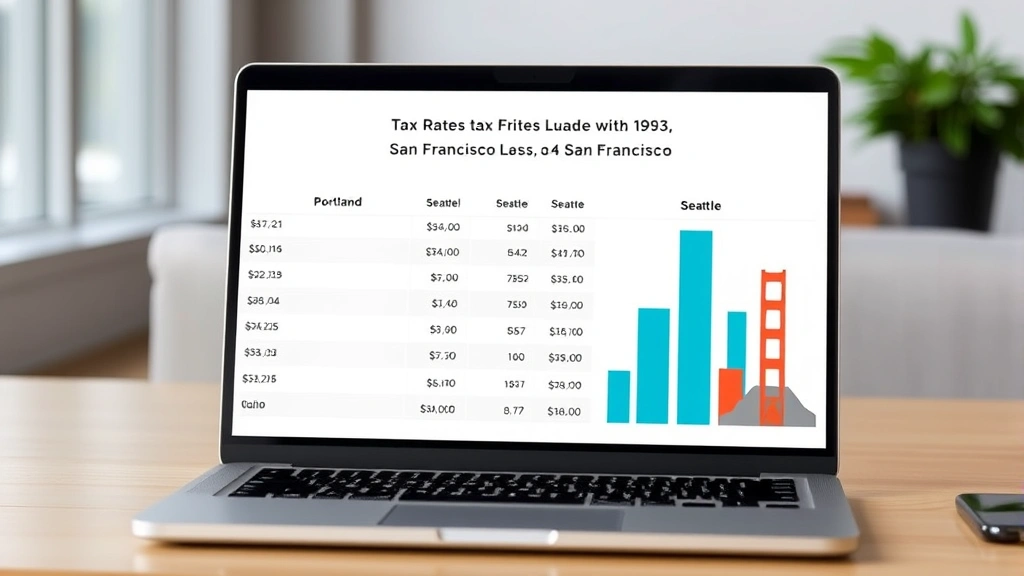
Portland, OR vs. Seattle, WA: Seattle has a 10.25% combined sales tax (state + local). On a $1,000 purchase, Seattleites pay $102.50 more than Portlanders. However, Washington has no state income tax, so high earners may come out ahead in Washington overall.
Portland, OR vs. San Francisco, CA: San Francisco residents face 8.625% sales tax plus California’s state income tax (up to 13.3%). The combined tax burden is significantly higher than Portland’s, though housing costs dominate the conversation in both cities.
Portland, OR vs. Maine: If you’re curious about how Oregon compares to the Northeast, check out our breakdown of Maine Sales Tax Rate. Maine has a 5.5% sales tax plus state income tax, making it moderately taxed compared to Portland.
The key insight: Portland’s no-sales-tax advantage is offset by high income taxes. It’s a trade-off that benefits frequent shoppers and businesses but costs high-income earners more in state taxes.
Tax Exemptions & Special Cases
Even though Portland has no sales tax, certain exemptions exist under Oregon law that affect what you pay:
Resale Certificates: Businesses buying inventory for resale don’t pay Oregon income tax on those purchases (since there’s no sales tax, this is less relevant, but the principle matters for understanding tax-exempt transactions).
Non-Profit Purchases: Registered non-profit organizations may qualify for exemptions on certain purchases, though this varies by transaction type.
Government Purchases: Federal, state, and local government agencies don’t pay sales tax (not applicable here) or income tax on certain purchases.
Agricultural Exemptions: Farmers and agricultural businesses have specific exemptions for equipment and supplies used directly in farming operations.
Manufacturing Equipment: Some manufacturing equipment may qualify for tax exemptions to encourage industrial development.
If you operate a business or non-profit in Portland, it’s worth consulting with a tax professional about potential exemptions. The Portland Bureau of Revenue & Financial Services website has detailed guidance, and the Oregon Department of Revenue provides official rules.
Filing & Compliance Requirements
If you live or work in Portland, here’s what you need to do for tax compliance:
Personal Income Tax: File Oregon Form 40 (individual income tax return) by April 15th each year if you earned Oregon income. You’ll also file federal Form 1040.
Business Income Tax: If you operate a business in Portland, file the business income tax return with the Portland Bureau of Revenue & Financial Services. Deadlines vary by entity type (sole proprietorship, S-corp, C-corp, LLC).
Estimated Quarterly Taxes: If you’re self-employed or own a business, you may need to pay estimated taxes quarterly (April 15, June 15, September 15, January 15) to avoid penalties.
W-4 Withholding: If you’re an employee, ensure your employer withholds the correct amount of Oregon income tax. You can adjust this using Oregon Form OR-W-4.
The IRS website has comprehensive guidance on federal requirements, while Oregon Department of Revenue handles state specifics.
Tax Planning Strategies for Residents
Here are practical strategies to minimize your tax burden in Portland:

Maximize Retirement Contributions: Contribute to 401(k), IRA, or SEP-IRA accounts. These reduce your taxable income and are particularly valuable given Oregon’s high income tax rates. The 2024 limits are $23,500 for 401(k)s and $7,000 for traditional IRAs.
Claim All Deductions: Oregon follows federal deduction rules. If you itemize, deduct mortgage interest, property taxes, charitable donations, and medical expenses. Many Portlanders benefit from itemizing given the city’s high property values.
Business Structure Optimization: If you’re self-employed, consider whether an S-corp or LLC structure reduces your overall tax burden compared to a sole proprietorship. This requires professional guidance but can save thousands annually.
Tax-Loss Harvesting: If you invest, offset capital gains by selling losing positions. This strategy works the same in Portland as anywhere else but becomes more valuable given Oregon’s high income tax rates.
Timing Income & Expenses: If you’re self-employed, consider deferring income to the next year or accelerating expenses into the current year to manage your taxable income strategically.
Charitable Giving: Donations to qualified charities reduce your taxable income. If you’re charitably inclined, bunching donations in high-income years maximizes the benefit.
For business-specific strategies, consider consulting a CPA familiar with Portland’s business income tax. The investment in professional advice often pays for itself through identified savings.
Frequently Asked Questions
Does Portland have sales tax?
No. Portland is in Oregon, which has no state sales tax. You pay zero sales tax on retail purchases. However, Portland does impose a 1.4375% business income tax on companies operating within city limits.
Is Oregon’s income tax high?
Yes. Oregon’s state income tax ranges from 4.75% to 9.9% depending on your income bracket, making it one of the highest in the nation. Combined with federal income tax, high earners in Portland face significant income tax burdens—which is the trade-off for having no sales tax.

What is the Portland business income tax rate?
Portland’s business income tax is 1.4375% of net business income. This applies to sole proprietors, partnerships, S-corps, and C-corps operating within Portland city limits. It’s in addition to Oregon state and federal taxes.
Do I pay sales tax on groceries in Portland?
No. There is no sales tax on groceries or any retail purchases in Portland. This applies to all unprepared food, prepared foods, and other goods.
Is Portland more affordable than Seattle or San Francisco?
For retail purchases, yes—Portland’s lack of sales tax saves money at checkout. However, Portland’s high income tax and rising housing costs mean the overall cost of living isn’t dramatically cheaper. High earners may find Seattle (no state income tax) more affordable despite its 10.25% sales tax.
Do I need to pay estimated taxes in Portland?
If you’re self-employed or own a business and expect to owe $500 or more in taxes, yes. Estimated quarterly tax payments are due April 15, June 15, September 15, and January 15.
Can I deduct Portland business income tax?
The Portland business income tax is deductible as a business expense on your federal return (Schedule C for self-employed individuals or the appropriate business tax form). This provides some relief, though it doesn’t eliminate the tax burden.
How does Portland’s tax structure compare to nearby states?
Oregon (Portland) has no sales tax but high income tax. Washington (Seattle) has high sales tax (10.25%) but no income tax. California (San Francisco) has both high sales tax (8.625%) and high income tax (up to 13.3%). Your optimal location depends on your income level and spending habits.
Conclusion: Understanding Your Portland Tax Picture
Portland’s sales tax situation is straightforward: there isn’t one. But that simplicity masks a more complex tax environment dominated by Oregon’s high income tax rates and Portland’s local business income tax.
For shoppers and consumers, Portland is genuinely cheaper at the register compared to most American cities. For high-income earners and business owners, Oregon’s overall tax burden is substantial and requires strategic planning.
The key takeaway: don’t let the “no sales tax” headline fool you into thinking Portland is a tax haven. Instead, understand the full picture—no sales tax, high income tax, and local business taxes—then plan accordingly. Whether you’re relocating, starting a business, or simply trying to optimize your tax situation, consider consulting a CPA familiar with Oregon and Portland tax law. The complexity is real, but so are the opportunities to minimize your tax burden through smart planning.
If you’re comparing Portland to other cities, we’ve covered Oregon Inheritance Tax implications and other state-specific taxes throughout our resources. Understanding these nuances helps you make informed decisions about where to live and how to structure your finances.


