
A preliminary tax definition refers to an estimated calculation of your tax liability before filing your official annual tax return. It’s the IRS’s way of ensuring you’re paying taxes throughout the year rather than waiting until April 15th to settle up. Think of it as a payment plan the government sets up with you—quarterly installments that keep you from getting hit with a massive bill or penalty later.
Table of Contents
What Is Preliminary Tax?
Preliminary tax is essentially your best guess at what you’ll owe in federal income taxes for the year. The IRS doesn’t want to wait until you file your return in the following year to collect taxes on income you earned throughout the current year. Instead, they require certain taxpayers to make quarterly estimated tax payments based on anticipated income, deductions, and credits.
This system applies mainly to self-employed individuals, freelancers, gig workers, and anyone with income not subject to withholding. If you’re a W-2 employee with taxes withheld from your paycheck, you’re already making preliminary payments through payroll deduction—you just don’t think of it that way. For business owners and contractors, however, preliminary tax payments are an active responsibility you must manage yourself.
The word “preliminary” is key here. You’re not locked into your estimate. When you file your actual return, the IRS reconciles what you paid throughout the year against what you actually owe. If you overpaid, you get a refund. If you underpaid, you owe the difference plus potential penalties.
Who Needs Preliminary Tax Payments?
Not everyone has to file preliminary tax payments. The IRS has specific thresholds and situations that trigger the requirement. Generally, you need to make estimated tax payments if you expect to owe $1,000 or more when you file your return. That’s the magic number—if your projected tax liability minus any withholding comes to $1,000 or more, the IRS wants those quarterly payments.
Self-employed individuals almost always fall into this category. If you run a business, work as a contractor, have rental income, or earn significant investment income, preliminary tax payments are likely required. Gig economy workers—rideshare drivers, freelance writers, virtual assistants—typically need to make these payments too.

There’s also a safe harbor rule: if you pay the lesser of 90% of your current year’s tax or 100% of your prior year’s tax (110% if your prior year AGI exceeded $150,000), you generally won’t face underpayment penalties. This gives you a concrete target to aim for, even if your estimate turns out to be off.
Check your specific situation carefully. Some states have their own preliminary tax requirements that differ from federal rules, particularly states like Illinois with specific estimated tax payment obligations.
How to Calculate Your Estimate
Calculating preliminary tax requires you to project your income for the year and apply the appropriate tax rates. This is where things get tricky because you’re making predictions about the future. Here’s the basic approach:
Start by estimating your total income for 2024. Include wages, self-employment income, rental income, investment income, and any other sources. Then subtract estimated deductions—whether you’re taking the standard deduction or itemizing. Use your AGI on your tax return as a reference point from last year, then adjust for expected changes.
Next, apply the current tax brackets to your estimated taxable income. You’ll need to factor in your filing status and any credits you expect to claim. The average tax rate formula helps you understand your effective tax burden. Many people use tax software or work with a CPA to run these numbers because the calculations involve multiple variables.
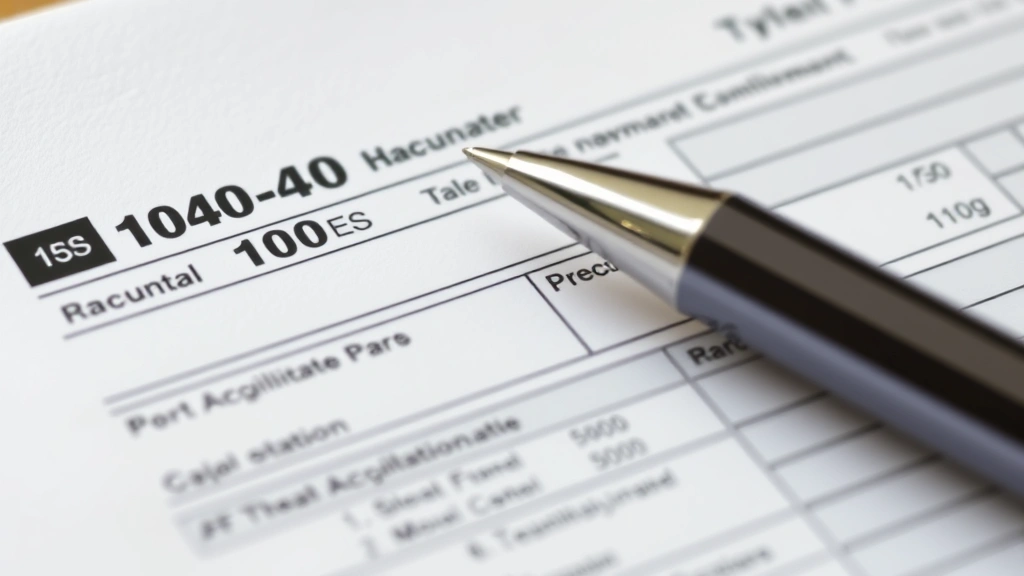
Once you have your projected total tax, subtract any income tax withholding you expect from W-2 income. What’s left is your preliminary tax liability—the amount you need to pay through quarterly estimated payments. Form 1040-ES provides worksheets to walk you through this calculation step-by-step.
Quarterly Payment Schedule
Preliminary tax payments happen four times per year, which is why they’re often called “estimated quarterly taxes.” The IRS sets specific due dates for each quarter, and these don’t align with calendar quarters—they’re staggered throughout the year.
For 2024, the payment schedule breaks down like this: Q1 (January 1 – March 31) is due April 15; Q2 (April 1 – May 31) is due June 17; Q3 (June 1 – August 31) is due September 16; and Q4 (September 1 – December 31) is due January 16, 2025. Mark these dates on your calendar because missing a deadline can trigger penalties and interest charges.
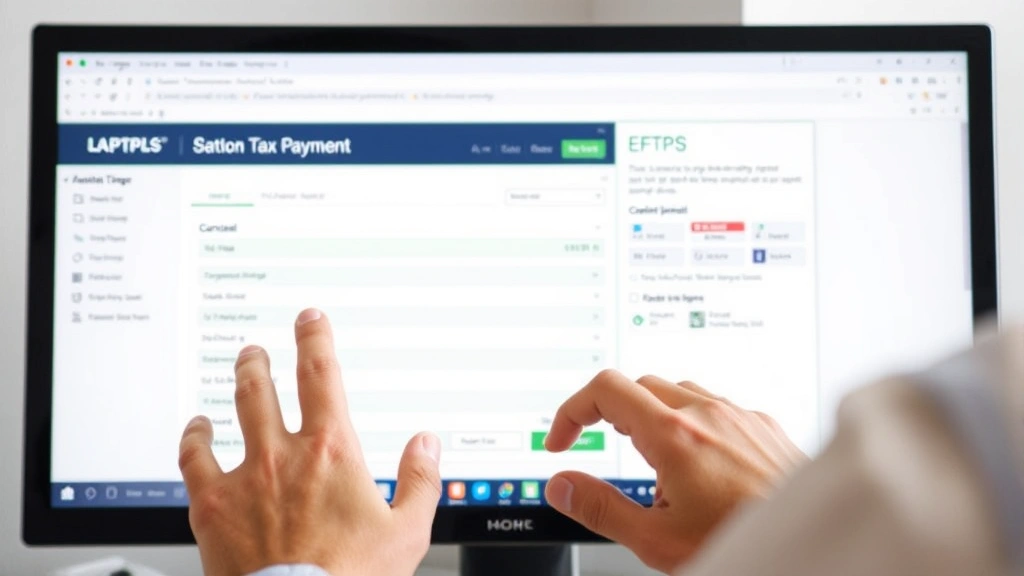
You can pay online through the IRS’s Electronic Federal Tax Payment System (EFTPS), by credit or debit card, or by mailing a check with Form 1040-ES. Many self-employed people set up automatic payments to avoid forgetting. Some taxpayers prefer to make unequal quarterly payments, paying more when they expect higher income and less during slower months—the IRS allows this flexibility as long as your total meets the safe harbor threshold.
Penalties for Underpayment
Miss your preliminary tax payments or pay too little, and the IRS will assess an underpayment penalty. This penalty is calculated quarterly and compounds, making it increasingly expensive the longer you’re underpaid. The current penalty rate is the federal short-term rate plus 3%, which adjusts quarterly.

Here’s the thing: the penalty stings because it’s in addition to the taxes you already owe. If you underpay by $5,000, you’ll owe the $5,000 plus a penalty on top. Over a full year, that penalty could add up to several hundred dollars depending on how much you underpaid and for how long.
The safe harbor rules exist specifically to protect you from these penalties. If you pay either 90% of your 2024 tax or 100% of your 2023 tax (whichever is less), you’re protected even if your actual 2024 tax turns out higher. This is why many people use their prior year return as a baseline—it’s the safest approach when income is unpredictable.
The IRS isn’t trying to be punitive; they just want consistent tax revenue throughout the year. If you genuinely can’t predict your income accurately or face a significant change in circumstances, you can adjust your estimated payments mid-year. File Form 1040-ES and recalculate based on your actual income to date.
Estimated vs. Actual Tax
The distinction between estimated and actual tax is fundamental to understanding how the system works. Estimated tax is what you predict you’ll owe. Actual tax is what you really owe when you file your return and report your true income and deductions for the year.
In an ideal world, these two numbers match perfectly. You estimated correctly, made quarterly payments that covered your liability, and you break even—no refund, no balance due. In reality, most people either overpay or underpay because income fluctuates, deductions change, or life circumstances shift unexpectedly.

If you overpaid through quarterly estimates, you’ll get a refund when you file your return. If you underpaid, you’ll owe the difference. This is where that preliminary tax definition becomes concrete: it’s the bridge between what you’ve already paid and what you actually owe. The IRS uses your actual return to settle the account.
This reconciliation process is why keeping good records matters. Document your quarterly payments, save your payment confirmations, and track your income throughout the year. When you file your return, you’ll report all your estimated tax payments on Form 1040, and the IRS will credit them against your final tax liability.
Strategies to Reduce Estimates
If your preliminary tax estimates feel overwhelming, there are legitimate strategies to lower them. The most straightforward approach is maximizing deductions. Self-employed individuals can deduct business expenses, home office costs, vehicle mileage, equipment, and supplies. The more legitimate deductions you claim, the lower your taxable income and preliminary tax payments.
Contributing to retirement accounts is another powerful tool. Traditional IRA contributions, SEP-IRA contributions, and Solo 401(k) contributions reduce your taxable income dollar-for-dollar. If you contribute $20,000 to a Solo 401(k), your preliminary tax calculation drops by $20,000 in income, potentially saving thousands in estimated taxes.
Consider timing of income and expenses strategically. If you’re self-employed and expect a large payment in December, you might accelerate some business expenses into that month to offset the income. Conversely, if you had a slow year, you might defer some income to the following year if possible.

Health Insurance Premiums for the Self-Employed are fully deductible, which many freelancers overlook. Quarterly estimated tax payments themselves aren’t deductible, but the income they’re based on can be reduced through legitimate business deductions and retirement contributions.
Work with a tax professional to review your situation. A CPA can identify deductions you might miss on your own and help you structure your business to minimize tax liability legally. The cost of professional advice often pays for itself through tax savings.
State Requirements Matter
Federal preliminary tax is just part of the equation. Most states with income tax have their own estimated tax requirements that work similarly to federal rules. Some states are more lenient, while others are stricter.
For example, Florida tax extension rules differ significantly from states with income taxes because Florida doesn’t have a state income tax. If you live in a no-income-tax state, you only worry about federal preliminary taxes. But if you live in California, New York, Illinois, or another high-tax state, you’re making state estimated payments on top of federal ones.
State thresholds for requiring estimated payments vary. Some states use $500 as their threshold, others use $1,000. Some states don’t require estimated payments if you’re also a W-2 employee with withholding, while others do. You need to know your specific state’s rules because penalties for missing state estimated payments can be just as painful as federal penalties.

If you work across multiple states—a common situation for remote workers and contractors—things get more complex. You might owe estimated taxes to several states simultaneously. This is where a tax professional becomes invaluable. They’ll track your income allocation to each state and ensure you’re meeting all requirements.
Frequently Asked Questions
What happens if I don’t pay preliminary taxes?
If you don’t pay estimated taxes when required, the IRS will assess an underpayment penalty on the unpaid amounts. Additionally, you’ll owe interest on the unpaid taxes from their due dates. The penalty and interest compound quarterly, making the total amount owed significantly higher than the original tax liability. You’ll also face this situation when you file your return, creating a larger balance due.
Can I adjust my preliminary tax payments during the year?
Yes, absolutely. If your income changes significantly—either higher or lower than expected—you can file an amended Form 1040-ES and recalculate your quarterly payments. This is especially important if you had a major life change like starting a business, losing a job, or having unexpected income. Adjusting mid-year prevents overpaying or underpaying for the remainder of the year.
Is preliminary tax the same as estimated tax?
These terms are used interchangeably in most contexts. “Preliminary tax” and “estimated tax” refer to the same concept: quarterly tax payments made throughout the year based on your projected income and tax liability. The IRS officially calls them “estimated tax payments,” but “preliminary” emphasizes that these are advance payments reconciled against your actual return.
What’s the difference between safe harbor and actual tax liability?
Safe harbor means you won’t face underpayment penalties if you meet the threshold (90% of current year or 100% of prior year tax). Your actual tax liability is what you really owe based on your true income and deductions. You could meet safe harbor and still owe additional taxes when you file—you just won’t face penalties. The safe harbor is about penalty protection, not about eliminating tax debt.
Do W-2 employees need to make preliminary tax payments?
Generally, no. W-2 employees have taxes withheld from their paychecks throughout the year, which serves the same purpose as preliminary tax payments. However, if you have significant income outside your W-2 job—rental income, investment income, side business—you might need to make estimated payments on that additional income. Review your total expected tax liability to determine if you’ll owe $1,000 or more.
How do I know what to estimate if my income is irregular?
Look at your prior year’s income as a baseline, then adjust for expected changes. If you’re self-employed with seasonal income, average your income across the year. Some people use their most recent three months of income and multiply by four for a rough annual figure. The safe harbor rule (90% of current or 100% of prior year) gives you flexibility—you don’t have to be perfectly accurate. If you’re truly uncertain, work with a CPA to build a reasonable estimate based on your business history.
Final Thoughts
Understanding preliminary tax definition is essential for anyone with self-employment income, investment income, or other earnings not subject to withholding. It’s not complicated once you break it down: the IRS wants you to pay taxes throughout the year in quarterly installments, and you’ll settle up when you file your actual return.
The key takeaway is that preliminary taxes aren’t optional if you meet the threshold—they’re a legal requirement. Missing payments or paying too little triggers penalties and interest. But the system also offers flexibility. You can adjust payments mid-year, claim the safe harbor to avoid penalties, and use legitimate deductions to lower your estimates.
Start by calculating your projected income for 2024 using Form 1040-ES worksheets. Mark the quarterly due dates on your calendar. If your situation is complex, invest in professional tax advice—a CPA can help you optimize your estimates and identify deductions you might miss. Most importantly, don’t ignore preliminary taxes. Staying current with quarterly payments prevents surprises at tax time and keeps you on the right side of the IRS.