

Understanding Volusia County real estate taxes is essential if you own property in this central Florida region. Property taxes in Volusia County are calculated based on assessed property values and millage rates that fund local schools, infrastructure, and emergency services. Whether you’re a first-time homebuyer, investor, or long-time resident, knowing how these taxes work can help you budget effectively and potentially identify savings opportunities.
Table of Contents
How Property Taxes Are Calculated
The formula for Volusia County real estate taxes is straightforward: Assessed Value × Millage Rate = Annual Tax Bill. However, the devil is in the details. Your assessed value isn’t necessarily what you paid for your home or what it’s worth on the open market. The Volusia County Property Appraiser’s office determines this value using standardized methods that consider comparable sales, property condition, and market trends.
Let’s say your home is assessed at $300,000 and the combined millage rate is 8.5 mills (which equals 0.0085 as a decimal). Your calculation would be: $300,000 × 0.0085 = $2,550 in annual property taxes. This is before any exemptions or discounts apply. For residents comparing to other counties, understanding your specific millage rate is crucial—it varies significantly across Florida and the nation.
The Assessment Process Explained
Every year, the Volusia County Property Appraiser conducts assessments to determine property values. This isn’t random; assessors use data from recent property sales, income approaches for rental properties, and cost approaches for newer construction. The good news? You have rights in this process. The appraiser’s office sends out assessment notices annually, typically in May. This is your chance to review the details and challenge the valuation if you believe it’s inaccurate.
The assessment process affects not just your taxes but also your ability to refinance or sell. An inflated assessment means higher taxes; an undervalued property might hurt your equity perception. Many homeowners overlook this step, but taking 30 minutes to review your assessment notice could save you hundreds annually. The Property Appraiser’s website provides detailed information about your property, including square footage, lot size, and condition ratings.
Millage Rates & Tax Breakdown
Volusia County’s millage rates combine several components: school district taxes, county government operations, special districts (like fire protection), and municipal services if you live in an incorporated city. In 2024, the combined rate typically ranges from 8.0 to 9.5 mills depending on your exact location within the county. Daytona Beach, Port Orange, and unincorporated areas each have slightly different rates.
Breaking this down further, the school district usually consumes the largest portion—roughly 6.5 to 7.0 mills. County services take about 1.5 to 2.0 mills. If you live in a city like Deland or Ormond Beach, municipal services add another 1.0 to 2.0 mills. Understanding this breakdown helps you see where your tax dollars go and why certain services might be funded differently than neighboring counties. You can find the exact rates for your property address on the Volusia County Tax Collector’s website.
Homestead Exemption Benefits
If you own a home in Volusia County as your primary residence, you’re likely eligible for Florida’s homestead exemption. This exemption reduces your assessed value by $50,000 for school district taxes and provides additional protection against assessment increases. Here’s why this matters: if your home is assessed at $300,000, the homestead exemption effectively reduces the taxable value to $250,000 for school purposes, saving you roughly $425 annually (at current millage rates).
To claim the homestead exemption, you must file an application with the Property Appraiser’s office by March 1st of the year you want it to take effect. You’ll need to provide proof of residency and ownership—typically a driver’s license and deed or mortgage document. Once approved, it continues automatically unless you move or sell the property. This is one of Florida’s most valuable tax breaks, and surprisingly, many eligible homeowners never apply. If you’re new to Volusia County, this should be your first tax move.
Payment Deadlines & Methods
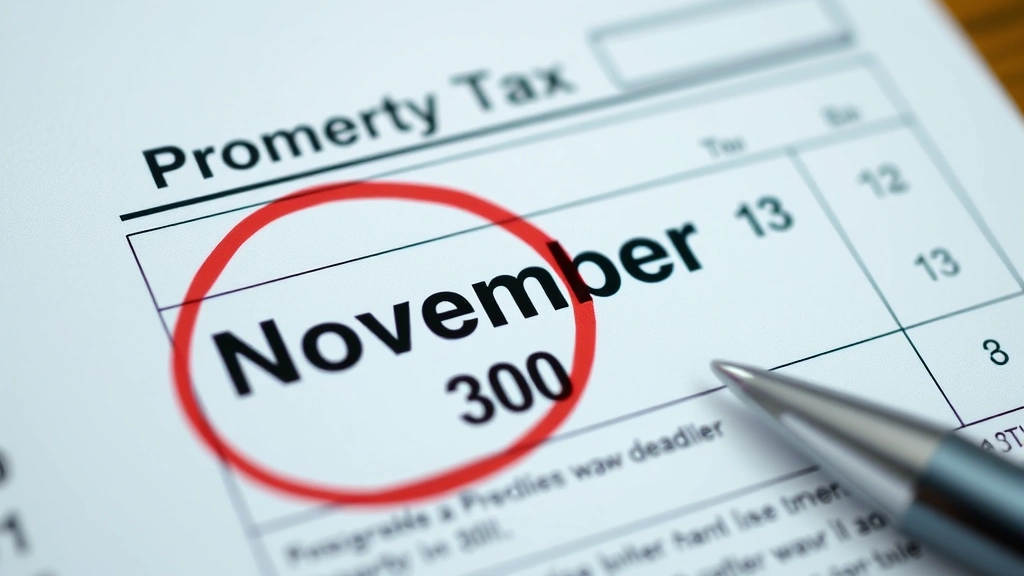
Property tax bills in Volusia County are due on November 30th each year, though you can pay earlier once the Tax Collector issues the bill (typically in August or September). The Tax Collector offers multiple payment methods: online through their website, by mail, in person at their office, or through automatic bank draft. If you have a mortgage, your lender may handle taxes through an escrow account, meaning the payment happens automatically from your monthly mortgage payment.
Missing the November 30th deadline triggers penalties and interest. You’ll face a 4% penalty if paid by December 1st through March 31st, and a 5% penalty if paid after April 1st. Additionally, interest accrues at 18% annually on unpaid amounts. These penalties compound quickly, so it’s crucial to mark your calendar. Many residents set up automatic payments or calendar reminders in October to avoid this trap. The Tax Collector’s website provides payment tracking, so you can verify your payment was received.
How to Appeal Your Assessment
Disagreeing with your assessed value? You have options. The formal appeal process involves filing a petition with the Value Adjustment Board (VAB), a quasi-judicial body that hears property tax disputes. You must file between August 1st and 25th (or within 25 days of receiving your assessment notice, whichever is later). The filing fee is typically $25, and you’ll present evidence supporting your lower valuation claim.
Before pursuing a formal appeal, consider requesting an informal review with the Property Appraiser’s office. Many assessments are adjusted during these discussions without formal proceedings. You’ll need comparable sales data—recent sales of similar properties in your area. Real estate websites like Zillow or Realtor.com provide this information, though working with a real estate agent or appraiser strengthens your case. Successfully appealing your assessment can result in substantial annual tax savings, making the effort worthwhile if you have legitimate grounds.
Other Exemptions & Deductions
Beyond the homestead exemption, Volusia County offers additional property tax breaks. The widowed homeowner exemption provides the same $50,000 reduction for surviving spouses who meet residency requirements. Disabled veterans may qualify for a complete exemption up to $50,000 of assessed value, with additional exemptions for 100% disabled veterans. Agricultural properties used for farming receive significant assessment reductions through the Agricultural Classification program.
Non-profit organizations, churches, and charitable institutions can apply for exemptions entirely. If you own property used for these purposes, contact the Property Appraiser’s office about the application process. Solar energy systems also receive tax incentives—improvements for solar installations may be exempt from property tax assessment for 10 years. These exemptions aren’t automatic; you must apply and provide documentation. Many property owners leave money on the table simply by not knowing these programs exist.
Investment Property Considerations
Investors in Volusia County face different tax dynamics than primary homeowners. Investment properties don’t qualify for the homestead exemption, so you’ll pay full millage rates on the assessed value. However, you can deduct property taxes as a business expense if you rent the property. Additionally, you may qualify for depreciation deductions on the building structure (though not the land) on your federal tax return.
Rental income in Volusia County is subject to state income tax (Florida has no state income tax—a major advantage), but federal tax applies. Understanding the relationship between property taxes and your rental income is essential for profitability analysis. A property generating $2,000 monthly rent might have $2,500 in annual taxes, meaning property taxes consume significant cash flow. This is why comparing Volusia County’s effective tax rates to other Florida counties matters when considering investment opportunities. Consulting with a CPA familiar with real estate investing helps optimize your tax strategy.
Frequently Asked Questions
What is the average property tax rate in Volusia County?
The combined millage rate typically ranges from 8.0 to 9.5 mills depending on your location within the county. This translates to roughly $2,400 to $3,200 annually on a $300,000 home after applying the homestead exemption. Rates vary by specific address because different areas have different school districts and special taxing districts.
Can I pay property taxes in installments?
No, Volusia County property taxes are due in full by November 30th. However, if you have a mortgage, your lender typically handles this through an escrow account, allowing you to pay monthly through your mortgage payment. If paying a lump sum is difficult, contact the Tax Collector’s office about hardship options.
How often is my property reassessed?
The Property Appraiser conducts annual assessments. However, assessment increases are capped at 3% annually under Florida’s Save Our Homes (SOH) amendment, provided you maintain your homestead exemption. This cap resets if you sell the property or lose the exemption.
What happens if I don’t pay my property taxes?
Unpaid property taxes accumulate penalties and interest, and your property can be sold at a tax certificate sale if taxes remain unpaid for several years. This is a serious matter—don’t ignore tax bills. Contact the Tax Collector immediately if you’re struggling to pay.

Do I need to appeal my assessment every year?
No, you only appeal if you believe the current year’s assessment is incorrect. Even if appealing one year, you may need to appeal again in subsequent years if the appraiser increases the value again. However, remember the 3% annual cap under the Save Our Homes amendment.
Are property taxes deductible on my federal return?
Yes, but with limitations. The Tax Cuts and Jobs Act (TCJA) caps the state and local tax (SALT) deduction at $10,000 annually. This includes property taxes, state income tax, and sales tax combined. Many homeowners don’t benefit from deducting property taxes because the standard deduction exceeds their itemized deductions.
Final Thoughts on Volusia County Real Estate Taxes
Volusia County real estate taxes represent a significant annual expense for property owners, but understanding the system empowers you to make informed decisions. From claiming your homestead exemption to appealing assessments and exploring other exemption programs, multiple strategies can reduce your tax burden. The key is taking action—assessment notices and exemption deadlines won’t wait, and missing them costs real money.
Whether you’re a homeowner, investor, or considering a move to Volusia County, factor property taxes into your financial planning. Compare millage rates across different areas within the county, understand your specific assessment, and don’t hesitate to challenge valuations you believe are inaccurate. For detailed information, visit the Volusia County Property Appraiser’s website or the Tax Collector’s office. If your situation is complex—especially if you’re investing in rental properties—consulting with a CPA or tax professional familiar with Florida real estate can provide personalized guidance worth far more than the cost of their advice.
For context on how Volusia County compares to other Florida counties, you might explore resources like the Fairfax County Real Estate Tax Assessment guide or the Warren County Property Tax overview. Understanding national trends also helps—check out information on when California property tax is due to see how Florida’s system differs. Additionally, reviewing County of Riverside Tax structures provides perspective on how different states handle property taxation.


