

If you live in Washington State, you’ve probably noticed that your paycheck and purchases hit differently than they do in other states. That’s because Washington has some unique tax rules—especially when it comes to Washington state excise tax. Unlike many states, Washington doesn’t have a state income tax, which sounds great on paper. But here’s the real talk: the state makes up for it with aggressive excise taxes on specific goods and services. These hidden taxes can quietly drain your wallet on everything from gas to groceries to your morning coffee.
The frustrating part? Most people don’t realize how much excise tax they’re actually paying. It’s not itemized clearly at checkout, and it’s definitely not something your employer explains during onboarding. That’s where this guide comes in. We’re going to break down exactly what Washington state excise tax is, which products get hit hardest, and—most importantly—how you can keep more money in your pocket.
What Is Washington State Excise Tax?
An excise tax is a tax levied on the production, sale, or consumption of specific goods or services. Think of it like a penalty tax—the government is basically saying, “We want to discourage this behavior or activity, so we’re going to make it more expensive.”
Washington State uses excise taxes strategically. Unlike a sales tax, which applies broadly to most purchases, Washington state excise tax targets particular items. The state imposes these taxes for two main reasons: (1) to generate revenue, and (2) to discourage consumption of products deemed harmful (like tobacco and alcohol).
Here’s the kicker: Washington is one of the few states without a state income tax. So while you’re not paying state income tax on your salary, you’re absolutely paying it through excise taxes on everyday purchases. It’s a trade-off that hits some people harder than others, depending on their lifestyle and spending habits.
According to the Washington State Department of Revenue, excise taxes generate billions annually and fund everything from transportation infrastructure to health programs. So your excise tax dollars aren’t just disappearing—they’re funding public services. That doesn’t make them less annoying to pay, but it’s good context.
Pro Tip: Because Washington has no income tax, residents often have more take-home pay than neighbors in high-income-tax states. The excise tax system is designed to recapture some of that benefit from people who buy taxed goods regularly.
Types of Excise Taxes in Washington
Washington State levies excise taxes on a surprisingly broad range of items. Let’s break down the main categories:
- Fuel & Gasoline Excise Tax: Currently 49.4 cents per gallon (as of 2024). This is one of the highest in the nation and funds transportation projects.
- Tobacco Products: $3.025 per pack of cigarettes, plus 35% tax on other tobacco products.
- Alcohol: 20.75% tax on spirits, 13.7% on beer, 6.5% on wine.
- Cannabis: 37% excise tax on retail sales (in addition to regular sales tax).
- Utilities: 6% tax on natural gas, electricity, and steam.
- Vehicles: 0.3% excise tax on vehicle purchases and transfers.
- Vapor Products: 70% excise tax on e-cigarettes and vaping products.
Some of these taxes are more visible than others. When you pump gas, you see the price per gallon, but the excise tax component isn’t always obvious. When you buy a pack of cigarettes, the tax is built into the price. And when you purchase a car, the vehicle excise tax is often rolled into the dealer fees.
If you’re comparing your situation to other states, check out how Mississippi sales tax works or review PA sales tax structures. Every state has different tax strategies, and understanding Washington’s approach helps you see the bigger picture.
How Much Are You Actually Paying?
Let’s do some real math. This is where excise taxes become painfully obvious.
Gasoline Example: If you fill up a 15-gallon tank once per week at $3.50 per gallon (pre-tax), you’re paying approximately $26.25 in excise tax alone per month, or about $315 per year. Over five years, that’s $1,575 in excise tax on fuel.
Cigarettes Example: A pack of cigarettes costs roughly $8-10 in Washington. Of that, approximately $3 is excise tax. If you smoke one pack per day, you’re paying roughly $1,095 annually in excise tax. That’s real money.
Alcohol Example: A six-pack of beer might cost $8. The excise tax component is roughly $1.10. Buy two six-packs per week, and you’re paying about $114 per year in excise tax.
Utilities Example: If your monthly electric bill is $120, roughly $7.20 is excise tax. Over a year, that’s $86.40 just on the utility excise tax.
Add these up for an average household, and excise taxes can easily total $500-$1,500+ annually, depending on your consumption habits. For families with multiple drivers or smokers, it’s significantly higher.
Warning: Excise taxes are regressive, meaning they hit lower-income households harder as a percentage of their income. If you’re earning $40,000 per year and paying $1,000 in excise taxes, that’s 2.5% of your income. For someone earning $200,000 with similar consumption, it’s only 0.5%. It’s not fair, but it’s the system.
Proven Strategies to Reduce Your Excise Tax Burden
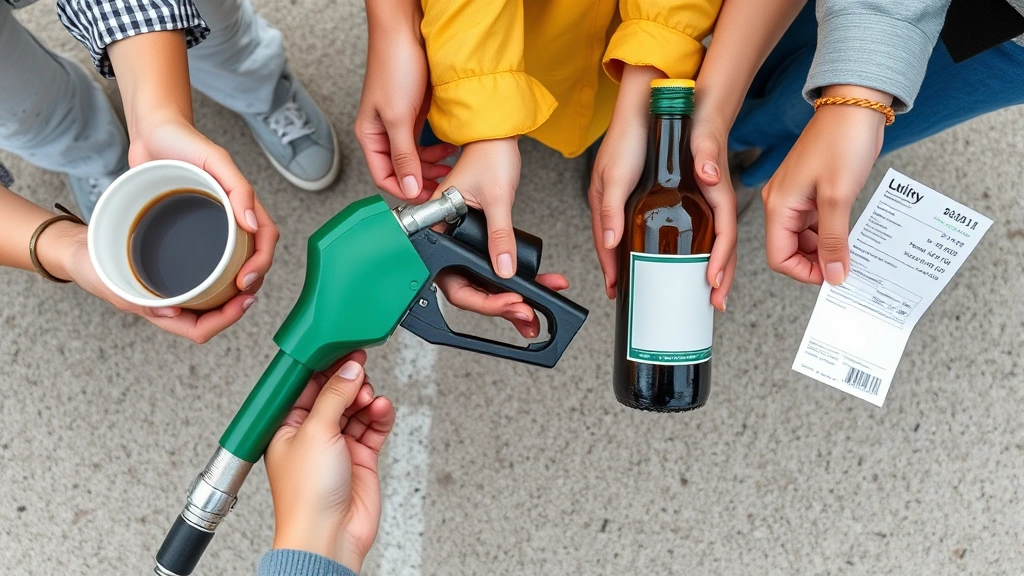
You can’t eliminate excise taxes entirely, but you can absolutely reduce them with smart habits. Here are actionable strategies:
- Reduce Fuel Consumption: This is the biggest lever. Carpool, use public transit, combine errands into one trip, or switch to a hybrid/electric vehicle. Even cutting your gas purchases by 20% saves you $63+ annually.
- Shop Across State Lines (Carefully): If you live near Oregon or Idaho, buying fuel or alcohol in those states can save significantly. Oregon has no sales tax and lower fuel excise taxes. However, this only makes sense if the savings exceed your travel costs.
- Quit or Reduce Tobacco/Vaping: This is the most dramatic savings opportunity. Quitting a pack-per-day habit saves you $1,095 annually in excise tax alone (plus health benefits worth far more).
- Moderate Alcohol Consumption: You don’t need to quit, but reducing consumption is a simple way to lower your excise tax burden.
- Energy Efficiency: Insulate your home, upgrade to LED bulbs, and use a programmable thermostat. Lower utility bills mean lower utility excise taxes.
- Time Large Purchases: If you’re buying a vehicle, timing your purchase strategically (e.g., end of month when dealers are motivated) might help you negotiate better, though the excise tax itself is fixed.
The beauty of these strategies is that they’re not just about taxes—they’re about living smarter and healthier. Reducing fuel consumption saves money and helps the environment. Quitting smoking saves money and extends your life. It’s a win-win.
Fuel & Transportation: The Biggest Excise Tax Hit
Let’s zoom in on the fuel excise tax because it’s Washington’s most painful tax for most residents. At 49.4 cents per gallon, Washington’s fuel excise tax is among the highest in the nation. Only a handful of states exceed it.
The fuel excise tax was designed to fund transportation infrastructure—roads, bridges, public transit. In theory, it’s a user-pays system: people who drive more pay more toward road maintenance. In practice, it’s become a substantial hidden tax that affects everyone from commuters to delivery drivers to small business owners.
Here’s a breakdown of what you’re paying:
- Federal fuel excise tax: 18.4 cents per gallon
- Washington State fuel excise tax: 49.4 cents per gallon
- Total excise tax on fuel: 67.8 cents per gallon
If gas costs $3.50 per gallon, roughly 19% of that price is excise tax. That’s substantial.
For electric vehicle (EV) owners, there’s an interesting twist. Washington introduced a $225 annual EV registration fee in 2022 to replace lost fuel tax revenue. So while EV drivers avoid the per-gallon excise tax, they pay a flat fee instead. For most EV owners, this is still a better deal, but it’s not tax-free.
Vehicle excise tax is another transportation-related hit. When you purchase a car in Washington, you pay 0.3% excise tax on the purchase price. On a $30,000 vehicle, that’s $90. On a $60,000 vehicle, that’s $180. It’s rolled into the dealer fees, so you might not notice it, but it’s there.
For more context on how different states handle transportation taxes, check out automobile sales tax in Arkansas or Illinois delivery tax structures. Every state approaches this differently.
Pro Tip: If you’re considering an EV, calculate whether the $225 annual registration fee is worth it compared to fuel excise taxes. For most people driving 12,000+ miles annually, the EV option wins financially.
Sin Taxes: Alcohol, Tobacco & Cannabis
Washington State calls excise taxes on tobacco, alcohol, and cannabis “sin taxes.” The government’s philosophy is clear: these products are legal, but we’re going to make them expensive to discourage consumption.
Tobacco Excise Tax: At $3.025 per pack, Washington’s tobacco excise tax is one of the highest in the nation. A pack of cigarettes costs roughly $9-10 total, meaning 30-35% of the price is excise tax. Smokeless tobacco and cigars face a 35% excise tax. Vapor products (e-cigarettes) face a brutal 70% excise tax, making a $20 vape cartridge cost roughly $34 after tax.
Why so high? The state uses tobacco taxes to fund health programs and smoking cessation initiatives. There’s also a public health angle: higher prices genuinely do reduce consumption, especially among younger, price-sensitive consumers.
Alcohol Excise Tax: Washington’s alcohol excise taxes vary by type:
- Spirits: 20.75% excise tax
- Beer: 13.7% excise tax
- Wine: 6.5% excise tax
A bottle of spirits costing $30 includes roughly $6.23 in excise tax. A six-pack of beer costing $8 includes roughly $1.10 in excise tax. These taxes fund alcohol treatment and prevention programs.
Cannabis Excise Tax: This is the newest major excise tax category. Washington legalized recreational cannabis in 2012 and imposed a 37% excise tax on retail sales (in addition to regular 6-10% sales tax). So a $20 cannabis product might cost $27-28 after taxes. The excise tax revenue funds public health, education, and drug treatment programs.
For perspective on how other states handle sin taxes, Investopedia’s guide to excise taxes provides national comparisons.
Warning: If you’re a regular user of any sin-taxed product, the cumulative annual cost is shocking. Track it for one month and multiply by 12. You might be surprised enough to reconsider your habits.
Other Hidden Excise Taxes You Might Miss
Beyond the big categories, Washington has several smaller excise taxes that fly under the radar:
Utility Excise Tax (6%): Your electric, natural gas, and steam bills include a 6% excise tax. It’s not itemized separately, so most people don’t notice it. But if your monthly electric bill is $120, you’re paying roughly $7.20 in excise tax monthly, or $86.40 annually.
Hazardous Substance Tax: Washington imposes a 7% tax on certain hazardous substances used in manufacturing. This is mostly a B2B tax, but it gets passed to consumers through higher product prices on things like batteries, pesticides, and certain chemicals.
Soft Drink Tax (Proposed): Washington has debated a sugary drink excise tax multiple times. As of 2024, it hasn’t passed, but it’s worth monitoring. If implemented, it would add roughly 2 cents per ounce to sugary beverages.
Plastic Bag Tax: Some Washington cities (like Seattle) impose local excise taxes on single-use plastic bags (typically 5-10 cents per bag). This is more of a behavioral tax than a revenue generator, but it adds up if you forget your reusable bags regularly.
The strategy behind these smaller taxes is often behavioral: make the behavior slightly more expensive, and people will change their habits. It works. Seattle’s plastic bag tax reduced single-use bag consumption by over 50%.
To understand how Washington’s approach compares to other tax systems, it helps to understand the broader tax landscape. For instance, real estate taxes vs. property taxes shows how different jurisdictions structure property-related taxes. And if you’re curious about how your paycheck is affected overall, smart paycheck savings strategies can help you budget for all taxes, including excise taxes.
Frequently Asked Questions
Does Washington State have income tax?
– No. Washington State does not have a state income tax on wages or salaries. This is one of the few states without income tax. However, Washington makes up for lost revenue through excise taxes, sales taxes, and property taxes. So while your paycheck isn’t taxed at the state level, you pay taxes on consumption and property.
Why is Washington’s fuel excise tax so high?
– Washington’s fuel excise tax (49.4 cents per gallon) is high because it funds transportation infrastructure—roads, bridges, public transit, and highway maintenance. The state uses a “user-pays” philosophy: people who drive more contribute more to road funding. Additionally, the state has no income tax, so it relies heavily on excise and sales taxes for revenue.
Can I avoid Washington state excise tax by shopping in Oregon?
– Partially, yes—but it only makes sense in certain situations. Oregon has no sales tax and lower fuel excise taxes. If you live near the Oregon border, buying fuel or alcohol in Oregon can save money. However, you’ll need to factor in travel costs and time. For most people, the savings don’t justify regular cross-border shopping. Additionally, some excise taxes (like tobacco) apply based on where you use the product, not where you buy it, so tax evasion isn’t an option.
What is the vehicle excise tax in Washington?
– Washington imposes a 0.3% excise tax on vehicle purchases and transfers. On a $30,000 car, that’s $90. On a $60,000 car, that’s $180. This tax is typically rolled into dealer fees and isn’t itemized separately on your invoice, so many buyers don’t realize they’re paying it.
How much can I save by switching to an electric vehicle?
– An EV owner avoids the per-gallon fuel excise tax but pays a $225 annual registration fee instead. For most people driving 12,000+ miles annually, this is a significant savings. Using the earlier example, a driver paying $315 annually in fuel excise tax would save $90 annually by switching to an EV (the difference between $315 and $225). Over 10 years, that’s $900 in tax savings, not counting fuel cost savings.
Is the cannabis excise tax in addition to sales tax?
– Yes. Washington imposes a 37% excise tax on cannabis retail sales, and then regular sales tax (6-10% depending on location) applies on top of that. So a $20 cannabis product faces roughly $7.40 in excise tax ($20 × 0.37) plus sales tax, bringing the total to roughly $27-28. It’s one of the highest combined tax rates on any product in Washington.

Can I deduct excise taxes on my federal return?
– Generally, no. Federal income tax deductions for state and local taxes (SALT) are capped at $10,000 annually. Excise taxes paid to Washington State can be included in this cap if you itemize deductions, but most people take the standard deduction, so they won’t benefit. Additionally, excise taxes are typically not deductible for self-employed individuals unless they’re directly related to a business expense.
Why does Washington tax vapor products at 70%?
– Washington imposed the 70% excise tax on vapor products (e-cigarettes, vape pens) to discourage their use, particularly among youth. The state views vaping as a gateway to smoking and a public health concern. The extremely high tax rate is intentionally punitive. It’s worth noting that this tax rate is higher than the tobacco tax rate, reflecting the state’s aggressive stance on vaping.


