

A Wayne county property tax search is your gateway to understanding one of the largest expenses homeowners face. Whether you’re buying property, appealing an assessment, or simply want to know what your neighbors paid, knowing how to search Wayne County property tax records can save you thousands of dollars and hours of frustration.
Table of Contents
What Is Wayne County Property Tax?
Wayne County spans multiple states—Michigan, Indiana, Ohio, and Mississippi—so let’s be clear: property tax rates and assessment methods vary significantly depending on which Wayne County you’re researching. The most commonly searched is Wayne County, Michigan (home to Detroit), but we’ll cover how to identify your specific location and find the right records.
Property taxes fund local schools, police, fire departments, and infrastructure. In Michigan’s Wayne County, the millage rate typically ranges from 40 to 60 mills per $1,000 of assessed value, though this varies by municipality. That means a $200,000 home might generate $8,000-$12,000 in annual property taxes.
The assessed value isn’t always the same as market value. Michigan uses a unique system where assessed value is capped at 50% of market value, and increases are limited to inflation or 5% annually—whichever is lower. This is why your neighbor’s identical house might have a different tax bill.
Why Property Tax Searches Matter
Nobody gets excited about property taxes, but understanding them could mean keeping money in your pocket. Here’s why a Wayne County tax map search matters:
1. Catching Assessment Errors: Assessors are human. They might overestimate square footage, miss a roof repair that reduced value, or incorrectly classify your property. Even a 5% overassessment on a $300,000 home costs you roughly $400-$600 annually.
2. Justifying Mortgage Refinances: Lenders need current property values. A tax search gives you baseline data to discuss with refinance specialists.
3. Estate Planning: If you’re handling a parent’s property or selling inherited land, tax records show what was paid historically and current assessed value—critical for estate taxes.
4. Investment Decisions: Real estate investors use property tax data to calculate cash-on-cash returns. High taxes in one area versus another can swing a deal from profitable to unprofitable.
5. Appeal Deadlines: Most counties have strict windows (often 30-45 days after assessment notices arrive) to file appeals. Missing this deadline can cost you a year of overpayment.

How to Access Tax Records Online
The easiest way to conduct a Wayne county property tax search is through online databases. Here’s the step-by-step process:
For Wayne County, Michigan:
Visit the Wayne County Treasurer’s website (treasurer.waynecounty.com) and use their property search tool. You’ll need either the parcel number or the address. The search returns:
- Current assessed value
- Taxable value
- Millage rates by municipality
- Tax payment history
- Delinquency status
If you don’t have the parcel number, start with the Indiana property tax lookup methodology (which applies to other Wayne County jurisdictions too): search by street address first, and the system will return the parcel ID.
For Wayne County, Indiana:
The Wayne County Assessor’s Office maintains searchable records at the county website. Indiana’s system is slightly different—they use a “township, range, section” system for some properties alongside traditional addresses.
For Wayne County, Ohio:
The Auditor’s Office provides a GIS (Geographic Information System) map-based search. This is particularly useful because you can visually see properties and their assessed values on a map.
For Wayne County, Mississippi:
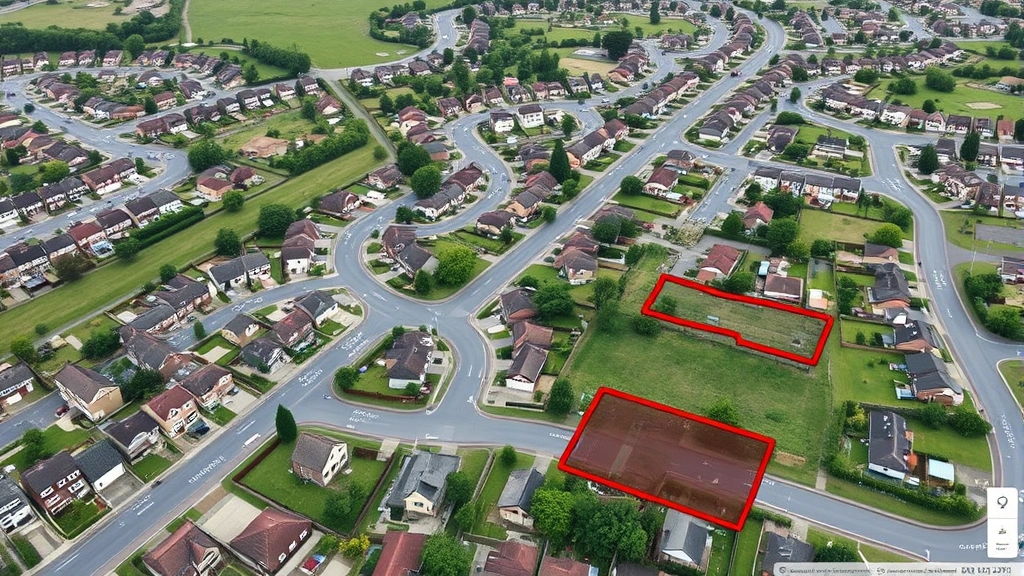
The Tax Assessor’s office maintains records accessible through their official website. Mississippi properties are often searched by owner name or parcel number.
Using the Wayne County Tax Map
The Wayne County tax map is one of the most powerful tools available. Here’s how to use it effectively:
Most modern tax maps are interactive GIS systems. You can:
- Zoom to your property: Enter your address or click on the map
- View parcel boundaries: See exactly where your property lines are (sometimes surprising!)
- Check neighboring assessments: Compare your assessed value to similar properties nearby
- Access property details: Square footage, lot size, year built, improvements made
- Review historical data: See how your assessment has changed over 5-10 years
A pro tip: use the tax map to identify comparable properties when preparing an appeal. If five homes identical to yours on the same street are assessed at $180,000 but yours is $220,000, you’ve got ammunition for an appeal.
Understanding Property Assessments
The assessed value shown in your Wayne county property tax search isn’t arbitrary. Assessors use standardized methods, though they vary by location:
Cost Approach: Land value + replacement cost of building – depreciation. This is common for newer homes.
Sales Comparison Approach: What similar properties sold for recently. This is most common in active real estate markets.
Income Approach: For rental properties, based on potential rental income. Less common but used for investment properties.
In Michigan specifically, assessors must complete revaluation studies every 5 years. This is why you might see your assessment jump significantly in certain years—the county is updating to reflect market changes.

Your assessed value is different from your taxable value. In Michigan, the taxable value is capped at the lower of: (1) 50% of market value, or (2) the previous year’s taxable value plus 5% or inflation, whichever is lower. This is why a booming real estate market doesn’t immediately translate to skyrocketing taxes for existing homeowners.
How to Appeal Your Assessment
If your Wayne county property tax search reveals what you believe is an inflated assessment, you have rights. The appeal process typically follows these steps:
Step 1: Get Your Assessment Notice
Assessors mail notices by a specific date each year (usually March-April in Michigan). This notice shows your assessed value and includes information about appealing.
Step 2: File a Formal Protest
You must file with the local Board of Review (or equivalent) by the deadline—usually 30-45 days after the notice. File online, by mail, or in person. There’s typically a small filing fee ($10-$50).
Step 3: Prepare Your Case
Gather evidence: comparable sales, professional appraisals, photos of damage or needed repairs, property condition assessments. Use your tax map search to identify 3-5 comparable properties with lower assessments.
Step 4: Attend the Board of Review Hearing

You’ll present your case to a panel. Many people skip this step—don’t. A 10-minute presentation showing comparables often results in a reduction. If you’re uncomfortable speaking publicly, bring a real estate agent or attorney.
Step 5: Appeal Further If Necessary
If the Board denies your appeal, you can file with the Michigan Tax Tribunal (or equivalent in your state). This costs more but is worth it for significant overassessments.
Comparing Properties and Values
Your Wayne county property tax search is most powerful when you compare multiple properties. Here’s how to do it like a pro:
Identify Comparables: Use your tax map to find 3-5 properties that are:
- Within 0.25 miles of your property
- Built within 5 years of yours
- Similar square footage (within 10%)
- Same number of bedrooms/bathrooms
- Similar condition
Document the Differences: If your property is newer, larger, or in better condition than comparables with lower assessments, that’s leverage for an appeal.
Check Recent Sales: Use property tax Milwaukee style resources and Zillow/Realtor.com to see what similar homes recently sold for. If homes are selling for $300,000 but assessed at $250,000, your assessment might be reasonable. If they’re selling for $250,000 but assessed at $300,000, you have a case.
Account for Improvements: Did you add a deck, roof, or bathroom? Your tax assessment should reflect this. Did you defer maintenance? Your assessment shouldn’t penalize you for that.
Common Search Mistakes to Avoid
When conducting a Wayne county property tax search, people often stumble on these errors:

Mistake 1: Confusing Assessed Value with Market Value
Your assessment isn’t what your house is worth. It’s a value used to calculate taxes. In Michigan, assessed value is capped at 50% of market value. In other states, it might be 100% or something else. Don’t assume your assessment reflects your home’s true value.
Mistake 2: Ignoring the Parcel Number
Your address might return multiple results if the database is outdated. The parcel number is unique and unambiguous. Get it from your tax bill or deed and use that to search.
Mistake 3: Not Checking for Exemptions
Homestead exemptions, senior exemptions, and other property tax breaks are available in many jurisdictions. Your search should show whether you’re claiming them. If not, you might be overpaying.
Mistake 4: Waiting Too Long to Appeal
Appeal deadlines are strict. Don’t wait until December to appeal a March assessment. Mark your calendar the moment you receive your notice.
Mistake 5: Using Outdated Data

Property tax records are updated annually, sometimes more frequently. Make sure you’re looking at current data, not last year’s assessment.
Mistake 6: Not Understanding Your Millage Rate
Your tax bill is assessed value × millage rate ÷ 1,000. A millage rate of 50 mills means you pay $50 per $1,000 of assessed value. Your search results should show your specific millage rate—it varies by municipality even within Wayne County.
Frequently Asked Questions
How often are property taxes reassessed in Wayne County?
In Michigan’s Wayne County, assessments are reviewed annually. Full revaluation studies occur every 5 years. In Indiana, Ohio, and Mississippi, schedules vary—typically every 1-4 years. Check your specific county’s website for exact timelines.
Can I search someone else’s property tax information?
Yes. Property tax records are public information. You can search any address and see assessed value, millage rates, and payment history. However, you cannot access personal financial information like mortgage details or income.
What’s the difference between assessed value and taxable value?
Assessed value is what the assessor says your property is worth for tax purposes. Taxable value is what’s actually used to calculate your tax bill. In Michigan, taxable value is capped and grows slowly even if assessed value jumps. In other states, they’re often the same.
How much does it cost to appeal my assessment?
Filing a protest with the Board of Review typically costs $10-$50. Appealing to the Tax Tribunal costs $50-$300. Hiring an attorney or tax professional costs $500-$2,000+. For significant overassessments, this investment pays for itself quickly.
Can I get a property tax refund if my appeal is successful?
Yes, but only for future years typically. If you successfully appeal and your assessed value is reduced, you’ll pay lower taxes going forward. Some jurisdictions allow refunds for the current year if the appeal is filed early enough. Check your local rules.
What if I can’t find my property in the Wayne County tax database?
This is rare but happens. Try: (1) searching by owner name instead of address, (2) using the parcel number if you have your deed, (3) checking if the property is in a different county than you think, (4) contacting the assessor’s office directly. New properties sometimes take 6-12 months to appear in the system.
Are commercial properties assessed differently than residential?
Yes. Commercial and industrial properties use different assessment approaches, typically the income approach. Their appeal processes may also differ. If you own commercial property, contact your assessor for specific procedures.
How do I know if my property tax is reasonable?
Compare your effective tax rate (taxes paid ÷ estimated market value) to neighboring properties and your county average. Use your Wayne county property tax search to find 5-10 comparable properties and see if your rate is significantly higher. If your effective rate is 2-3% higher than similar properties, an appeal might be worthwhile.
Conclusion
A Wayne county property tax search is straightforward once you know where to look and what to look for. Start with your county’s official assessor website, use the tax map to identify comparable properties, and understand the difference between assessed and taxable value. If your assessment seems high, gather comparables and file an appeal—it’s often the fastest way to reduce your tax bill legally.
Property taxes aren’t glamorous, but they’re one of the largest expenses homeowners face. Taking 30 minutes to search your property records and understand your assessment could save you hundreds or thousands of dollars over time. For related information on property tax strategies, check out resources on real estate taxes in Summit County and Franklin County real estate taxes for comparative insights. And if you’re selling property, understanding capital gains implications is crucial—our real estate capital gains tax calculator can help you plan accordingly.


